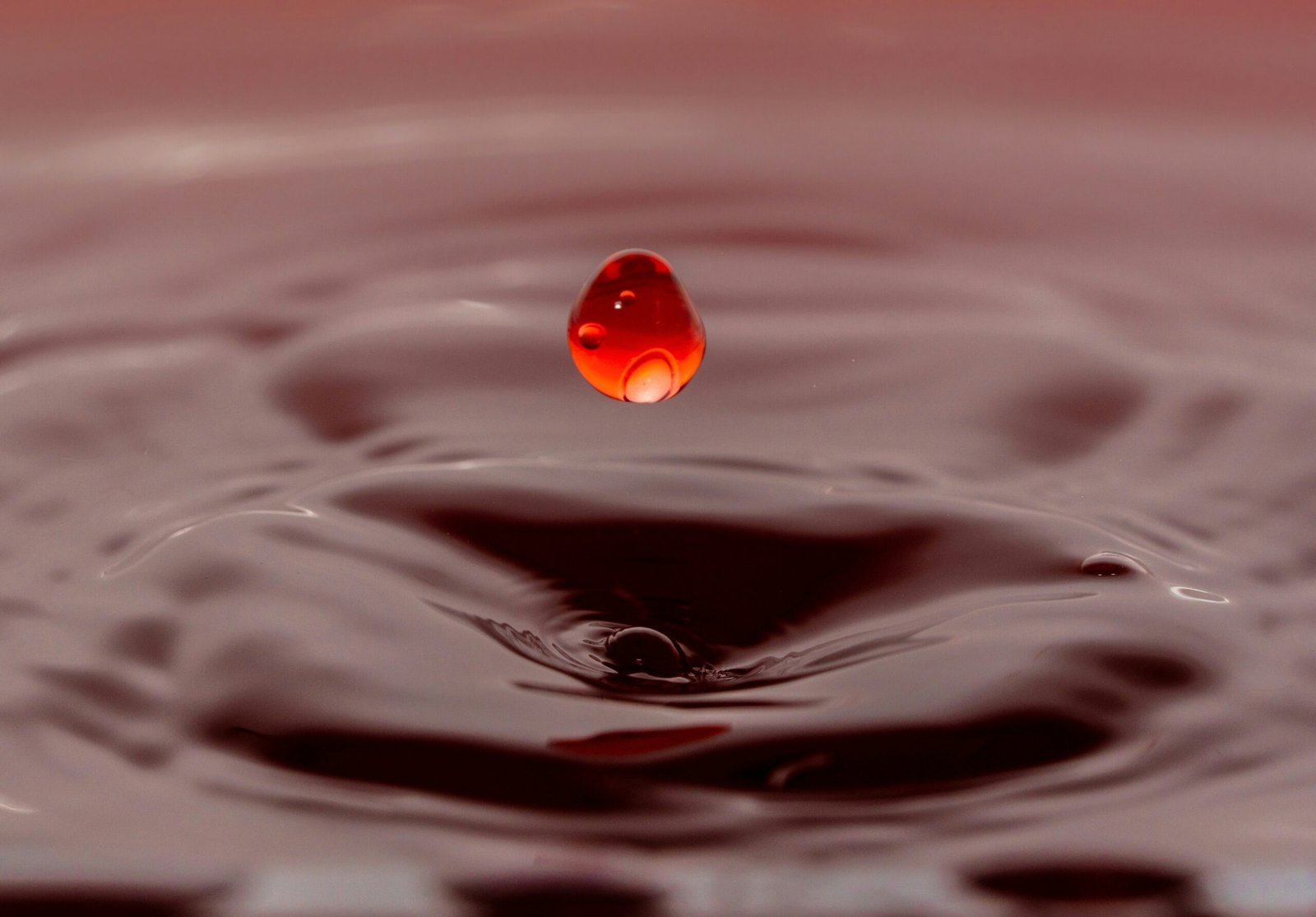
Image Courtesy: Shibin Joseph/Unsplash
Every year on 14 June, the world marks World Blood Donor Day, a moment to thank voluntary blood donors and reflect on one of the simplest, most profound acts of public service. At a blood donation camp, very little looks dramatic. There are forms to fill, a brief conversation about health, a reclining chair, a needle, perhaps a biscuit and a cup of tea afterwards. People arrive between meetings, after work, on a college campus, or because a colleague has reminded them that it has been a while. Most do not arrive carrying a grand idea of themselves. They simply give an hour of an ordinary day.
That ordinariness is what makes it remarkable.
Blood cannot be manufactured in a factory. It cannot be generated on demand because an operating theatre needs it urgently. Every unit that reaches a patient exists only because a healthy body chose to give some of what it would otherwise renew on its own. A health system may have laboratories, ambulances, refrigeration, screening protocols and sophisticated equipment, but somewhere near the start of that chain is a person who decided, without payment and without knowing who might need it, to roll up their sleeve.
The system depends on that choice.
We live in a time when almost every act of care can be made visible – fundraisers posted, appeals shared, causes tracked and declared. There is nothing wrong with this; many lives are saved because someone sees a message at the right moment and responds. But blood donation belongs to a quieter category of giving. The donor will usually never know who received their blood, or whether it helped a new mother after a complicated childbirth, a child being treated for thalassaemia, a cancer patient, or a stranger brought into an emergency room after an accident. The blood leaves one body without a story attached and enters another life at a moment of need.
That is an unusual form of trust. Most relationships we build run on recognition, we help family because they’re ours, friends because we know their faces, causes because they align with something we already believe. Blood donation asks for something more open-ended: that another person’s survival may matter before we ever know who they are. Their name, faith, language, politics, income may be entirely unlike ours. We may never cross paths. But our bodies already share a world, and that world occasionally makes a simple request, someone needs something only another human being can give.
This year’s theme, “One Drop of Humanity. Give Blood. Save Lives,” sounds idealistic until you enter a hospital and see how practical it is. The idea is not sentiment; it’s logistics.
This is also why regular voluntary donation matters more than emergency generosity. Most of us have seen the urgent messages circulate through families, workplaces and WhatsApp groups: a patient needs a particular blood group, donors required immediately, please share widely. These appeals often bring out the best in people – friends call friends, strangers volunteer, a community gathers around a family in distress. But there is something troubling in the fact that so many families must begin their most frightening hours by searching for donors. A family already dealing with a complicated delivery, a diagnosis, an accident, should not also have to become a crisis-management team – calling twenty people, forwarding messages, pleading publicly for something a functioning health system should already have ready.
The most dependable blood system isn’t one that works only when panic spreads. It’s one sustained by people who give before an emergency arrives.
That distinction says something about the difference between kindness and citizenship. Kindness responds when suffering becomes visible. Citizenship prepares for the suffering we cannot yet see. The person who donates on an ordinary Sunday morning is deciding, in advance, for someone they don’t know, at a time they can’t predict, in a place they may never visit. It isn’t spectacular. It’s preparedness, an acknowledgment that we live among others, and that one day a stranger’s need may become the reason this small decision mattered.
There’s something democratic about it too. Blood donation doesn’t erase inequality – access to healthcare is still shaped by income, geography and institutional capacity – but it interrupts the logic that everything important must be earned, purchased or exchanged. This isn’t an argument for romanticising sacrifice. Nobody should feel coerced, and not everyone is medically eligible: health, age, weight, medication, pregnancy and recent illness all matter, and donation must always be safe, voluntary and properly screened. But a healthy culture of giving makes room even for those who can’t donate themselves, organising a camp, encouraging a family member, sharing accurate information, offering transport, making a workplace more supportive. It means no longer treating blood donation as something people do only after a desperate request lands on their phone.
We often call donors heroes. The appreciation is deserved, but the word can create distance, heroes sound exceptional, unlike the rest of us. Blood donation cannot survive on exceptional people alone. It needs ordinary people who make it a habit. A first-time donor remembers the slight nervousness before the needle, the relief when it’s over, the quiet surprise that something so consequential fit into a morning. A regular donor barely speaks about it at all, because it has become routine, and that may be the ideal. Not because giving blood should feel casual, but because it should feel normal, sitting alongside the other quiet responsibilities of adult life: checking in on ageing parents, voting when we can, helping a neighbour, contributing to the systems we hope will be there when we need them.
We tend to look for large gestures when we think about social responsibility – philanthropy, public leadership, movements that change a city’s direction. These matter. But a society also holds together through smaller forms of participation that never make headlines. Blood donation is one of them. It asks us to admit that we are more dependent on one another than modern life allows us to believe. We like to think of ourselves as self-sufficient, especially in cities where almost everything can be ordered or delivered. Illness has a way of exposing the limits of that idea. Care is never entirely private. It depends on nurses, technicians, doctors, relatives, and people who did something in advance so that help would be there at the exact moment it became necessary.
This is the republic of strangers: a community made not of people who know one another, but of people willing to act as though another life is connected to their own. Perhaps that is the real meaning of this day. It isn’t only a reminder to give blood, it’s a reminder that care doesn’t begin at the moment of crisis. It begins earlier, in ordinary time, when we make room for someone we may never meet.
Somewhere, a person may be sitting in a donation chair today, checking the time, thinking about the rest of their afternoon. Somewhere else, days or weeks later, another person may be alive because that donor decided an ordinary day was good enough to give. The most meaningful way to honour World Blood Donor Day is not simply to celebrate donors, but to become one, if we are able.
It is not a grand theory of humanity. It is much simpler than that. It is one person quietly keeping faith with another.