

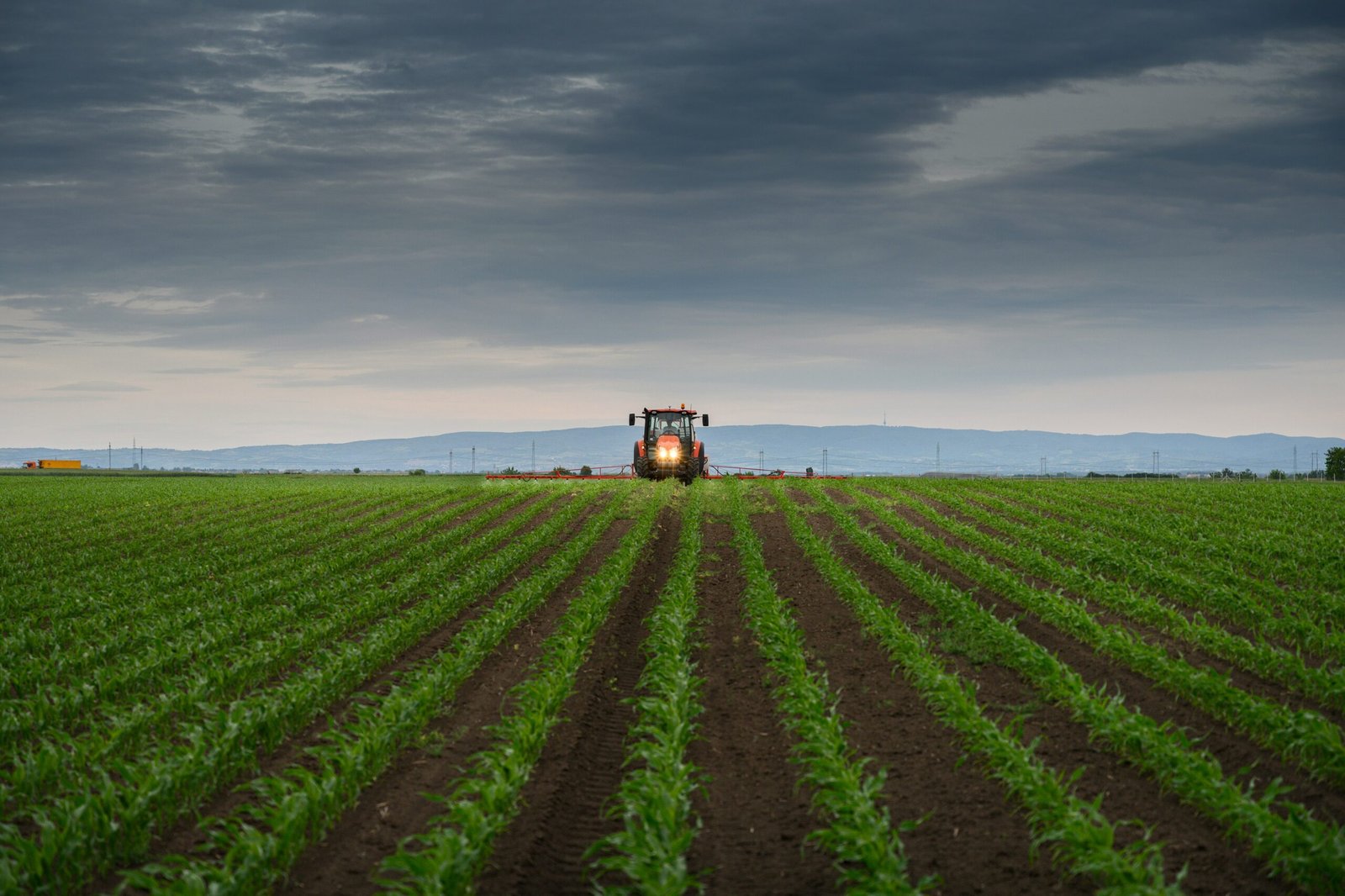
By late afternoon, the field is quiet. No storm threatens the horizon. No visible swarm crosses the crop. The earth has not cracked open in warning. The leaves are still green. Water moves in a thin line along the irrigation channel. At first glance, there is only continuity.
But farming has always lived in the space between what is visible and what is already happening.
A crop can begin to suffer before it appears to be suffering. A pest can begin moving before the first damaged leaf is seen. Soil can lose strength long before it looks tired. Water stress can begin not as a catastrophe, but as a delay, a faint change, a small interruption in rhythm.
For centuries, farmers have read these signs through experience: the colour of a leaf, the feel of soil between fingers, the movement of insects, the weight in the air before rain. Long before data became the language of the future, the field was already producing it.
And yet, something has changed.
The world is absorbed by artificial intelligence. AI has become the shorthand for the future. But the most important technology of the next 50 years may not be the one that changes how offices work. It may be the one that helps feed civilisation.
This is not a sentimental claim about farming. It is a practical one. Beneath every economy, city, hospital, university, digital platform, and political promise lies one quiet dependency: food must arrive. It must be grown somewhere, by someone, under conditions that are becoming less predictable.
Difficulties in agriculture
Agriculture has never been easy. But the nature of difficulty has changed. Earlier, uncertainty often came in patterns that could be remembered. The older farmer knew which wind carried rain, which soil held moisture, and which pest followed which temperature shift. That knowledge still matters. But the field around it is changing faster than memory can keep up with. Rain no longer arrives with the same discipline. Heat arrives earlier, lasts longer, and reaches more punishing extremes. Input costs rise. Water becomes contested. Markets punish farmers in ways they cannot fully control.
A farmer may do everything right and still lose to timing.
This is the new anxiety of agriculture: not only whether a farmer knows what to do, but whether he knows it soon enough, before circumstances close the window for action. This is where technology becomes significant, not as a spectacle or a superficial replacement for human expertise, but as a tool that can alter timing, enhance confidence, and inform action.
The most important data point in the world may urgently be a plant showing signs of stress before the human eye can see them. This is what a new generation of agricultural technology is trying to do: make the field legible earlier.
Affordable solutions for the farmer
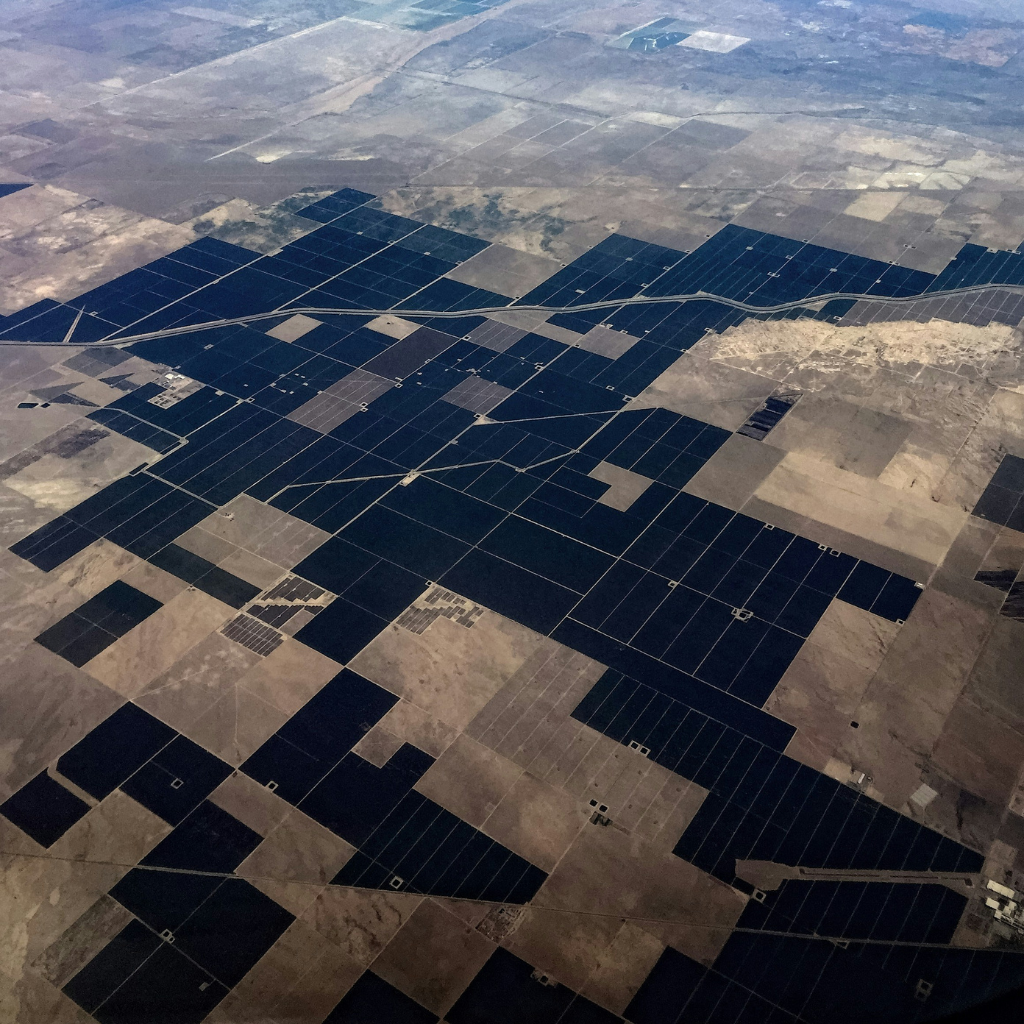
Satellite-driven crop intelligence, for instance, can detect variations in crop health, moisture, vegetation, and stress across large areas. A farmer may see one field. A satellite can see thousands. It can show that stress is beginning in one corner before it spreads. The important word here is not satellite. It is early.
If problems are seen too late, only damage control is possible. Early detection enables precise, cost-effective, and smaller-scale responses, avoiding unnecessary intervention and preventing loss.
Imagine a farmer preparing to irrigate an entire field because the season has been dry and the crop looks uneven. A more precise reading may show that only one section is stressed, while another still holds enough moisture. The decision changes. The crop receives what it needs, not what habit or fear might have demanded.
Or consider a pest warning that reaches a farmer before the infestation becomes visible across the crop. The difference between seeing early and seeing late is not just technical. It can be the difference between selective action and panic spraying, between recovery and resignation.
Other technologies are quietly entering this space. Soil health platforms can help farmers understand what their land can support. Weather-linked advisories can translate forecasts into practical choices. Precision irrigation tools can help farmers use water more thoughtfully. The most effective of these technologies share a common, urgent objective: they minimise the interval between the emergence of risk and the corresponding response.
Krishivaas is one such agricultural intelligence company working at the intersection of farming, data, and decision-making. Its approach is built around helping farmers, agricultural enterprises, and public systems detect emerging stress earlier, understand local variation, and respond with timely, practical action. As Vishnu Gorantala, Co-founder of Krishivaas, says, “The farmer should not have to become a data scientist to make better decisions. Technology is useful only when it reaches him in time, in a language he can trust, and in a form that helps him act.”
It is a reminder that the farmer remains the center of the system. Technology can observe, analyse and warn. But the final decision still belongs to the person who knows the land, the season, the family’s risk, and the cost of being wrong. For Sudarshan Ramachandriah, Co-founder of Krishivaas, the real promise of technology lies in its ability to detect stress before loss becomes visible. “The value of agricultural intelligence is not in collecting more data. It is in seeing the signal early enough, and converting it into a decision that can protect the crop.” This distinction highlights the difference between information and intelligence. While information describes current conditions, intelligence enables proactive action before damage becomes irreversible.
The bigger picture
The latest UN food security reporting estimates that about 673 million people experienced hunger in 2024, while 2.3 billion people faced moderate or severe food insecurity. The World Bank’s June 2026 food security update notes that conflict and climate shocks remain primary drivers of acute food insecurity, even as food and nutrition insecurity are increasing despite broadly stable supplies of major staples.
These are not distant policy issues. They begin in fields. Ram Bhoopal, Co-founder of Krishivaas, sees an equally important opportunity for governments. “Governments have a unique advantage in agriculture because they can look beyond individual farms and see entire regions as living systems. When early warnings, field intelligence, and farmer advisories come together, policy can move from reaction to preparedness.” This may represent one of the most significant forthcoming shifts. When agriculture is viewed solely as a farm-level issue, technological solutions remain fragmented. However, if governments, institutions, farmer organizations, and technology systems recognize regions as interconnected food systems, early warning can be established as essential public infrastructure.
A recent visit by Adarsh Muri and the Krishivaas team to Egypt further sharpened this understanding. They returned with deep appreciation for the Government of Egypt’s hospitality and for the keen interest shown in how agricultural intelligence can support farmers, institutions, and food systems at scale. The visit reinforced a larger truth: the future of farm technology will not be measured only by what it can detect from above, but by what it enables on the ground.
Before it’s too late
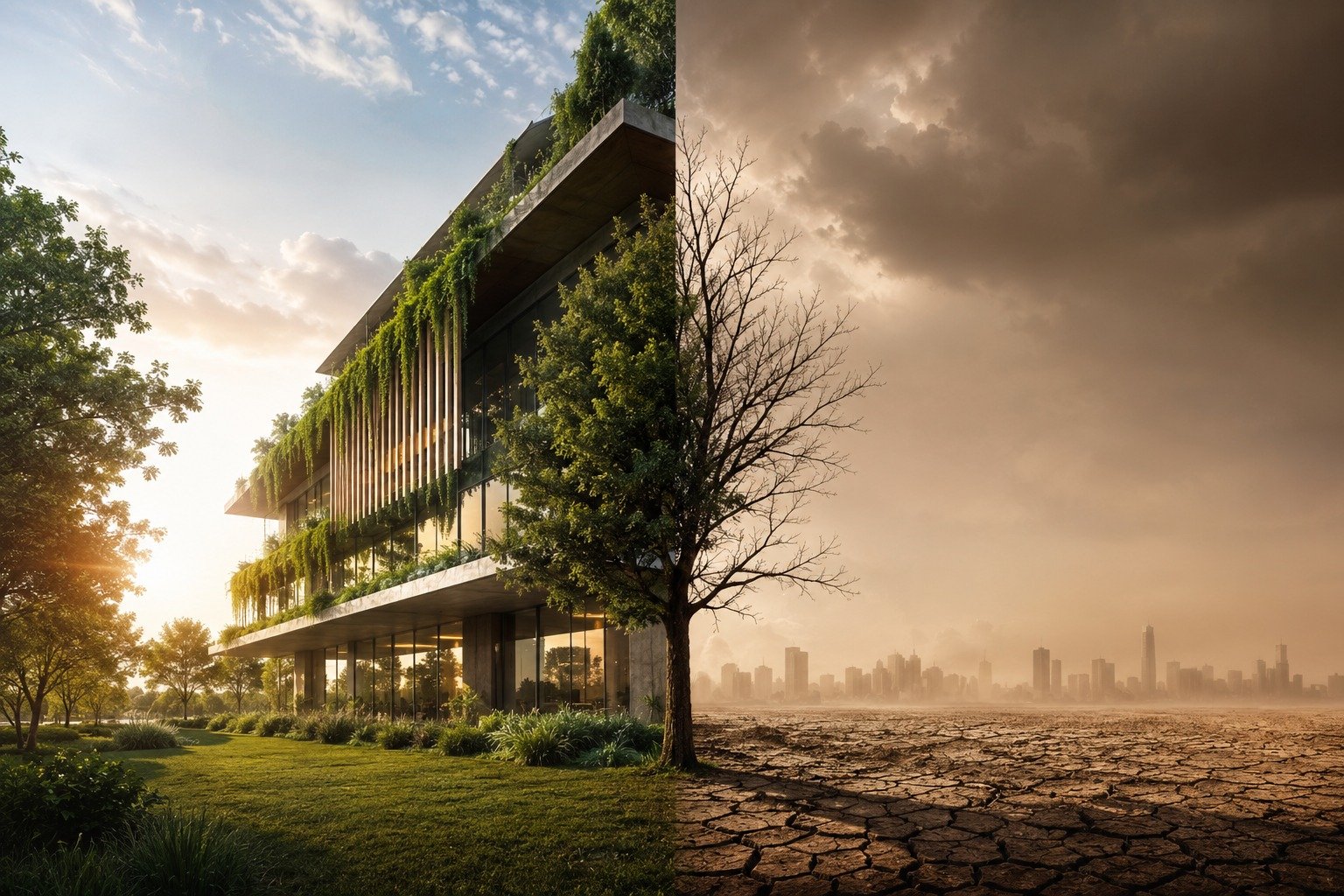
Agricultural failures are frequently recognised only after they have escalated into economic or humanitarian crises. By that point, the underlying issues in the field have often persisted for months. That is why urgent and accurate detection matters. Because climate change will not first appear as an abstract graph. It will appear as delayed rain, failed flowering, a new pest, a dry borewell, or a soil that no longer responds the way it once did. In that gap, intelligence will matter.
The future may still be written in code. But civilisation will continue only if someone, somewhere, knows what is happening in the field before it is too late.



One Response