

Ria sat across from me last month with a shortlist that looked nothing like the one I’d helped her brother build three years earlier. Aarya’s list, back in 2023, had been twenty universities deep, US and Canada.There hadn’t been a flicker of doubt in that process. Ria’s list had four names on it. None of them were the US, the UK, or Australia. “I’ve been looking at Europe,” she said, half a question. “Is that a real option, or am I settling?”
I’ve been asked versions of this question all year, sometimes about Europe specifically, sometimes folded into questions about visas, jobs, or “how things are looking.” Last August, a study-abroad webinar of ours drew one of our largest audiences in years. Not one of those families came back to start an application. The interest hadn’t disappeared. Something underneath it had.
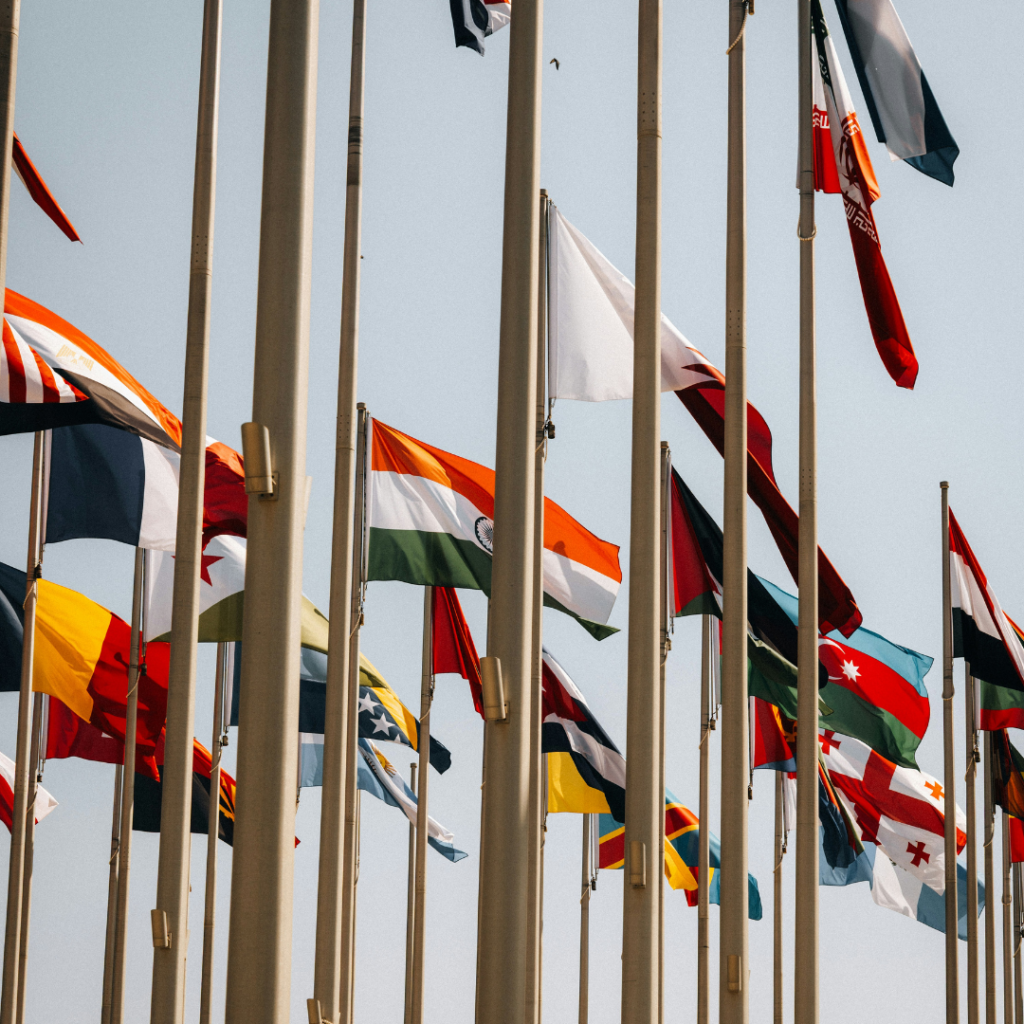
The Old Global Dream
Earlier, families wanted to know which university, which course, which city would give their child the best shot at a good life. The conversation was about ambition. Politics, if it came up at all, stayed “out there,” in the news, not in the admission file. The families worked on how to make twenty applications feel distinct, not duplicated, the focus was on preparing the child how to live independently, cooking, laundry, managing money, the agenda was comparing loan structures across universities like interest rates on a car loan. Nobody in that room asked whether the destination itself made sense.
War Enters the Family Calendar
It doesn’t arrive as headlines. It arrives as a parent mentioning, almost in passing, that they’ve been watching the news more than usual, a question about whether a city is “still okay,” not because anything happened there, but because something happened somewhere else, and the world feels less safe now.
Many of us still remember helping families track flights out of Ukraine in 2022, students who’d gone for medicine, suddenly mid-evacuation instead of mid-semester. UNICEF estimated that over 470 million children were living in conflict-affected areas in 2023. None of the families I speak to are tracking foreign policy closely. But they’re absorbing its mood, and that mood has entered the admissions conversation in a way it never used to.
The Immigration Reset
If there is one shift underlying everything else, it is this: the countries that have, for two decades, formed the backbone of Indian families’ study-abroad imagination are all, in different ways, recalibrating how open they are to international students and graduates. I didn’t fully understand this until I felt it myself.
In 2023, my own daughter left for the UK to pursue her master’s. I remember the lead-up, the shopping, the packing, the goodbye at the airport, and not a single moment of doubt. It felt like the most natural next step in the world. This year, I have a student, Tanya, heading to Bristol to study Law. Her mother calls more than she used to, not about application deadlines or scholarship amounts, but about the changing visa and immigration rules. Every time a reel about UK immigration shows up on her Instagram, she rings me. The recent tightening of the post-study work route, the shorter Graduate visa window, the steep increases in funds students must evidence, are not abstract policy changes for this family. They are the new reality Tanya is walking into. And as her counsellor, I feel the weight of that in a way I simply did not a few years ago, when I sent my own daughter to London.
Increasingly, families ask what a foreign master’s is actually an investment in, when even a job offer no longer guarantees a visa. Employer sponsorships are harder to come by, and PR pathways have grown longer and less predictable. That question, which barely came up a few years ago, now sits in almost every conversation I have.
The US carries a different kind of uncertainty, less about jobs, more about whether the ground itself feels stable. H-1B remains the dream pathway for many engineering families, but recent changes to selection criteria, and ongoing disputes over proposed fee hikes, have made it feel less like a plan and more like a bet. One family I know chose to defer their son’s US master’s altogether. “Let’s wait,” his mother told me, “until the world settles a bit.”
Australia remains a major destination, but getting in has become a more careful process. The government now caps how many international students it will accept each year, and visa officers are scrutinising applications more closely to judge whether a student is “genuine.” Most families never read the fine print of any of this. What they feel instead is something simpler: a quiet, low-grade worry, about visas, about safety, about whether their child will be looked at a little harder than before, for reasons that have nothing to do with merit.

The India Option Is No Longer Only a Fallback
Several foreign universities are now opening campuses across India, Bristol, York, Aberdeen, Liverpool, Queen’s Belfast, Victoria University, offering the same degrees and curriculum as their home campuses. For families, it’s something of a goldmine: cheaper than studying abroad, and students can even spend part of the course at the main campus itself. For a family weighing global exposure against global uncertainty, that’s an option increasingly worth exploring.
Then there is liberal arts education, a wave that is quietly reshaping Indian education from within. It is like a breakthrough from the conventional methodology of rote learning and textbook studies. Parents are now quite curious about these colleges, and every third student who walks into my office these days wants to study psychology and or any non-stem courses is making new inquiries about them. Institutions like Ashoka in Sonipat, FLAME in Pune, Krea in Sri City and Shiv Nadar offer something genuinely different: unique subject combinations, major-minor options, double majors, dual majors and tie-ups with prestigious universities abroad for student exchange programmes. The interdisciplinary approach gives students the freedom to choose from diverse disciplines, psychology paired with politics, design woven into the sciences. These colleges represent a completely different approach to education, and families are taking notice.
And it isn’t limited to humanities. Even engineering is evolving. Plaksha in Mohali offers a liberal twist to technical education, where a student can pursue a BTech alongside economics or entrepreneurship. The boundaries between disciplines are dissolving. The National Education Policy 2020 explicitly endorses this multidisciplinary, holistic approach, and recent data from the All India Survey on Higher Education shows that liberal arts now account for over a third of undergraduate enrolment nationally. A newer set of institutions is competing strongly for that demand, and winning. One family chose a foreign-university campus in India over an offer abroad for their son’s undergraduate degree. “He gets the degree, the curriculum, even some of the same faculty,” the father said, “without us lying awake wondering which time zone he’s safe in.”
The ROI Question
Earlier, students would leave India confident that a foreign degree meant a foreign job, and that job would help pay off the large loan taken to study at a premium college abroad. That confidence is fading. Jobs in the west are harder to come by now, and many of these countries are increasingly prioritising their own domestic workforce. Students are coming back home, and that is hitting the ROI hard. How does a family make peace with a two-crore education loan when their child returns without a job offer?
The numbers say it clearly. According to India’s Bureau of Immigration data presented in the Rajya Sabha, the number of Indian students going abroad fell from 908,000 in 2023 to 770,000 in 2024, and further to 626,000 in 2025, a drop of over 31% in just two years. Canada saw a 41% fall, the US dropped by 13%, and the UK by nearly 28%.
A student who went to Essex for a master’s in Artificial Intelligence is still job-hunting in the UK months later, and this isn’t an isolated case. For those who do return home, the picture isn’t always easier either. Students who have studied abroad are finding that an overseas degree doesn’t automatically open doors in India. The assumption that a foreign qualification would set them apart is being tested, in a job market that has plenty of well-qualified graduates, foreign degree or not. Industry reports have cited a government survey finding that only 22% of Indian students who studied abroad between 2015 and 2019 secured a job back home. A growing number are returning without the employment the foreign degree was supposed to deliver, often taking up the same start-up and technology roles their peers who stayed back walked into directly, while some return to join their family business.
So the question many families are raising now is: should my child go abroad to study at all?
Safety Has Become Part of Education
Today, when we scroll through social media or watch the news, we frequently come across shocking incidents of attacks, deportations and racism that make us think about the safety of our children studying abroad. It is less about one incident and more about a general mood, a low hum of anxiety that sits underneath everything else. A student mentioned earlier, partway through her programme at an Ivy League university in the US, described a campus that had grown tense and uncertain. International students were unsure, day to day, where they stood. Nothing happened to her directly. But the atmosphere alone was enough to make her leave and start over at York instead.
When I visited London, my own daughter told me to be careful about my belongings, especially my phone. Closer to home, a parent told me about a string of incidents circulating on her building’s WhatsApp group. Phones snatched off students mid-call. Food bags grabbed off bikes. Tourists and international students targeted for cash. None of it had happened to her son. But after reading enough of these posts, she asked me quietly: should he learn some form of self-defence before he leaves? Not because of anything specific. Just because, as she put it, “the world feels like it needs that now.”
So seriously has this concern grown that the Indian Embassy now closely monitors the safety of Indian students abroad. Safety advisories are issued, helpline numbers are shared, and guidelines are circulated, a formal acknowledgment that sending a child overseas today comes with a layer of risk that simply didn’t exist in the conversation before.
A decade ago, preparing a child to go abroad meant warm clothes and a crash course in cooking. Today it also means conversations about situational awareness, digital safety, knowing who to call and when, and recognising when to leave a situation before it escalates. Resilience has quietly joined the curriculum.
The New Role of the Admissions Counsellor
This is not an overnight business. It never was, but today, the weight of it has grown considerably. Despite the growing uncertainties, students are still drawn to overseas education. Parents may be anxious, but the aspiration hasn’t dimmed. What has changed is what families now need from someone like me.
The role of an admissions counsellor today goes far beyond identifying the right college. It means sitting with a family not once, but multiple times, across weeks and sometimes months, until the student finally boards that flight. It demands constant alertness, to shifts in the global landscape, to which courses will hold value five years from now, to new programmes emerging at universities, to changes in immigration policy, to where the jobs are actually moving. It is a living, evolving body of knowledge, and it never stops changing.
I sometimes think of it as designing a lehenga for a bride. You cannot simply pull something off the rack. You have to understand her taste, her personality, what she can carry, what suits her, what will make her feel most like herself on the most important day of her life. Choosing the right college is no different. It demands time, skill, multiple conversations, and a genuine understanding of who the student is, not just what their grades say. It means carefully weighing cost, ROI, destination safety, course employability, and whether that degree will still open doors a decade from now. This is not about selling universities or dispatching students to whichever institution will accept them. Curating a college path is now a highly skilled craft, and it deserves to be recognised as one.
And when it all comes together, when I stand at the departure gate and say goodbye, or receive a text saying “Ma’am, I have reached, I am happy,” or another saying “Ma’am, I found a job,” there is nothing quite like it. It is fulfilling, a feeling of achievement that is hard to put into words. When Aarya’s parents called to say he was doing well, and then asked me to now look after Ria, I understood at that moment what this work truly is. It is not an admission. It is a relationship. It is trust. And that, more than anything, is what keeps me at it.
Global education, locally
I once asked Dr. Simon Mak, an American academic now Vice-Chancellor of Universal AI University in Karjat, where he saw all this heading. He said his goal wasn’t only Indian students staying home. It was a future where American students might choose to come to India. A decade ago, that would have sounded impossible. Today, it sounds like a direction.
And India is actively working toward that direction. NITI Aayog has outlined a roadmap to make India a global hub for higher education by 2047, describing a deliberate shift from India being a “source” of global students to a “destination” for global talent. The number of universities in India has grown from 723 in 2014 to over 1,200 today. IIT campuses have opened in Abu Dhabi and Zanzibar. The NEP 2020, as one policy document put it, is not merely an education reform. It is a nation-building project. The old conventional institutions are transforming. New autonomous universities are rising. India is no longer just watching the world of education evolve. It is shaping it.
And perhaps none of this should surprise us. Centuries ago, scholars like Fa Hien and Xuanzang travelled from China to study at Nalanda and Takshashila. Students came from Arabia, Persia and Greece. For generations, India was not the place scholars left. It was the place the world came to learn. The wheel may be turning again, slowly and in ways we cannot yet fully see.
Global Exposure Without Blind Faith
I don’t think the study-abroad dream is dying. I think it’s catching its breath.
For years, students left India on faith. Faith that a foreign degree meant a foreign job. Faith that the world was open and waiting. Nobody questioned it. Students simply went. That faith hasn’t gone away, but it is no longer automatic. The world has changed, the pathways have multiplied, and the conversations in my office have become longer, more layered, and more honest than they used to be.
Going abroad or staying in India, building a global career from here or building it out there, only time will tell which path will prove wiser. What matters now is that for the first time in a generation, both are real choices.