

In a world, where the haves, have-nots divide is growing by the day, hi-tech advances in medical education and healthcare are becoming the exclusive preserve of the rich; literally excluding the global south.
With cardiac problems becoming a pandemic across the planet, advances in cardiac surgery are of paramount importance. Rapid advances in minimally invasive cardiac surgery and robotic cardiac surgery, have created a paradigm shift; for tele-robotic surgery, like tele-medicine, brings on the tantalising prospect of even bridging geographical distance. A surgeon, sitting in Mumbai can operate on a patient in, say, Sri Lanka!
The History of Robotic Surgery
Robotic assistance for cardiac surgeons began in Paris in 1998. Harvesting of the internal mammary artery, which is used to bypass blocks in Coronary Artery Bypass Grafting (CABG) surgery, was done robotically. However, robotic cardiac surgery has come a long way since; and what’s more, India has a few firsts to her credit.
In 2006 Dr Ravikumar of India, did the first robotic mitral valve replacement. In 2024, Dr Sudhir Srivastava performed the first robotic ‘cardiac telesurgery’. The patient was in Jaipur while the surgeon was in Delhi! The robotic system used was indigenous too; the SSI Mantra system developed by Dr Sudhir Shrivastava, today revered as the ‘Father of Robotic Surgery’ in India.
Advantages of Robotic Cardiac Surgery
Robotic cardiac surgery scores over regular open-heart surgery because the incision made is tiny, there is lesser blood loss, precision is unmatched as there is 3D visualisation and better dexterity. Overall pain is lesser, hospital stays are shorter and patients are back on their feet in a fortnight or so while recovery from open heart surgery requires twice that time.
India is increasingly considered a global destination for robotic and minimally invasive cardiac surgery today, thanks to innovations by Indian surgeons and the comparative cost advantage that India offers.
But the techniques remain confined to India’s top corporate hospitals and a few government hospitals like AIIMS (Delhi). The west still leads the pack when it comes to training and using robotics in a big way.
Making High-Tech Training Accessible
Budding cardiac surgeons, the world over are eager to learn these new techniques. But such hi-tech conferences with hands-on learning opportunities, are generally held abroad and carry a hefty fee; in INR it would be a couple of lakhs, for registration, flight tickets, boarding, lodging and so on.
No wonder, that the FIRST ever International Endoscopic and Robotic Cardiac surgery Conference (IERCSC-2026) with a hands on training program; importantly, with totally free registration costs and free at-venue hospitality thrown in, hosted by the medical college arm of the ‘One World, One Family’ (OWOF), mission, head-quartered in rural Sathya Sai Grama, Karnataka became a disruptor in the world of knowledge-sharing.
The response was electric!
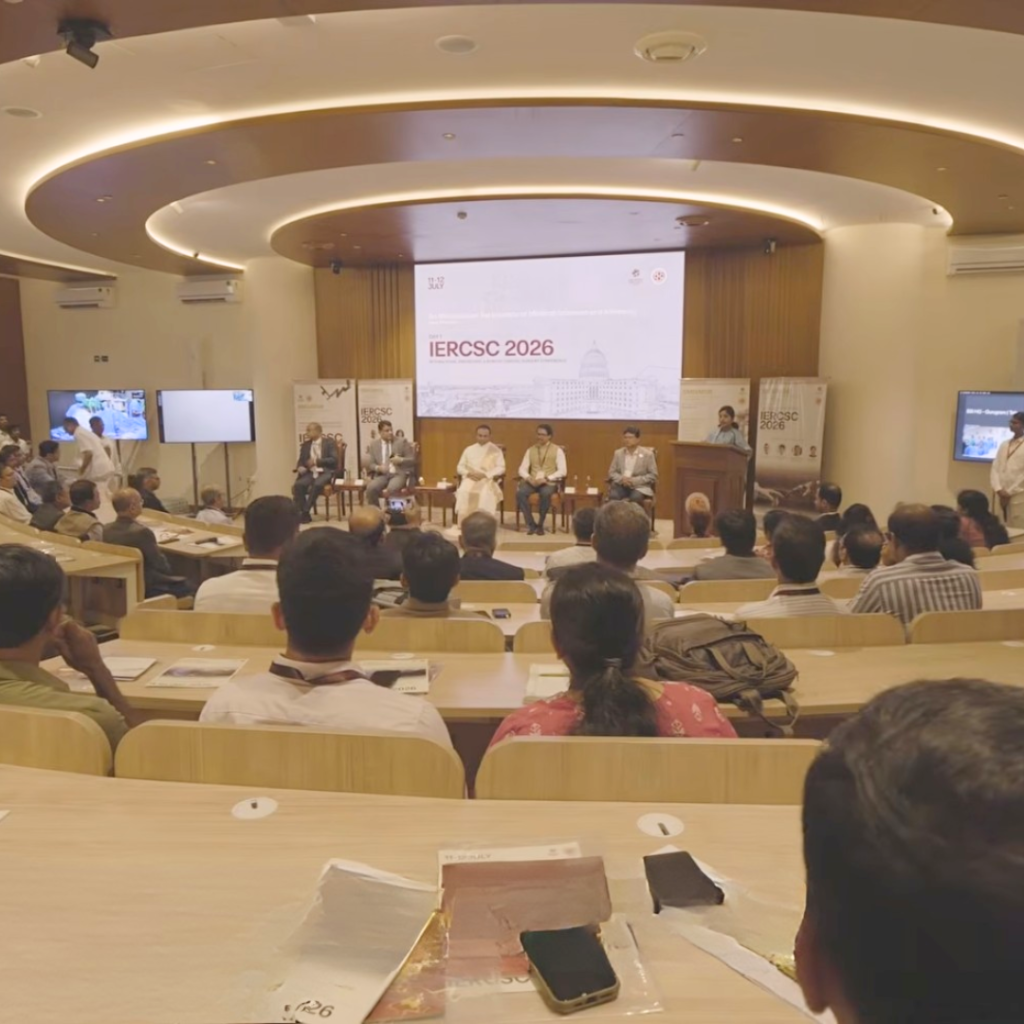
There were 256 applicants for the 80 trainee spots. In view of the overwhelming response, the organisers upped the number of spots to 114. Providing world-class surgical education to our young cardiac surgeons, sans financial barriers, was the audacious goal!
To make this possible, the OWOF mission brought together three institutions to organise the event- the CTVS department of its own medical college, the Sri Madhusudan Sai Institute of Medical Sciences & Research (SMSIMSR), the Manipal Hospital Group of Kolkata and the Gurugram based, SS Innovations International.
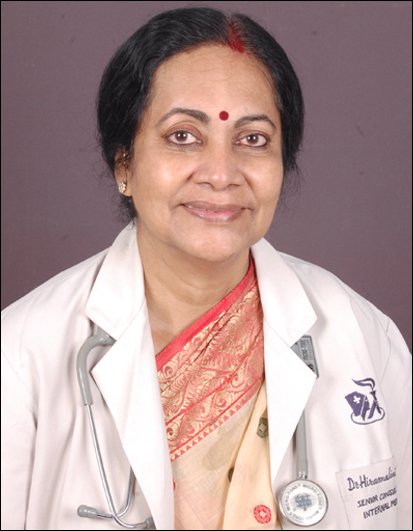
Pioneers and leaders in the field from Germany, Greece, Ukraine, China, Vietnam, Malaysia, Brazil, the USA and host nation, India were brought together at this hybrid super-high-tech conference, by Conference Chairman, renowned Dr Sandip Sardar of the Manipal Group of Hospitals, Kolkata and Conference Secretary, Dr Hiremath, the Head of CTVS, in SMSIMSR.
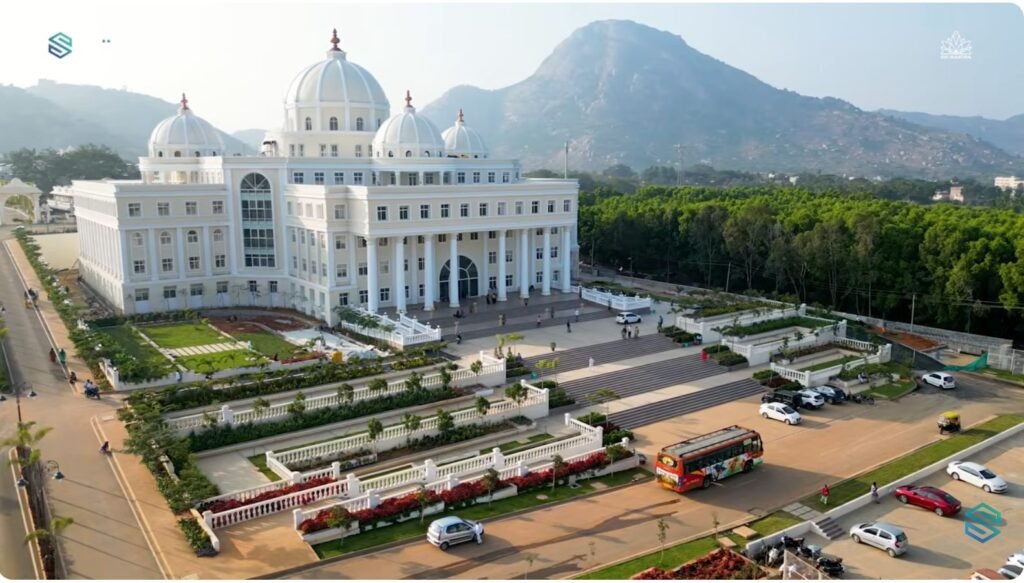
A medical college launched by the OWOF mission, SMSIMSR houses the world’s largest hospital free of any out-of-pocket charges, and is testimony to the idea that healthcare must be democratised.
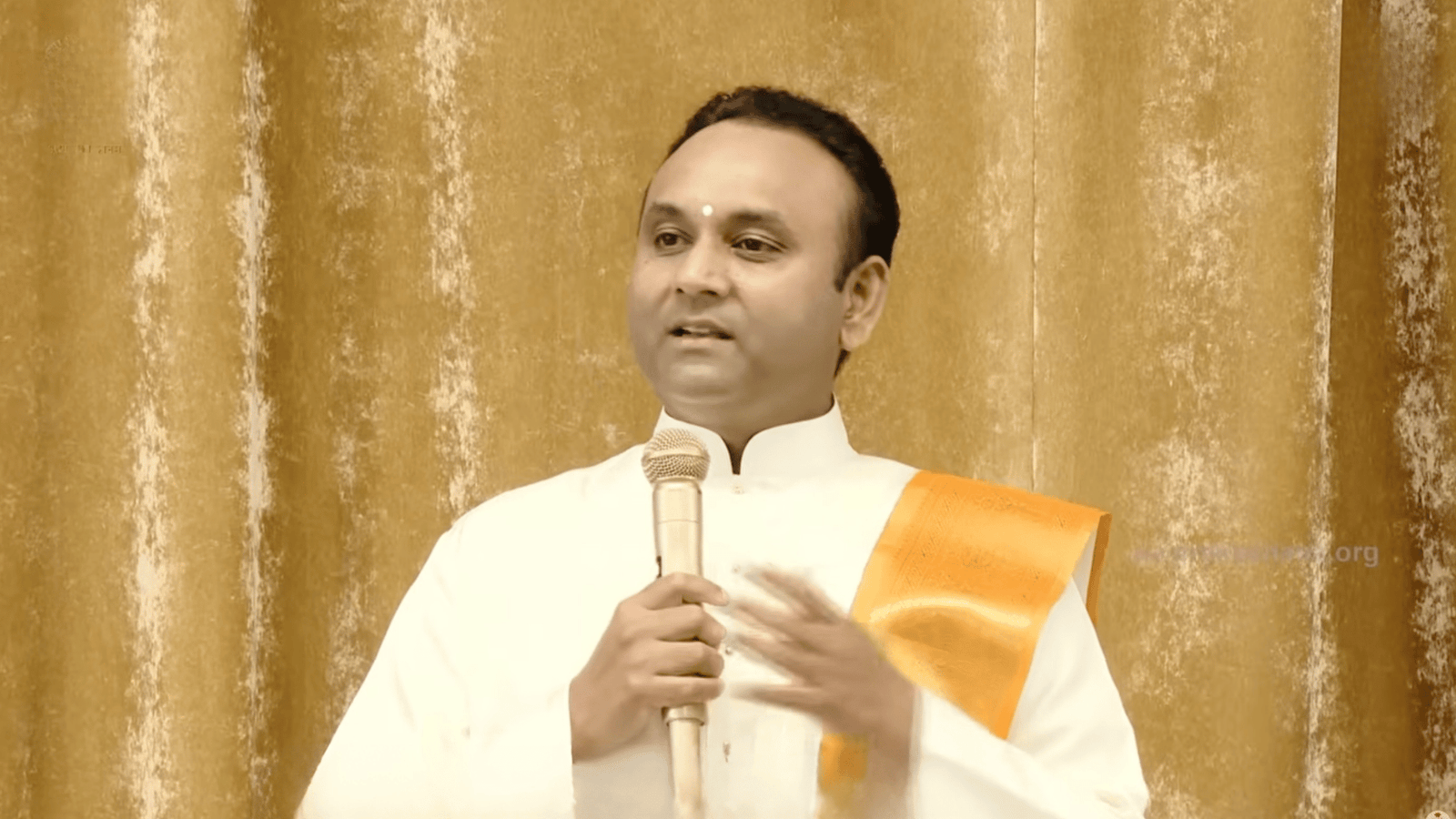
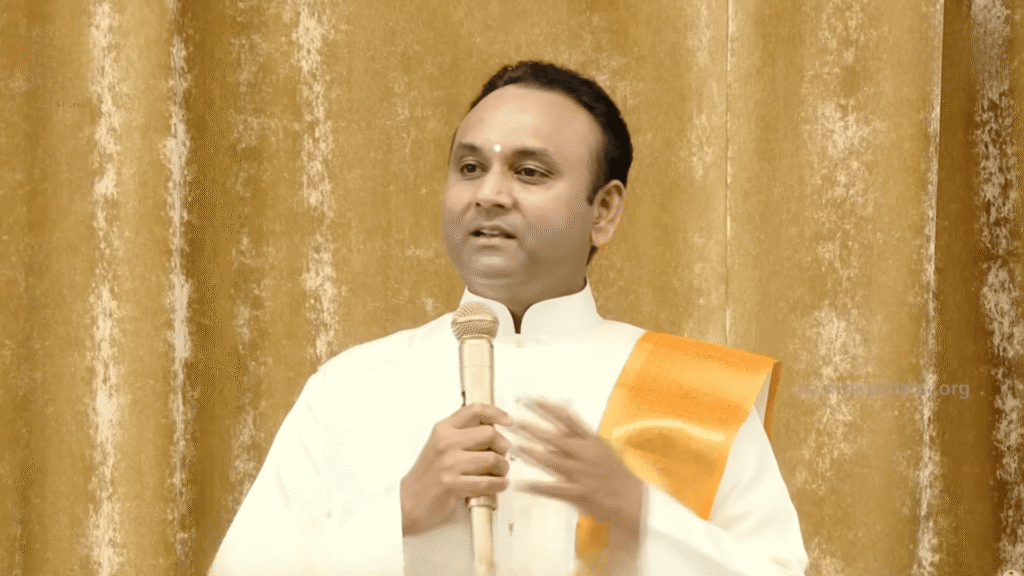
Sadguru Sri Madhusudan Sai, young Founder of the OWOF mission, who believes that science, technology, cutting edge innovations and healthcare can co-exist with compassion, flagged off the conference, stating that clinical excellence and compassion simply had to go hand in hand.
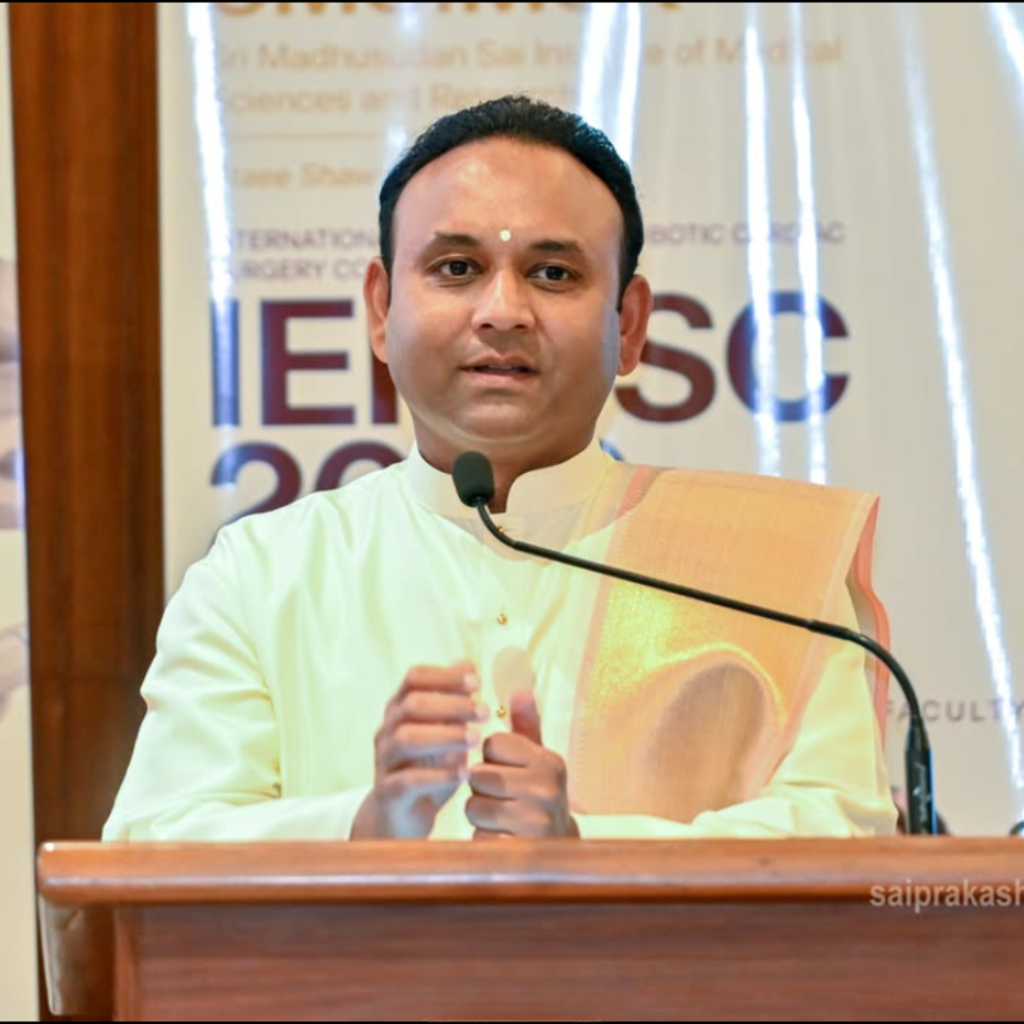
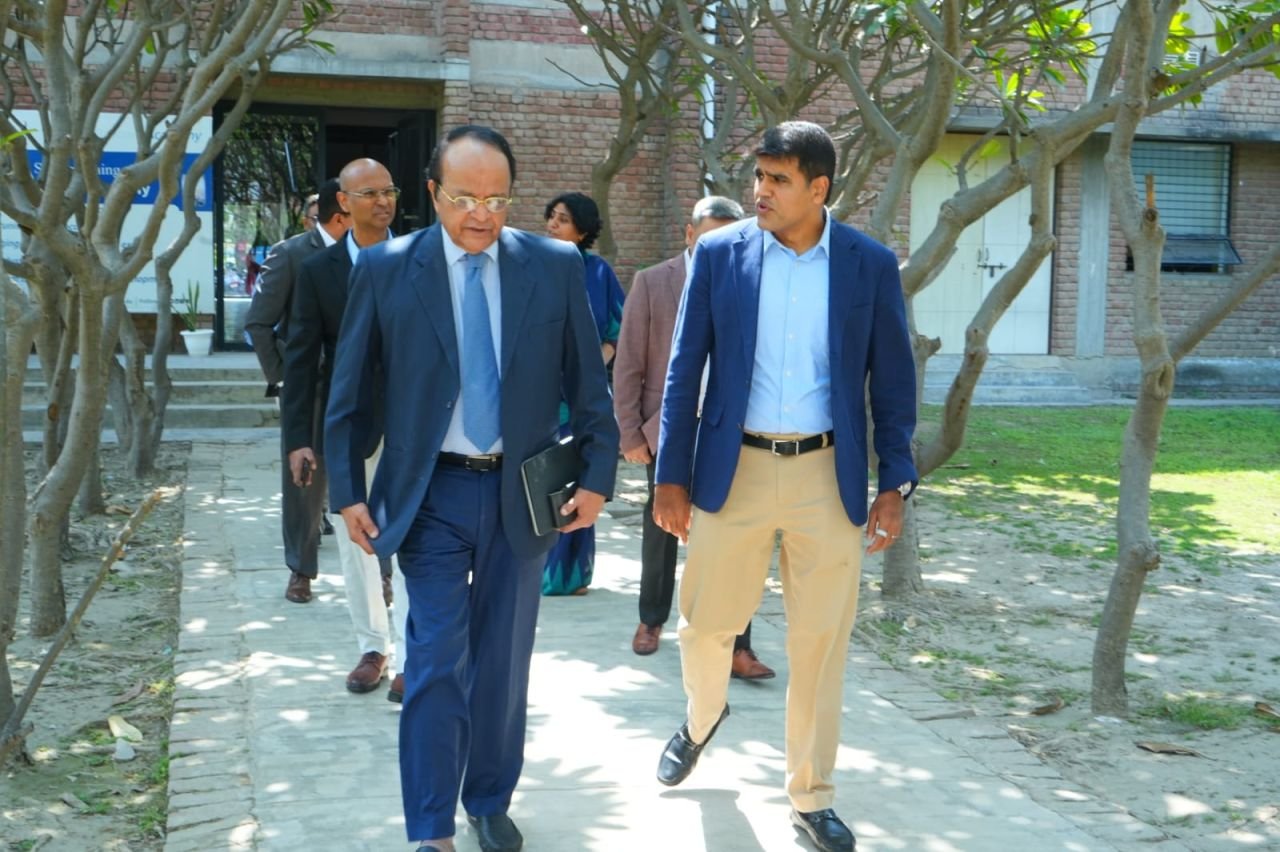
The Chief Guest at the inaugural was Sri Prabhu G, the District Magistrate of Chikkaballapur who offered all assistance to SMSIMSR from the government, for it had put the district on the world map as an ideal healthcare destination.
An MOU between SMSIMSR, the Manipal Group of Kolkata and SSI International of Gurugram with the goal of making India, the global hub for robotic and minimally invasive cardiac surgery, was a high point of the conference.
A Milestone for Medical Collaboration
The IERCSC, with an academic program, that prioritises collaboration, indigenous innovation and technology transfer; with hands-on world class training, free of any charges, to train and groom India’s gen-next of cardiac surgeons is to become a regular biennial feature.
DAY ONE of the conference was marked by live demonstrations. Real time 3D viewing of an aortic valve replacement happening in Greece and mending of a complex congenital heart defect, happening in Coimbatore, using minimally invasive cardiac surgical techniques provided a great learning opportunity.
The piece de resistance was a world record breaking, marathon ten hour long robotic closure of an Atrial Septal Defect by Dr Sudhir Srivastava, Father of Indian Robotic Surgery. He operated robotically, from Gurugram, Delhi, while the patient was in SMSIMSR, in rural Sathya Sai Grama, Karnataka.
Due to thick adhesions, the heart could hardly be seen properly; but with his characteristic never-say-die spirit, Dr Shrivastava persisted and after successful minimally invasive robotic surgery to close an atrial septal defect, the patient was shifted to the ICU; and is doing fine.
The conference also featured scientific sessions and lectures delivered by a star-studded international faculty. A panel discussion on the way forward to make India the global hub for minimally invasive cardiac surgery and robotic cardiac surgery followed.
The panel focussed on ways to support indigenous innovations, strategies for cost reduction through collaborations and global partnerships; technology transfers; and most importantly, capacity building by supporting and training a gen-next of cardiac surgeons, to take over leadership.
The goal – to make affordable, accessible robotic and minimally invasive cardiac surgery, available to the average Indian citizen. Sadguru Sai’s guideline – that competence with compassion, need to be the watch words, was unanimously accepted.
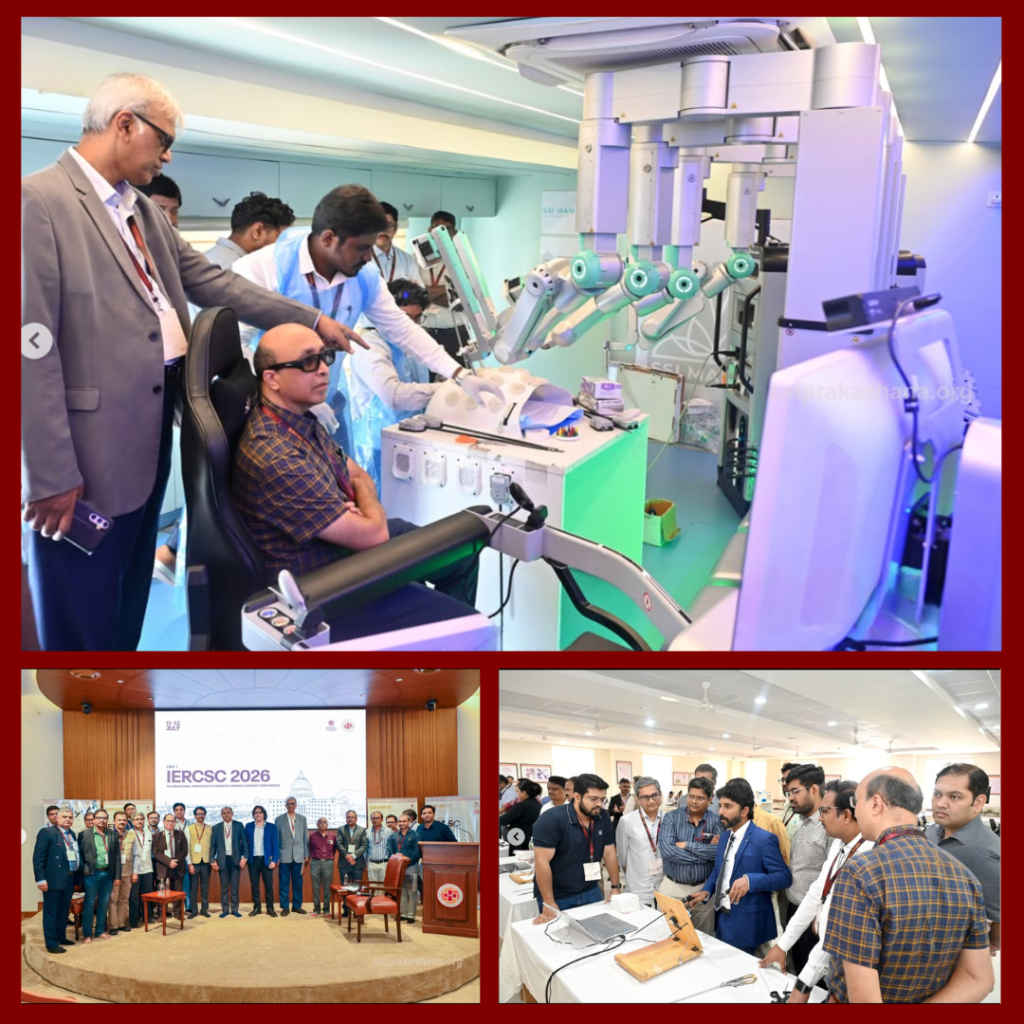
DAY TWO was marked by experiential learning through intensive hands-on workshops. Structured training in minimally invasive endoscopic cardiac surgery through guided simulation on bovine hearts, was led by the faculty. Young cardiac surgeons were put through the paces of minimally invasive operative techniques and endoscopic instrumentation through faculty guided simulation.
In parallel, at the robotic surgery training platform on wheels, a bus modified for the purpose, the trainees went through hands-on experience using porcine hearts, which structurally, are very similar to human hearts.
Upcoming heart surgeons familiarised themselves with robotic system set-ups, instrument control, simulation based robotic surgical techniques, under faculty guidance. Indeed, the conference set a new benchmark in cardiac surgery education.
Nurturing Competent and Compassionate Doctors
SMSIMSR, launched by the OWOF mission in 2023, is an experiment in nurturing competent AND compassionate doctors. The residential medical college offers not just medical education free of any charges, but a Gurukulam-type, values-based, lifestyle and mentorship as well; and this is paying off handsomely.
As the conference concluded, the third year MBBS examination results of the first batch of SMSIMSR came- 100% pass with 100% distinctions! Unheard of, in the annals of medical colleges!
SMSIMSR, clearly is a winner on all fronts – in UG, PG and even super-speciality training, as exemplified by the runaway success of the IERCS Conference. What is more, through SMSIMSR, Sadguru Sai of the ‘One World, One Family’ mission has shown that the democratisation of healthcare and medical education, is no pipe dream. It is possible!