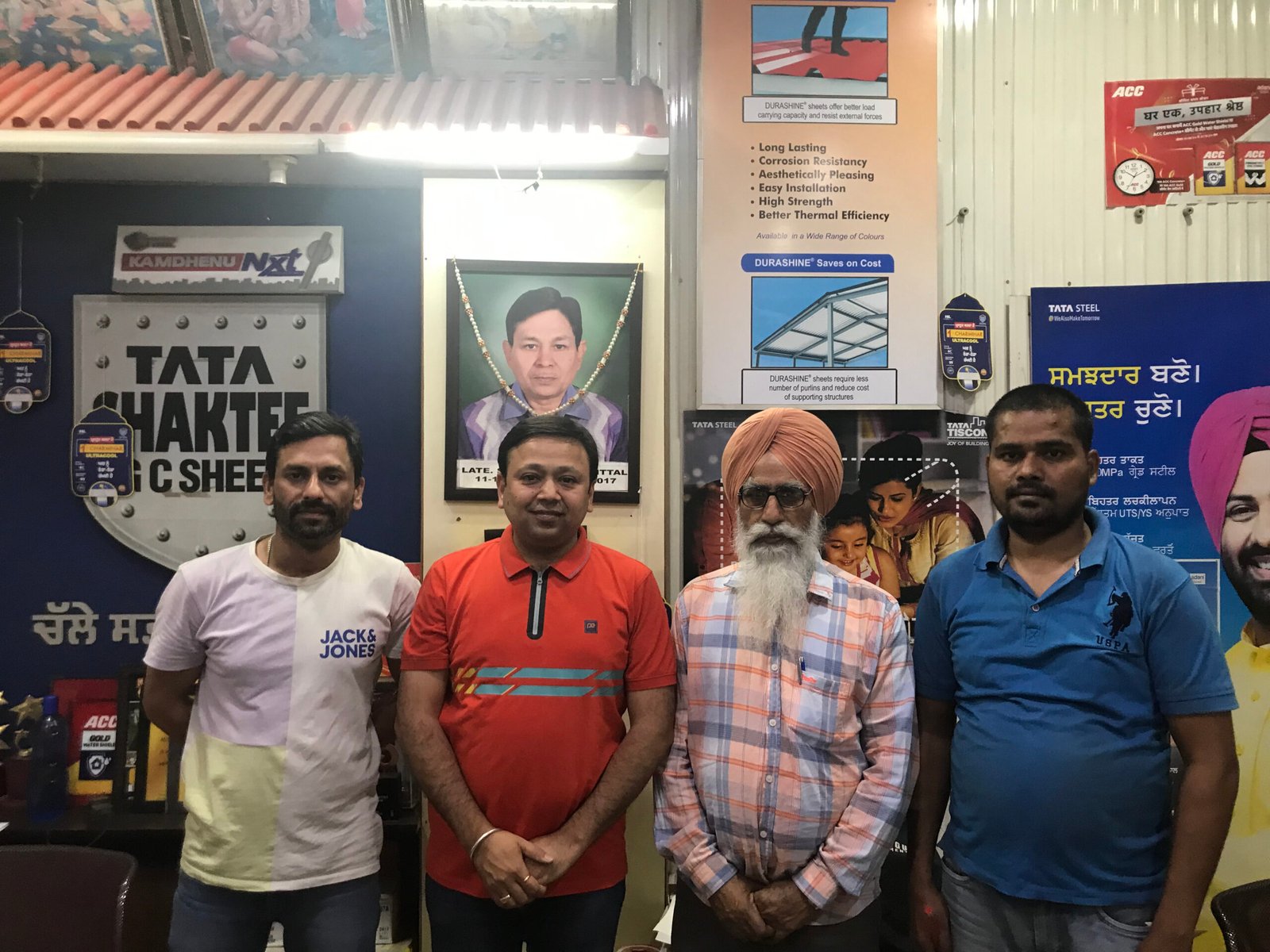


A few months ago, I was sitting with the owner of a traditional sweets business in Bangalore, watching an AI system make sense of months of customer feedback. In less than five minutes, it had done what would once have taken someone an entire afternoon.
Complaints about packaging were grouped together. Delivery issues formed their own cluster. Comments about a new product “not tasting like the original” appeared as a pattern we had not even noticed. It was impressive. It was also incomplete. The AI had found the pattern. But nobody in the room yet knew what it meant.

Was the recipe actually different? Had a supplier changed? Were a handful of unhappy customers amplifying one another online? Or was the business seeing the first signs of a much larger shift in customer expectations? The machine could organise the evidence. Judging its significance was still a deeply human task.
I left that meeting thinking less about artificial intelligence than about expertise. We often imagine expertise as knowing more than everyone else. But watching AI retrieve, sort and connect information so effortlessly made me wonder if we had been measuring the wrong thing all along. Maybe expertise was never just about knowing. Maybe it was about knowing what to do with knowing.
What AI has stripped away
Here is where I have landed. AI has not made expertise obsolete. It has stripped away everything that was never expertise in the first place: the retrieving, the remembering, the organising, the parts of “knowing” that were really just storage. What is left standing, once that layer is gone, is the only part that was ever genuinely hard.
Let us start with what an expert actually is.
Not someone who has all the answers.
Not someone with a flawless memory.
Not someone who can produce the longest explanation in the room.
An expert is someone you turn to when you are faced with a problem you cannot solve on your own. For a long time, we assumed that ability came from knowing more than everyone else. And to a large extent, it did. Expertise was built on three things: deep knowledge of a subject, the ability to retrieve that knowledge when it mattered, and enough experience to know how and when to apply it.
Knowing the rule was one thing. Knowing when the rule did not apply was something else entirely.
For centuries, those three qualities were so closely intertwined that we treated them as one. We called the whole thing expertise. Now, AI has made two of those three nearly free. Knowledge is a search away. Memory, in the sense of hoarding information for later, matters differently when retrieval is instant. What is left standing is the third leg: experience, interpretation, judgement, and the ability to recognise a problem quickly enough to know what to do with it. That is now the difference between an amateur and an expert.
The World Economic Forum’s Future of Jobs Report 2025 makes a similar point from the labour-market side: while AI and big data are among the fastest-growing skill areas, human skills such as analytical thinking, resilience, leadership and collaboration remain critical. World Economic Forum The most future-facing workplaces are not asking only for people who can use tools. They are asking for people who can make sense of the consequences. That distinction is everything.
Information is not understanding
I have watched this play out across every industry I work in: a boutique law firm, a legacy sweets brand, a real estate developer trying to qualify leads at scale. The retrieval problem that used to take a junior team days now takes minutes. What is left once that layer is gone is quieter, and was always the harder part.
When I built an automated system to organise leads for a real estate client, the AI could tell within seconds which contacts looked “warm,” based on past enquiries and browsing behaviour. The output was fluent, confident and instant.
But it had no idea that one of those warm leads was a repeat browser who had been burned by a builder before and needed reassurance, not another pitch.
It had no idea that another had gone quiet because of a family emergency that had nothing to do with the property at all.
It had no instinct for human hesitation.
A fluent answer is not the same as an accurate one.
An accurate answer is not the same as a wise one.
AI can tell you what the data says. It cannot always tell you what the data does not say: the history behind a customer’s hesitation, the risk that a confident recommendation is confidently wrong, the politics inside an organisation, the emotional temperature of a relationship, or the small human detail that changes what the answer should mean.

That gap used to be invisible, because finding information at all took so much effort that nobody had time to notice what it was missing.
Now that retrieval is instant, the missing part is the only part left for a human to supply.
This is where businesses often get AI wrong. They think the value lies in faster answers. Often, the real value lies in making the absence of judgement more visible.
The question has become the real skill
Here is something I have learned building these systems for clients, over and over: the quality of what an AI gives you is almost entirely downstream of the quality of what you ask it.
I have sat across from clients who wanted “an AI that writes our emails.”
I have also sat across from clients who asked, “Where in our workflow is judgement being wasted on decisions that do not need a person?”
Both are AI projects.
Only one produces something worth having.
The first gives you a slightly faster version of what you already had. The second forces you to understand your own business well enough to know where the real bottleneck is.
This is the sharpest version of the shift.
It used to be enough to know things. Now the differentiator is knowing what to ask, and being able to tell a technically correct answer from a genuinely useful one.
That is closer to judgement than to knowledge, and judgement has always been harder to teach.
The OECD AI Principles frame trustworthy AI around a human-centred approach, including transparency, robustness, accountability and respect for democratic values. OECD NIST’s AI Risk Management Framework similarly emphasises that trustworthy AI must be valid and reliable, safe, secure, accountable, transparent, explainable, privacy-enhanced and fair.
These frameworks matter because they remind us that intelligence is not just output.
It is process.
It is context.
It is accountability.
And in most real organisations, the person asking the question is already shaping the answer.
What automation actually frees up
There is a version of this conversation that treats automation as simply cutting cost or headcount.
I do not think that is the interesting story. In many cases, it is not even the accurate one.
When I have helped businesses automate the repetitive layer, sorting feedback, drafting first-pass responses, pulling together a daily summary from scattered sources, the people involved get pushed toward the parts of the job that always mattered most and used to get the least attention.
A relationship manager who no longer spends an hour compiling a report can spend that hour talking to the client about what it means for them.
A lawyer freed from manually searching case files can spend more time on the argument itself: the part that requires understanding a specific judge, a specific client’s risk tolerance and a specific moment in the dispute.
A business owner who no longer has to manually read every complaint can instead ask the harder question: what pattern are we seeing, and what does it say about how our customers are changing?
Automation, done well, does not remove expertise from the room. It removes the clutter sitting on top of it.
What is left, uncomfortably often, is a much clearer view of how much real decision-making skill and insight a business actually had once the busywork stopped disguising the gap.
In that sense, AI does not only automate work.
It audits work.
It reveals which parts of a process needed intelligence, and which parts were only demanding time.
Expertise is no longer locked behind access
There is a flip side to this that makes me hopeful rather than uneasy.
For most of history, being an expert required more than sharp thinking. It required access: to education, institutions, libraries, mentors, time and permission.
It required years of unpaid or underpaid effort spent building a knowledge base nobody would recognise until you had finished the official journey.
Plenty of sharp minds never got called experts simply because they never got the access.
I think of this whenever I work with a small business owner who clearly has excellent instincts, but never had the formal training to be recognised as strategic.
AI is quietly changing who gets to cross that line.
Someone with real critical thinking but no institutional access can now retrieve the knowledge leg almost instantly and spend their energy on judgement and pattern recognition instead.
I have watched sharp operators start to look like strategists once the retrieval burden lifts off them.
The expertise was probably always there.
It just did not have anywhere to show itself.
This may be one of AI’s most important cultural effects. It could weaken the monopoly that formal systems have long held over expertise. It may allow more people to enter serious conversations, not because they suddenly know everything, but because they can finally reach the information layer quickly enough to reveal the quality of their thinking.
That is democratising.
But it is also destabilising.
Because once access is no longer the main barrier, we will need better ways to judge judgement itself.
The apprenticeship problem
There is another consequence we are not talking about enough.
If AI removes the repetitive layer too quickly, how will people learn the judgement that comes after it?
A junior lawyer learns by reading bad drafts, old files, contradictory precedents and small mistakes. A marketer learns by studying what customers actually said before turning it into a campaign. A business analyst learns by cleaning messy data and noticing where the numbers do not behave.
Much of this work is tedious.
But some of it is formative.

If we automate all of it away, we may free people from drudgery while also removing the apprenticeship through which judgement was built.
This is the real design challenge for organisations. The question is not simply, “Can this task be automated?” Often, it can.
The better question is: “Was this task only labour, or was it also training?”
If a young professional never wrestles with raw material, will they know when a polished AI summary has missed something important? If they never struggle through the mess, will they recognise when the clean version is too clean?
The next generation of experts may need a new kind of apprenticeship: not one built around memorising and retrieving, but around questioning, testing, doubting and interpreting machine-generated work.
The expert of the future may be trained less by being asked to remember and more by being taught how to inspect.
The risk nobody is pricing in
There is a cultural cost worth naming honestly, because it is the part that worries me most in my own work.
When answers come this easily, we get impatient with uncertainty.
If a system gives you a response that is polished, self-assured and immediate, it takes real discipline to stop and ask whether that response is right, or just plausible-sounding.
I have seen it with clients directly. A dashboard produces a clean-looking insight, and the instinct is to act on it immediately because it looks so finished.
The polish of the output gets mistaken for the reliability of the conclusion.

The old, slow way of finding things out had an accidental safeguard built in. It took long enough that you had time to doubt yourself along the way.
Instant answers remove that friction.
And friction, it turns out, was doing quiet, unglamorous work.
It was where scepticism used to live.
The Stanford AI Index 2026 notes that as AI advances, governance frameworks, evaluation methods, education systems and data infrastructure are struggling to keep pace with the speed of the technology. That gap is not only technical. It is cultural.
Our systems are becoming faster than our habits of verification.
That is dangerous because a wrong answer delivered slowly invites scrutiny. A wrong answer delivered instantly and beautifully can start to feel like authority.
The new expert is slower than the machine
So what does expertise mean now?
I do not think expertise has disappeared. I think it has been revealed.
Everything that was never really expertise, the remembering, the retrieving, the organising, has been stripped away because a machine can now do those things in seconds.
What is left is what was always the real thing: asking the sharper question, recognising context, noticing what a fluent answer leaves out, and having the discipline to sit with an uncomfortable “I am not sure yet” instead of accepting the first confident response on the screen.
So, what does an expert look like today?
Not the person with the fastest answer.
Not the one who sounds the most certain.
Not the one who can produce the most information.
The expert is the one who sees what others overlook, asks the question nobody else thought to ask, and knows when an answer, however polished or persuasive, deserves a second look.
Instant access to knowledge is now the baseline.
What separates the expert is judgement: the ability to decide what matters, what does not, and what consequences may follow.
That is not a small shift. It changes how we should educate children, hire professionals, design businesses and assess leadership.
A school that still rewards only memory is preparing students for a world that has already moved.
A company that rewards only speed may confuse activity with understanding.
A leader who treats AI outputs as answers rather than invitations may become more efficient and less wise at exactly the same time.
From knowledge workers to judgement workers
For decades, we have spoken about the “knowledge worker.”
The phrase made sense in a world where knowledge was scarce, expensive and unevenly distributed. The person who could access, retain and apply information had power.
But we may now be moving into the age of the judgement worker.
This does not mean knowledge no longer matters. It means knowledge is no longer enough.
The judgement worker knows how to work with abundant information without drowning in it. They know how to ask what the system has not seen. They know when to trust the model, when to test it, and when to walk away from its recommendation entirely.
They know that a customer is not only a cluster.
A legal issue is not only a precedent.
A business decision is not only a dashboard.
A human problem is not only a pattern.
This is where the Knobles question sits.
AI is not only changing work. It is changing the cultural status of knowing. It is changing who gets to be called intelligent, who gets to participate in expert conversations, and what kinds of human qualities become more valuable when information becomes abundant.
The future may not belong to people who know the most.
It may belong to people who can think best in the presence of too much knowledge.
What remains human
For centuries, expertise was measured by what a person carried in their head.
Perhaps, for the next century, it will be measured by the quality of the conversations they can have with an intelligence that remembers almost everything.
Because when knowledge becomes abundant, judgement becomes the scarce resource.
We just could not see it until memory became free.
The machine can retrieve.
The machine can summarise.
The machine can cluster, draft, compare and predict.
But the human being must still ask: Does this matter? What is missing? Who is affected? What happens next? What are we assuming? What should we not automate? What would wisdom do with this answer?
That may be the real test of expertise now.
Not whether we can compete with the machine’s memory.
But whether we can protect the human capacity that memory was never able to replace.
Judgement.