
How Climate Change Is Forcing the World to Rethink Construction
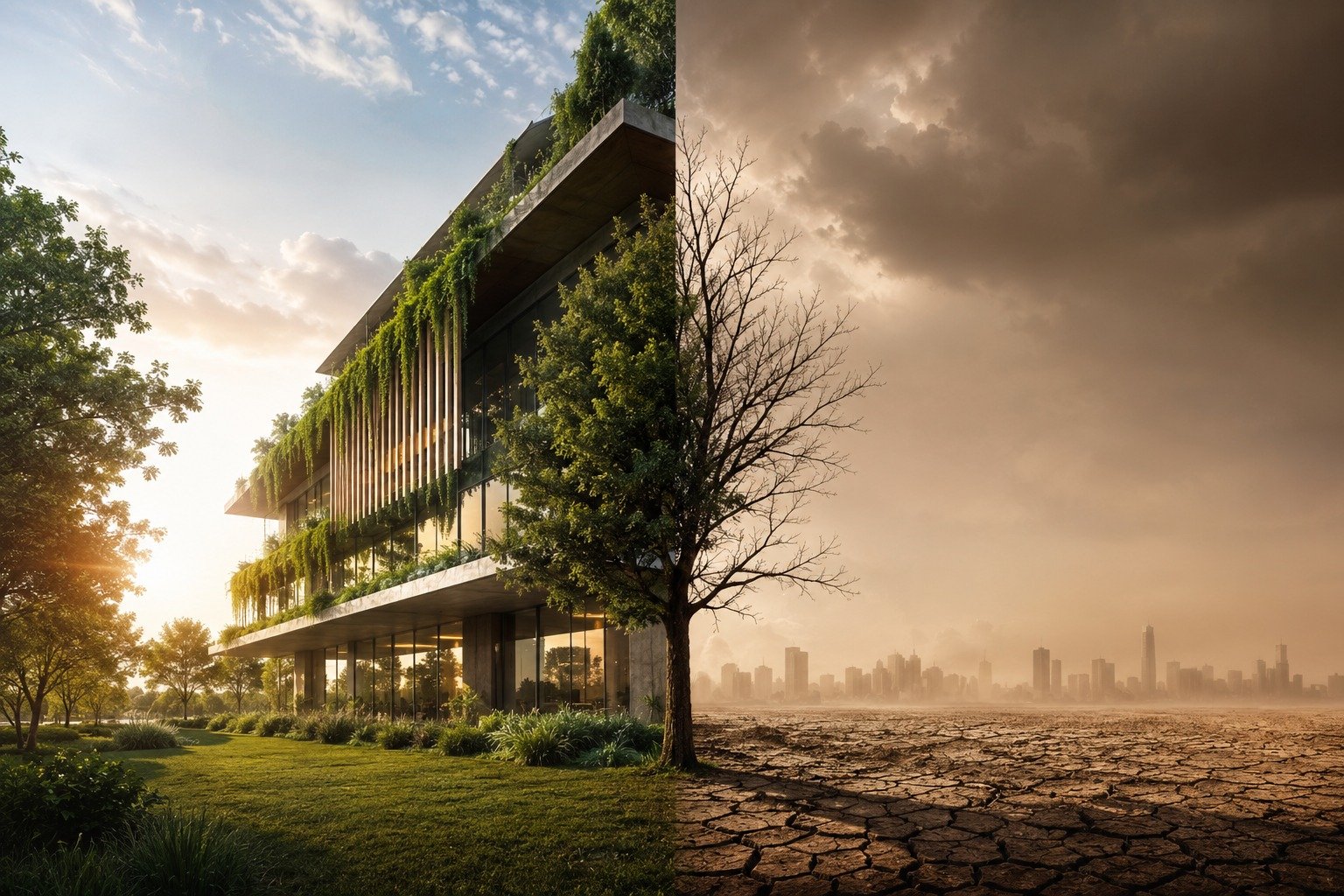
From London’s overheating homes to India’s forgotten architectural wisdom, climate change is exposing a hard truth: the buildings we once considered efficient may no longer be fit for the world we’re entering.
On a warm June evening in London, a young couple did something that would have seemed absurd a decade ago. They packed pillows, a bedsheet, and a portable fan, and went to sleep in their living room. Not because their bedroom was under renovation. Not because the power had failed. It was simply too hot to sleep upstairs.
By midnight, the temperature inside their top-floor apartment had climbed above 30°C. Windows were open, fans were running, yet the heat refused to leave. The building, designed to retain warmth through long British winters, was now doing exactly what it was built to do – holding onto heat in a world that is getting hotter.
Across London, this is becoming increasingly common. Homes once celebrated for energy efficiency are now turning into heat traps in summer. Ironically, many were designed only recently, under climate assumptions that no longer hold.
The problem isn’t poor construction. The problem is a changing climate.
In 2026, the Greater London Authority warned that around one million homes in the capital are at high risk of overheating, alongside more than 1,300 schools, 60 hospitals and over 350 care homes in vulnerable areas. The realization is reshaping how cities think about architecture itself.
A quiet but fundamental question is emerging across the world:
“The biggest threat to our buildings is no longer age. It’s the weather they were designed for.”
The blueprint has changed
Architecture has always relied on the past. Historical rainfall shaped drainage systems. Average temperatures guided insulation. Prevailing winds influenced design. But climate history is no longer a reliable guide.
According to the World Meteorological Organization (WMO), the last decade has been the warmest on record globally. The United Nations Environment Programme (UNEP) notes that cities are warming at nearly twice the global average due to urbanisation and the urban heat island effect. By 2050, up to 1.6 billion urban residents could face dangerous levels of extreme heat if current trends continue. Yet many cities are still being designed as if those trends do not exist. It is like drawing maps for a sea that has already shifted.
London: when efficiency becomes vulnerability
Much of Britain’s housing stock was built for cold, damp winters. Airtight construction, thick insulation and compact layouts were designed to preserve heat. Those same features now trap it.
During recent heatwaves, indoor temperatures in some London apartments stayed dangerously high even at night, making it difficult for residents to recover from daytime heat stress. Public health researchers increasingly identify overheating as one of the fastest-growing housing risks in the UK.
Air conditioning may appear to be a solution, but it introduces new problems. It increases electricity demand and adds waste heat to already warm urban environments. In effect, it cools interiors while warming cities further. It is a short-term fix for a structural design flaw.
India already knew the answer
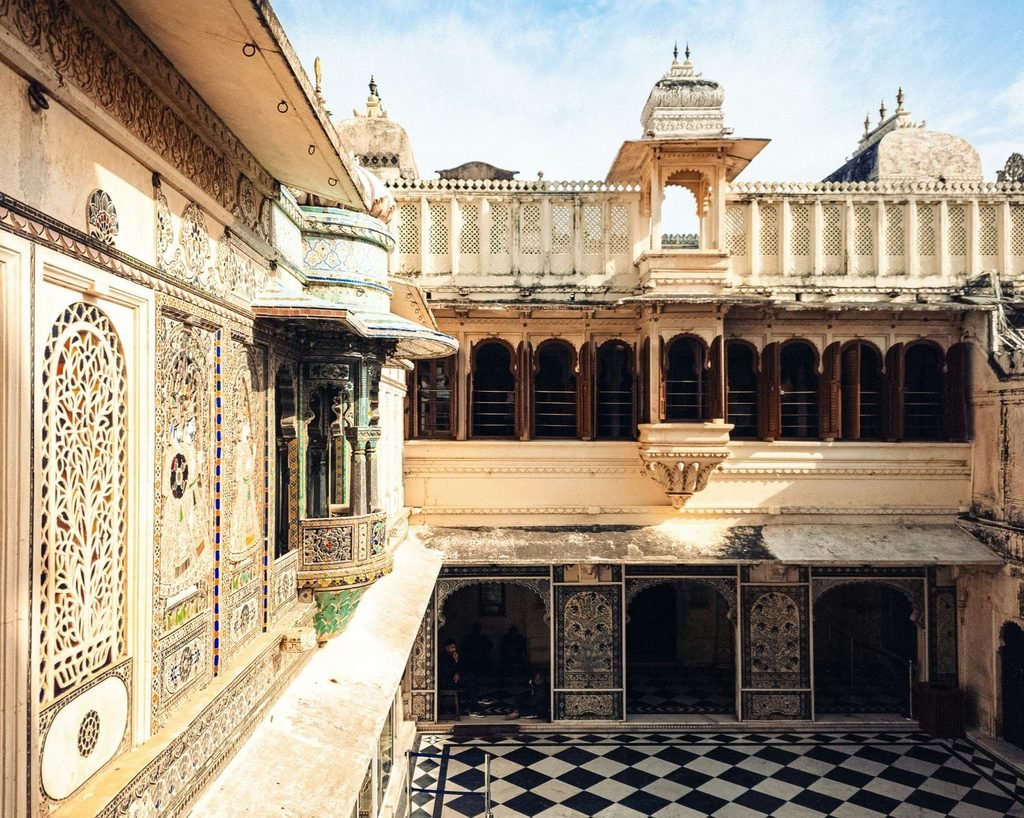
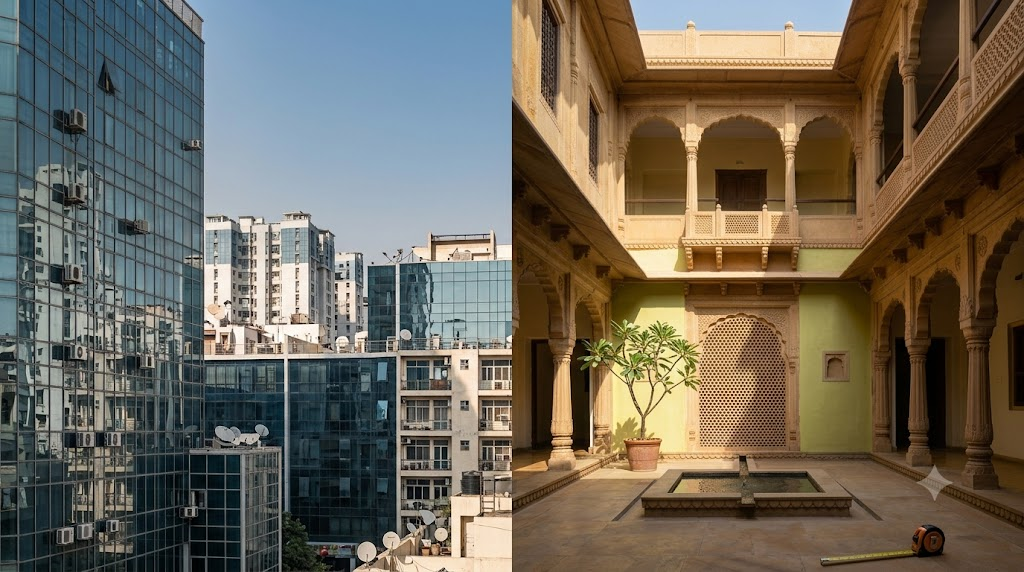
Some of the most effective climate strategies are not new; they are forgotten. Across traditional Indian architecture, passive cooling was embedded into design long before mechanical systems existed. Courtyards in Rajasthan pulled hot air upward. Thick lime-plastered walls slowed heat transfer. Deep verandas shaded interiors. Jaalis filtered sunlight while allowing airflow. High ceilings helped heat rise above living spaces.
These were not aesthetic decisions. They were climate technologies. Some of the smartest climate solutions aren’t new; they’ve been hiding in traditional architecture for centuries.
In contrast, many modern Indian cities have moved toward glass-heavy construction that absorbs heat and depends almost entirely on air conditioning. The result is a rising energy burden in rapidly growing cities. According to the World Bank, nearly 40% of India’s population will live in urban areas by 2036, intensifying pressure on housing and infrastructure to remain livable under rising temperatures.
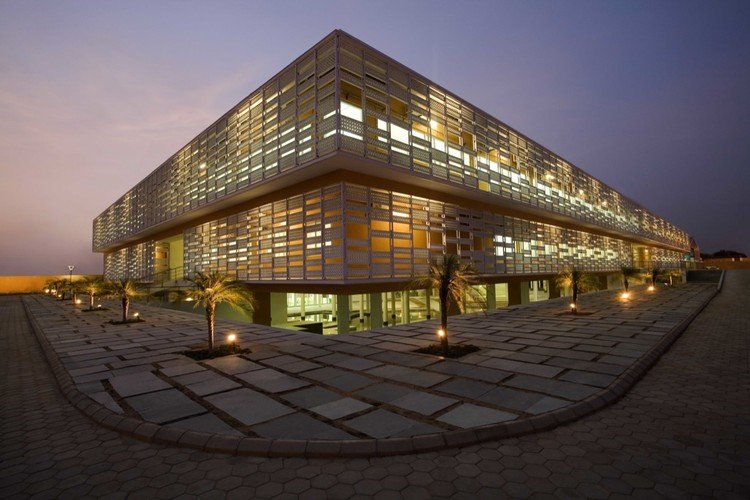
Some responses are already emerging. Cities like Ahmedabad have introduced Heat Action Plans combining early warnings, public communication and urban cooling measures, models now studied across South Asia. There are also examples of modern reinterpretation. The Pearl Academy campus in Jaipur, designed by the award-winning Indian architecture firm Morphogenesis, uses perforated façades and shaded courtyards inspired by traditional jaali systems. The building reduces solar gain while enhancing natural ventilation, proving that climate-responsive design does not require new technology, only renewed thinking.
Dubai: designing cities that resist heat
Walk through Expo City Dubai on a summer afternoon, and something feels strangely out of place. The temperature outside hovers above 45°C. By every expectation, the streets should be deserted. Yet people are walking between buildings, lingering in shaded plazas and gathering at outdoor cafés.
It isn’t magic. It’s design.
At Expo City Dubai, streets are designed to reduce direct sun exposure, shaded walkways connect public spaces, and district cooling systems supply chilled water across entire zones instead of individual air-conditioning units. Native plants replace water-intensive landscaping, reducing both heat and resource demand.
The principle is simple but powerful: prevent buildings from heating up in the first place. In a warming world, cooling is no longer just a building issue. It is an urban planning challenge.
Europe: a quiet architectural transformation
For centuries, Europe’s skylines have been defined by cathedral spires, terracotta rooftops and centuries-old stone buildings. Now, they’re being rewritten. Not by architects chasing the next iconic skyscraper, but by climate change.
White rooftops are being introduced to reflect sunlight. Green roofs are spreading across residential and commercial buildings, lowering surface temperatures while improving insulation. Trees are being planted not just for aesthetics, but because shaded streets can be several degrees cooler during heatwaves.
In Paris, one of the most ambitious transformations is underway beneath the surface. The city is expanding a district cooling network that uses naturally cool water from the River Seine to regulate building temperatures. By 2042, it is expected to serve over 3,000 buildings while significantly reducing electricity use and emissions compared to conventional cooling systems.
Europe’s approach reflects a broader shift: resilience is not about replacing old cities, but adapting them.Cities must learn to breathe again.
The most dangerous material is assumption
For decades, buildings were designed with one core assumption: that they would experience relatively stable climate conditions over their lifespan. That assumption is now obsolete.
Buildings constructed today will face heatwaves, energy demands and weather extremes far beyond historical norms. According to the International Energy Agency (IEA), air conditioners and fans already account for nearly 20% of global electricity use in buildings. Meanwhile, UNEP estimates that buildings contribute around 37% of global energy-related CO₂ emissions.
Continuing to solve overheating with more cooling systems alone risks locking cities into a cycle of rising energy use and emissions. The challenge is no longer just architectural. It is systemic. The most dangerous material in modern construction isn’t concrete or glass, it’s outdated assumptions.
Building for a different future
Perhaps the greatest misconception about climate change is that it belongs only in environmental reports or international climate summits. In truth, it is already written into our walls.
It determines whether a child can concentrate in a classroom, whether an elderly resident can sleep through the night, whether a hospital remains safe during a heatwave and whether a city can continue to function when temperatures reach levels its designers never imagined.
Every brick laid today is an investment that will last for decades. If we keep building for yesterday’s weather, we’ll keep paying for tomorrow’s climate. The future of architecture is no longer about building bigger or taller. It is about building wisely, for a planet that has already changed.