

From the Knobles Editorial Desk
On the occasion of the birthday of Sadguru Sri Madhusudan Sai, Knobles brings you an exclusive report from Sathya Sai Grama on the International Conference on Values Education 2026.
Held under the aegis of the Sri Sathya Sai University for Human Excellence and the International Institute for Human Values Education, the conference brought together educators, institutions and delegates from across the world around a timely question: what would it take to move from human being to being human?
In an age marked by conflict, anxiety and deep social fragmentation, the event turned its attention to values education not as an abstract ideal, but as a practical educational project. This article reports from the conference through the lens of what was said, launched and discussed over the course of the event.
Inside the International Conference on Values Education 2026 at Sathya Sai Grama
The International Conference on Values Education 2026, held at Sathya Sai Grama under the aegis of the Sri Sathya Sai University for Human Excellence (SSSUHE) and the International Institute for Human Values Education (IIHVE), brought together delegates from 32 countries for a two-day discussion on values-based education.
Organised under the education wing of the One World One Family (OWOF) mission, the conference opened on 23 July with the theme “Human Being to Being Human”. Across inaugural remarks, technical sessions and the valedictory function, the central concern remained consistent: how can education systems respond to a world increasingly marked by violence, fragmentation and moral uncertainty?
A conference framed by urgency
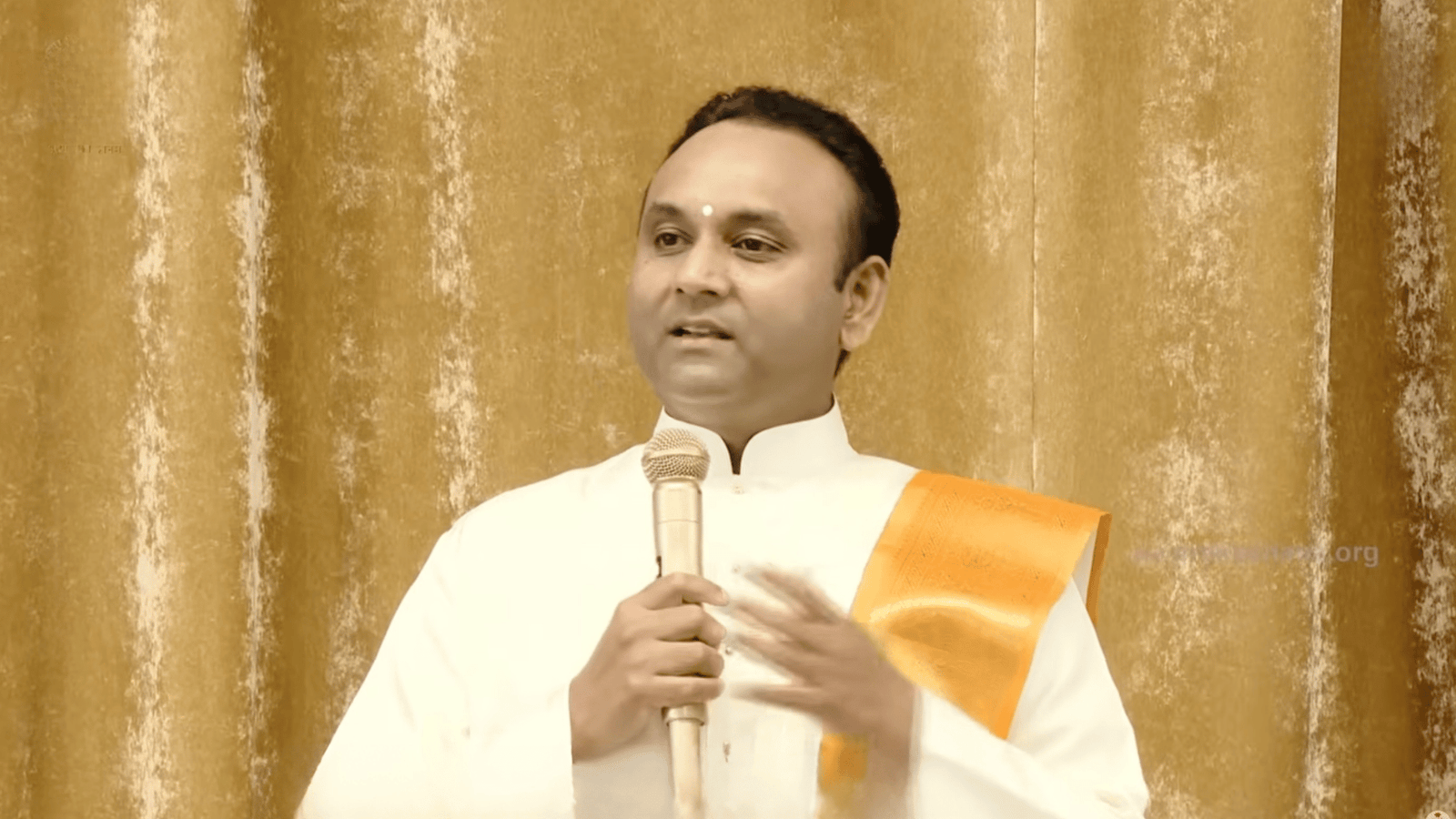
In his opening remarks, Sadguru Sri Madhusudan Sai described the theme as both timeless and urgent. Referring to the wars and unrest affecting different parts of the world, he argued that values education had moved from being an aspirational idea to a pressing necessity.
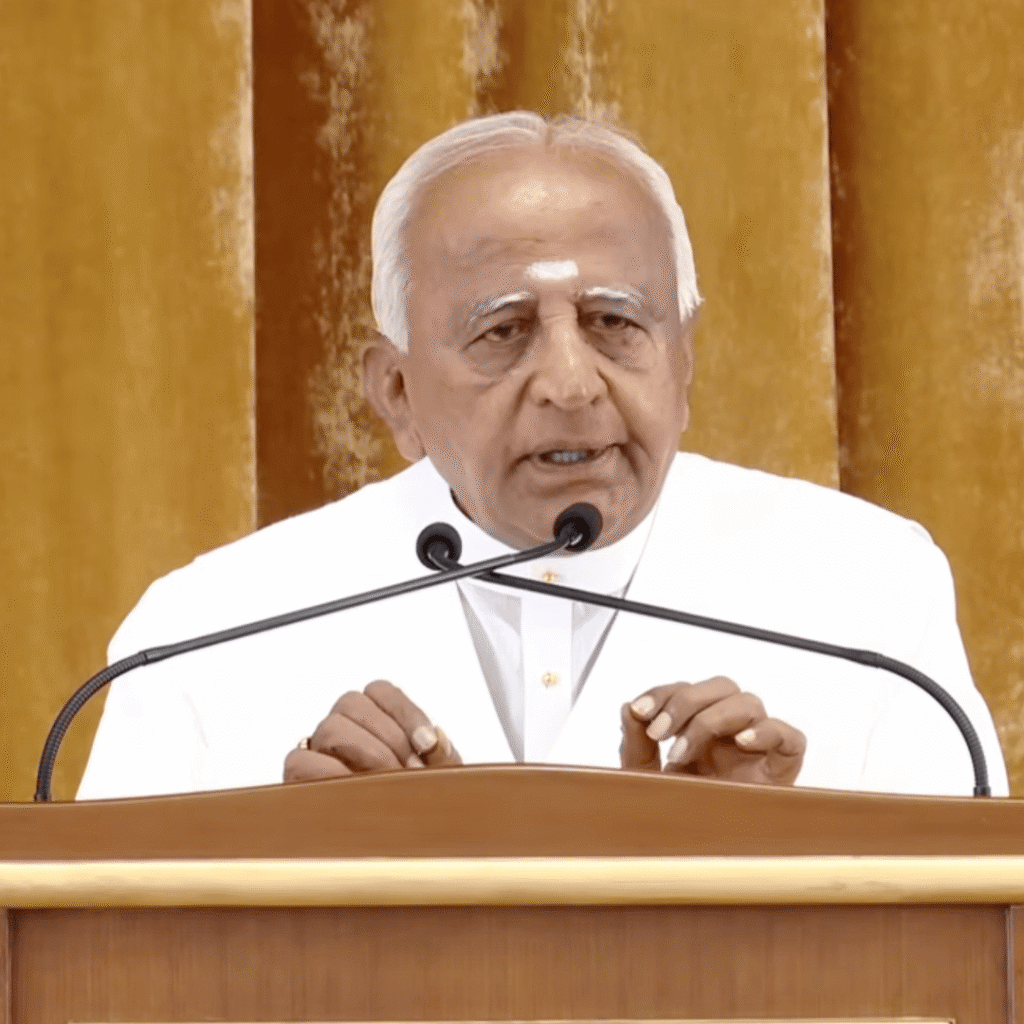
Dr B.N. Narasimha Murthy, Chief Mentor of SSSUHE, similarly spoke of a global deficit in human values, invoking Martin Luther King Jr.’s well-known phrase about a world of “guided missiles and misguided men”. The conference’s opening proposition was clear: if the next generation is to inherit a more humane world, values cannot remain peripheral to education.
A key idea that emerged at the outset was that large-scale social transformation may need to begin with children and youth, and that this in turn requires educators themselves to be prepared for values-based teaching. The OWOF mission’s formulation of this pathway was expressed as “Value Educate the World”, beginning with “Value Educate the Educators.”
From schools to universities
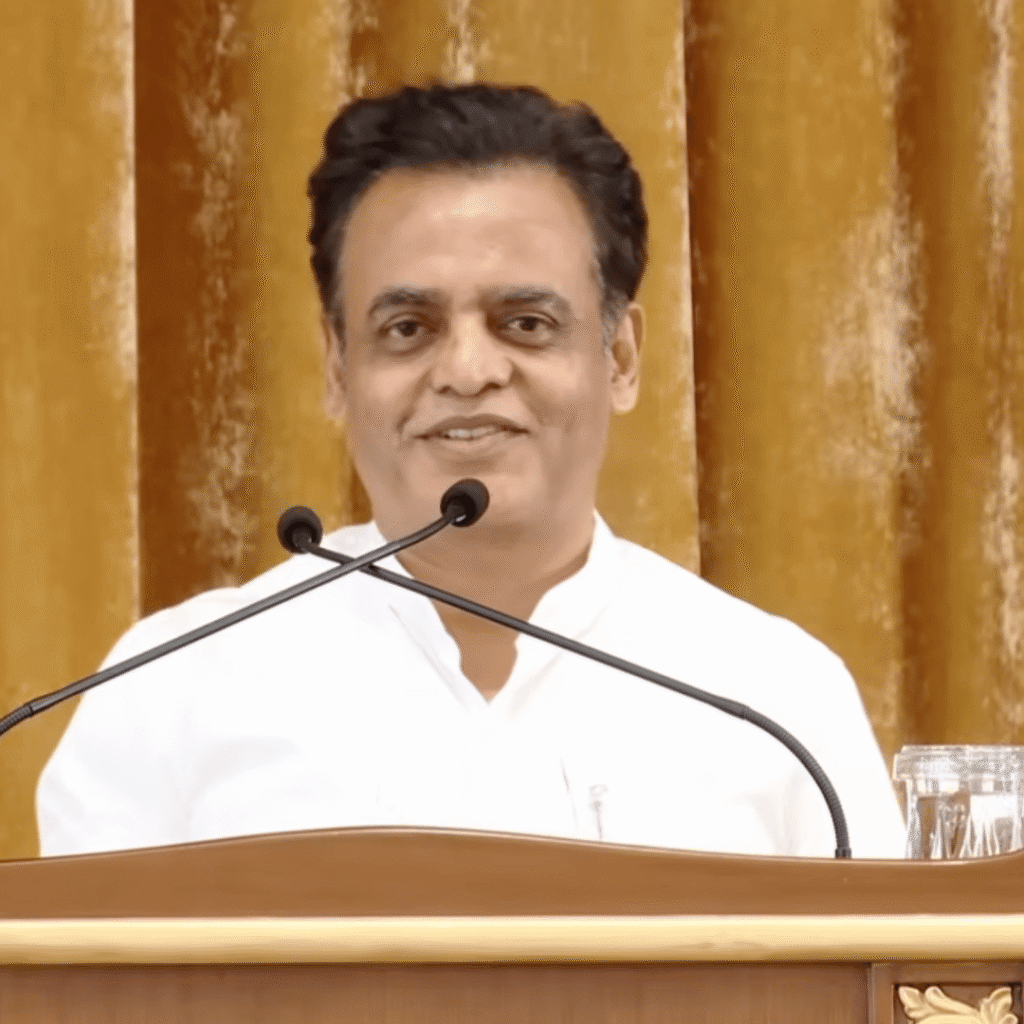
While the conference included school teachers, it also widened the conversation to higher education. Representatives from 19 universities participated, including 18 from India and one from abroad. At the inaugural session, Chief Guest Dr Ashwath Narayan, former Deputy Chief Minister of Karnataka, welcomed the inclusion of higher education in the values education conversation and expressed support for such efforts from the government side.
The education wing of the OWOF mission has long foregrounded human values as a core part of its educational model. At its 27 residential school campuses, speakers said, equal emphasis is placed on Apara Vidya, which is education for a living or academics, and Para Vidya, which is education for life, or human values.
That emphasis continues at the university level as well. SSSUHE, which offers higher education across multiple fields including medical education and does so without charging students, was presented during the conference as a working example of a values-led institutional framework.
Measuring humaneness
One of the distinctive elements discussed at the conference was the attempt to make values education assessable in practical terms.
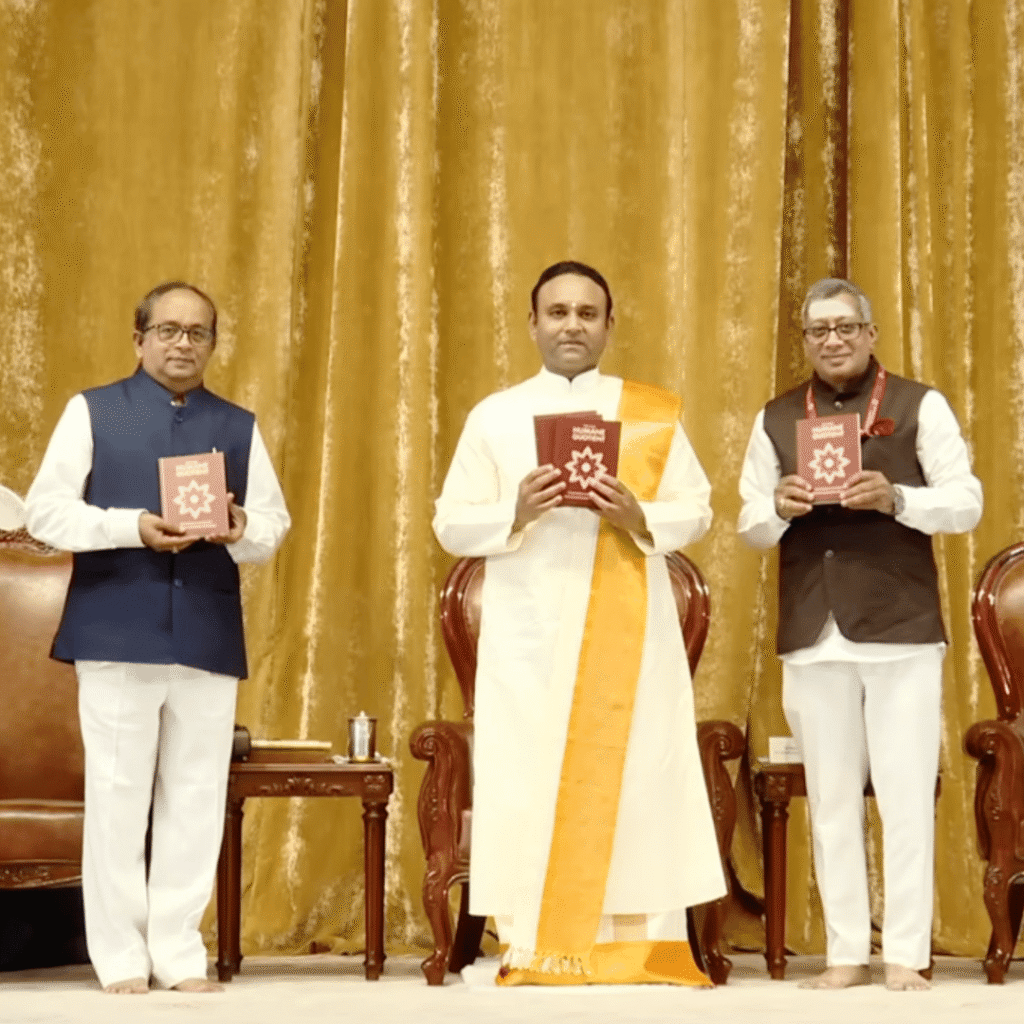
A handbook developed by SSSUHE researchers Dr Thothadri and Dr Sai Krishna was introduced to the global values education team. The framework proposes a “HuQ” or Humaneness Quotient, designed to assess student development across eight core competencies: selflessness, empathy, integrity, acceptance, responsibility, equity, diversity and inclusivity.
According to the conference presentations, this method is already in use at SSSUHE. Students are assessed not only by lecturers and wardens, but also by peers and hostel-mates. A passing evaluation in HuQ is treated as necessary for graduation, and students aspiring to academic gold medals must secure a minimum HuQ score of 80 percent.
The larger argument behind the framework was that academic excellence, while important, cannot be treated as sufficient in itself. The conference repeatedly returned to the proposition that education should also shape character, responsibility and social consciousness.
From self-care to universal care
Another idea highlighted through the conference was a progression in values education: from self-care, to socio-care, to universal care. Speakers suggested that when values are embedded meaningfully, students often move beyond personal advancement toward a broader sense of service.
According to organisers, this has been visible in SSSUHE itself, where many graduating students have chosen to continue working in initiatives related to social uplift. The conference cited this as one indicator that values education, when internalised, can influence life choices beyond the classroom.
The discussion also drew on developments following a National Vice Chancellors Conference held the previous year. Some university leaders, having studied SSSUHE’s model and outcomes, have reportedly begun incorporating similar approaches within their own institutions. The Kodagu University was mentioned as an early adopter.
A question of scale and policy
Despite these examples, speakers also acknowledged that institutional experiments alone may not be enough. For values education to gain wider traction, conference participants argued, there would need to be policy support and stronger cooperation between government, civil society and educational institutions.
Sadguru Sri Madhusudan Sai referred to this as the need for “Sarkar-Samaj-Sanstha” collaboration. The suggestion was that unless human values education becomes more structurally embedded, its implementation may remain uneven and localised.
The pre-conference conversations
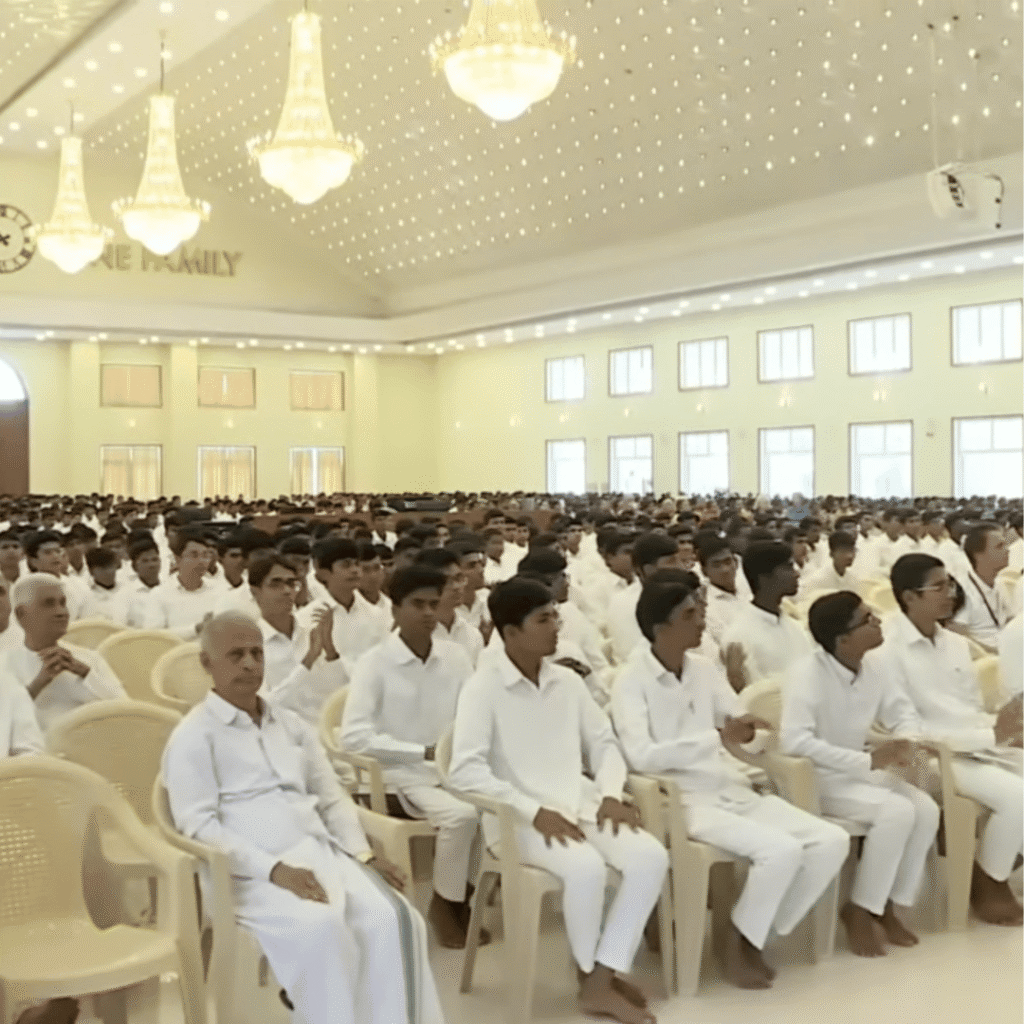
The conference began informally with a pre-conference session in which delegates from over 30 countries shared brief summaries of values education work already underway in their respective contexts. One of the notable exercises during this session was a discussion around what participants considered the most foundational human value.
According to the organisers, unconditional love emerged as the value named most frequently by delegates—around 80 percent of them. Other values mentioned included selflessness, non-violence, peace, empathy, acceptance and inclusivity. There was broad agreement that values education should begin early and continue through adolescence into young adulthood.
From vision to classroom practice
Over the next two days, the conference moved into technical sessions involving presentations, panel discussions, case studies and role-play. Participants came from a wide range of geographies, including Australia, the Middle East, Croatia, India, Slovenia, Nigeria and Brazil.
The sessions focused on translating broad ideals into practical teaching strategies. Among the themes discussed were age-appropriate nurturing of values, classroom methods, implementation challenges and the role of educators not only as teachers but as role models.
A key release during the conference was the 15-volume guide “Be Good, See Good, Do Good”, designed for teachers working with children from ages 3 to 18. Organisers described it as an age-sensitive teaching resource, with adaptations for different countries supported through AI tools.
For higher education, a human values education text for first-year undergraduates was also released as part of the Value Educate Bharat movement.
A new digital platform
Another launch at the conference was the new website of the International Institute for Human Values Education (IIHVE). The platform is intended to serve as a global portal for values education resources and collaboration.
According to the launch announcement, the website will host online courses, curricula and publications, all of which will be available for free download. It is also expected to function as a hub for international collaboration in the field.
The teacher as the medium
If one message recurred most often throughout the conference, it was that values education cannot be reduced to theory or curriculum alone. Repeatedly, speakers stressed that values must be lived by educators if they are to be meaningfully transmitted to students.
This idea was underscored in an unexpected way during the event. Some of Sadguru Sri Madhusudan Sai’s own school teachers, from his years at Kendriya Vidyalaya, BALCO Nagar, arrived at Sathya Sai Grama around the time of the conference inauguration, intending to stay for Guru Purnima. Their presence became part of the conference narrative.
Introducing them to the audience, Sadguru Sri Madhusudan Sai acknowledged their role in shaping his personality and character. In both the inaugural and valedictory settings, he reflected at length on the influence of teachers in his life, not only through subject knowledge, but through encouragement, care, humour, discipline and emotional presence.
He spoke of a history teacher who made historical debate come alive in the classroom and helped shape his public speaking confidence; of a teacher who gave up a personal holiday to accompany students on a picnic; of a music teacher who taught him harmonium and brought joy and aesthetic awareness into student life; of a teacher who responded with gentleness rather than scolding when he arrived injured on sports day; and of an English teacher whose careful correction and encouragement gave him confidence in the language.
He also recalled the influence of his warden at Whitefield, who introduced him to philosophy and spirituality, as well as a sports coach who encouraged him to take up regular physical exercise.
The cumulative point of these recollections was not biographical detail alone. They served as examples of the conference’s central thesis: that the teacher’s role in values education lies as much in example and relationship as in formal instruction.
Love as the foundational value
Throughout the conference, the language of love appeared repeatedly, not in sentimental terms, but as an organising principle from which other values are derived.
Sadguru Sri Madhusudan Sai cited the teaching of Sri Sathya Sai Baba that “there is only one human value, and that is love,” and linked it to the deliberations of the conference, where unconditional love had emerged as the most widely endorsed foundational value.
He went on to describe how different values could be understood as different expressions of love: truth as love in speech, non-violence as love in thought, righteousness as love in action, peace as love in understanding, patriotism as love for the nation, eco-consciousness as love for the environment, service as love for others, and self-awareness as love for oneself.
In his remarks, he also drew a connection between this principle and the growth of the OWOF mission itself, citing its expansion across hospitals, educational institutions, nutrition programmes and centres of human development as evidence of what sustained, selfless commitment can build.
The closing note
At the valedictory function, the Chief Guest was Sri Vishnu Deo Sai, Honourable Chief Minister of Chhattisgarh, the home state of Sadguru Sri Madhusudan Sai. The presence of both the Chief Minister and some of the teachers from BALCO Nagar gave the concluding session a layer of personal and regional resonance.
The vote of thanks was delivered by Ms Bhuvana Santhanam, Head of Global Collaborations at the OWOF mission. Returning to the conference theme, she reiterated the proposition that the movement from “human being” to “being human” ultimately rests on lived values rather than declared intent.
That, perhaps, was the conference’s clearest takeaway. For all the emphasis on frameworks, pedagogy, assessment tools and institutional models, the event repeatedly returned to a simpler claim: values education will matter only to the extent that it is embodied, in classrooms, in institutions and in the conduct of those who teach.





One Response