
By Knobles Editorial Desk
We often speak of compassion as a personal quality: the instinct to help, the willingness to give, the ability to see another person’s suffering as worthy of our attention. But what happens when compassion is made systemic? When it is translated into hospitals, nutrition programmes, schools, livelihoods, supply chains, trained professionals and institutions built to endure?
That is the question at the heart of the One World One Family movement.
At a time when public systems across the world are struggling with unequal access to healthcare, education, nutrition and dignified employment, One World One Family (OWOF) presents a distinctive model. Its premise is spiritual, but its expression is deeply practical: a child must not come to school hungry; a family must not lose a child because they cannot afford cardiac care; a medical student should not begin a life of service under the burden of debt; a young person should not have to leave home simply because opportunity does not exist nearby.
The movement’s scale invites attention. But equally compelling is its attempt to connect service with dignity, professional excellence with values, and institutional growth with an ethic of human belonging. It asks whether development can be more than delivery, whether care can be organised without becoming impersonal, and whether the idea of a shared human family can still guide action in an increasingly fragmented world.
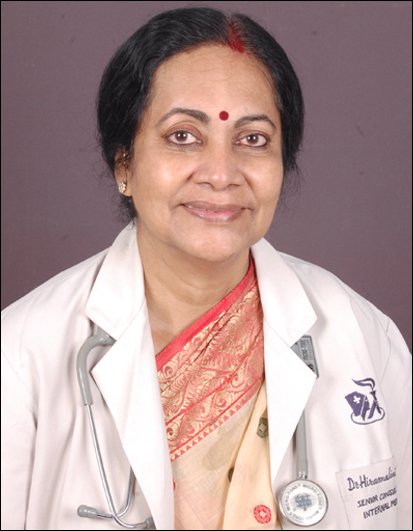
In the essay that follows, Dr Hiramalini Seshadri, a physician whose own life has been shaped by the ethic of service through medicine, traces the vision, work and spiritual lineage of One World One Family. Her account moves through its nutrition, healthcare, education and livelihood initiatives, while locating the movement within the continuing Sai tradition that inspires it.
This is not merely a story about an organisation or a set of institutions. It is an exploration of a larger possibility: that compassion, when sustained by commitment, competence and collective will, can become infrastructure.
ONE WORLD, ONE FAMILY
The continuing Sai mission from Sathya Sai Grama
By Dr. Hiramalini Seshadri
On a school morning, the difference between a distracted child and a child ready to learn can be as simple as a warm, fortified drink. In a rural hospital, the difference between grief and a future can be a cardiac procedure that a family could never otherwise afford. For a bright but poverty-stricken twelve-year-old government school kid, faced with the prospect of dropping out and finding work, this difference, to get values-based, school and university education for free, in world-class residential environs with placements thrown in as well, can feel like manna dropping from heaven. In a village or inner-city community, the difference between resignation and dignity can be a first skill, a first job and the knowledge that someone believes opportunity must not be the privilege of a few.
These are the human consequences of the One World, One Family (OWOF) mission. Across nutrition, healthcare, education and livelihoods, a vast network of service initiatives associated with Sadguru Sri Madhusudan Sai is attempting something audacious: to ensure that birth, geography and income do not decide whether a person can eat well, heal, learn or earn with dignity.
The scale is striking. The mission’s morning nutrition programme now reaches over one crore schoolchildren every day; its healthcare initiatives have completed 3.5 million plus free consultations and over one lakh surgeries globally. Its schools, colleges, hospitals, wellness centres and employment projects are growing across India and several parts of the world.
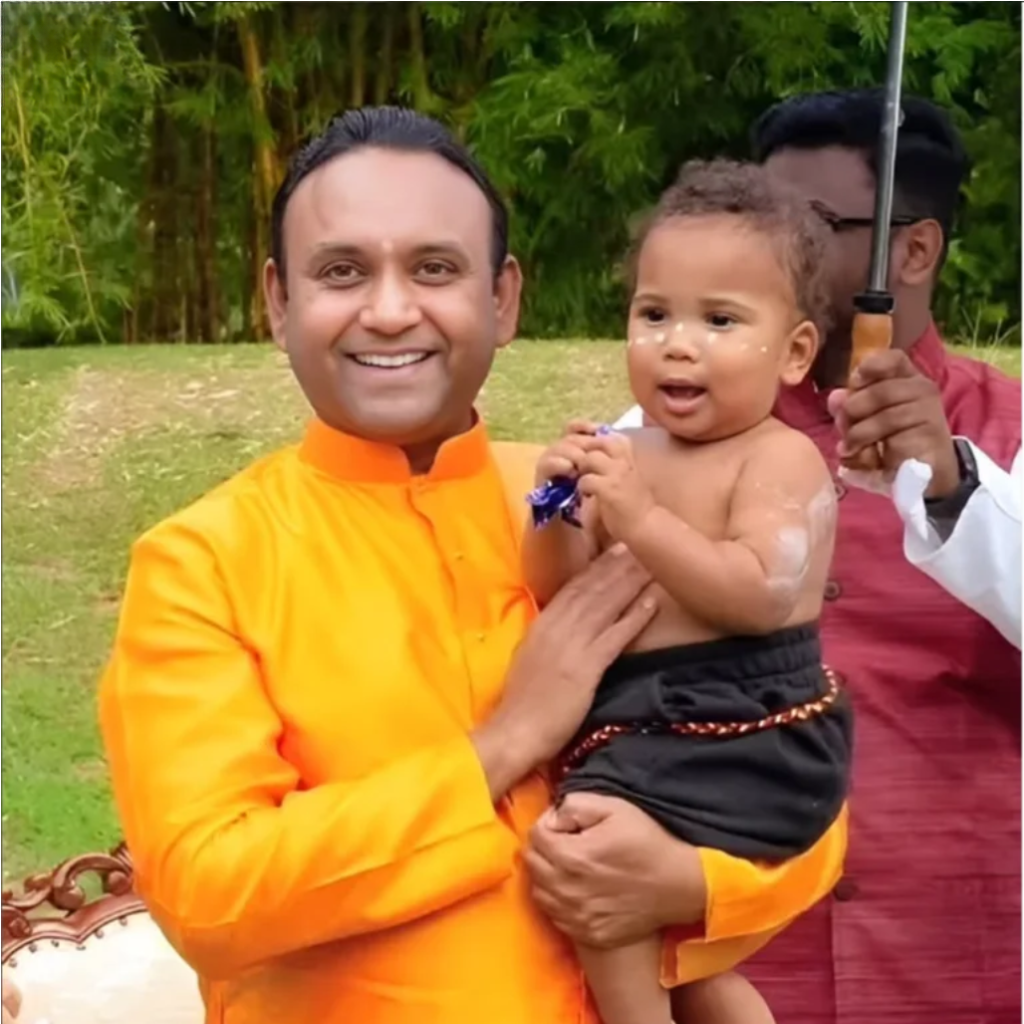
Yet the real measure of the work lies in individual lives: a child who stays in school because hunger no longer overwhelms the morning; a rural kid who becomes the first graduate of her village; a parent who does not have to choose between a child’s heart surgery and a lifetime of debt; a young person who finds skilled work without having to leave home forever.
The idea beneath it is disarmingly simple. If God is the parent of all, humanity is one family. And in a family, nobody should be left behind.
OWOF AT A GLANCE
- Presence through seventy-plus Trusts and partner initiatives in over 100 countries
- Free morning nutrition for over one crore schoolchildren each day, according to the mission
- More than 3.5 million free medical consultations
- Over one lakh surgeries globally
- Around 30 residential school and college campuses, alongside a private university
- Rural and inner-city livelihood initiatives in India, the United States and now Mexico
- A dozen plus Centres for Human Development across the globe fostering understanding and the essential oneness of all the spiritual traditions of mankind
- A model built on the philosophy: Love All, Serve All; for we are One World, One Family
The people and philosophy behind the mission
The impact of One World, One Family is rooted in a spiritual philosophy rather than a conventional development model. The mission draws inspiration from the Sai tradition, beginning with Sri Shirdi Sai Baba, whose life transcended religious boundaries and emphasised the unity of humanity.
Bhagawan Sri Sathya Sai Baba (of Puttaparthi) expanded that vision into one of the world’s largest service movements, establishing free schools, universities, hospitals and drinking water projects and even public health projects like the ‘Sai-Net’ program in Kenya, which halved malarial deaths in that country, thanks to effective distribution of insecticide treated mosquito-nets; “Love All, Serve All”, is the message. Service, in this tradition, is not charity but spiritual practice. The person serving and the person receiving are regarded as members of the same divine family.
Followers believe that after Bhagawan Sri Sathya Sai Baba left his physical body in 2011, he continued to guide the mission through his former student, Madhusudan Rao Naidu, who was formally anointed Sadguru Sri Madhusudan Sai in 2019. His youthful team sees him as a role-model; committed to liberation through selfless, fearless service with love; much like Swami Vivekananda.
Whether viewed through the lens of faith or simply through the institutions that have emerged over the past decade, the mission has continued to expand rapidly across India and internationally.
Sadguru Sri Madhusudan Sai was born on July 26, 1979, in Bilaspur. A gold medallist in Chemistry and Business Administration from Bhagawan Sri Sathya Sai Baba’s institutions, he initially worked in banking before dedicating himself fully to the mission. Under his leadership, Sathya Sai Grama has become the headquarters of a global network of service organisations working across nutrition, healthcare, education, livelihoods and human development.
The philosophy underpinning the mission is Vasudhaiva Kutumbakam, the ancient Indian ideal that the whole world is one family. Sadguru Sai often describes the model as one of collaboration between government, society and service organisations (“Sarkar-Samaj-Sanstha”), recognising that no single institution can solve today’s complex social challenges alone.
International recognition has followed. The Prashanthi Balamandira Trust received consultative status with the United Nations Economic and Social Council in 2023, and in 2024 became one of the organisations listed on India’s Social Stock Exchange.
A mission of ‘Actionable Compassion’
Rather than functioning as a monolith, One World, One Family operates through a family of specialised Trusts and institutions, each addressing a different aspect of human development, through ‘actionable compassion’. Together they seek to remove barriers; that prevent people from living healthy, educated and dignified lives of purpose.
Sri Sathya Sai Annapoorna Trust: nourishing children before they learn
The morning nutrition programme began in 2012 with breakfast for just fifty government-school children. Today, through the Sri Sathya Sai Annapoorna Trust, over one crore children receive morning nutrition every school day.
Children receive SaiSure, a fortified nutritional supplement made from millets, malt and micronutrients, served with milk or milk powder. The programme aims to improve nutrition, attendance, concentration and learning outcomes by addressing hunger before the school day begins.
The long-term vision is to reach eight crore schoolchildren across Bharat. Partnerships such as the 2026 collaboration with Strength Global are helping expand towards that goal.
Supporting this effort is the Sri Sathya Sai Gokulam milk powder facility. Launched in Chamarajanagar, Karnataka, it is to be duplicated country-wide to strengthen production and supply chains so that nutrition can be delivered consistently at scale.
WHY MORNING NUTRITION MATTERS
- Hunger affects education, health and future opportunity.
- By ensuring children begin the school day nourished, the Annapoorna programme seeks to improve not only classroom performance but lifelong outcomes.
Sri Sathya Sai Sanjeevani: making healthcare a birthright
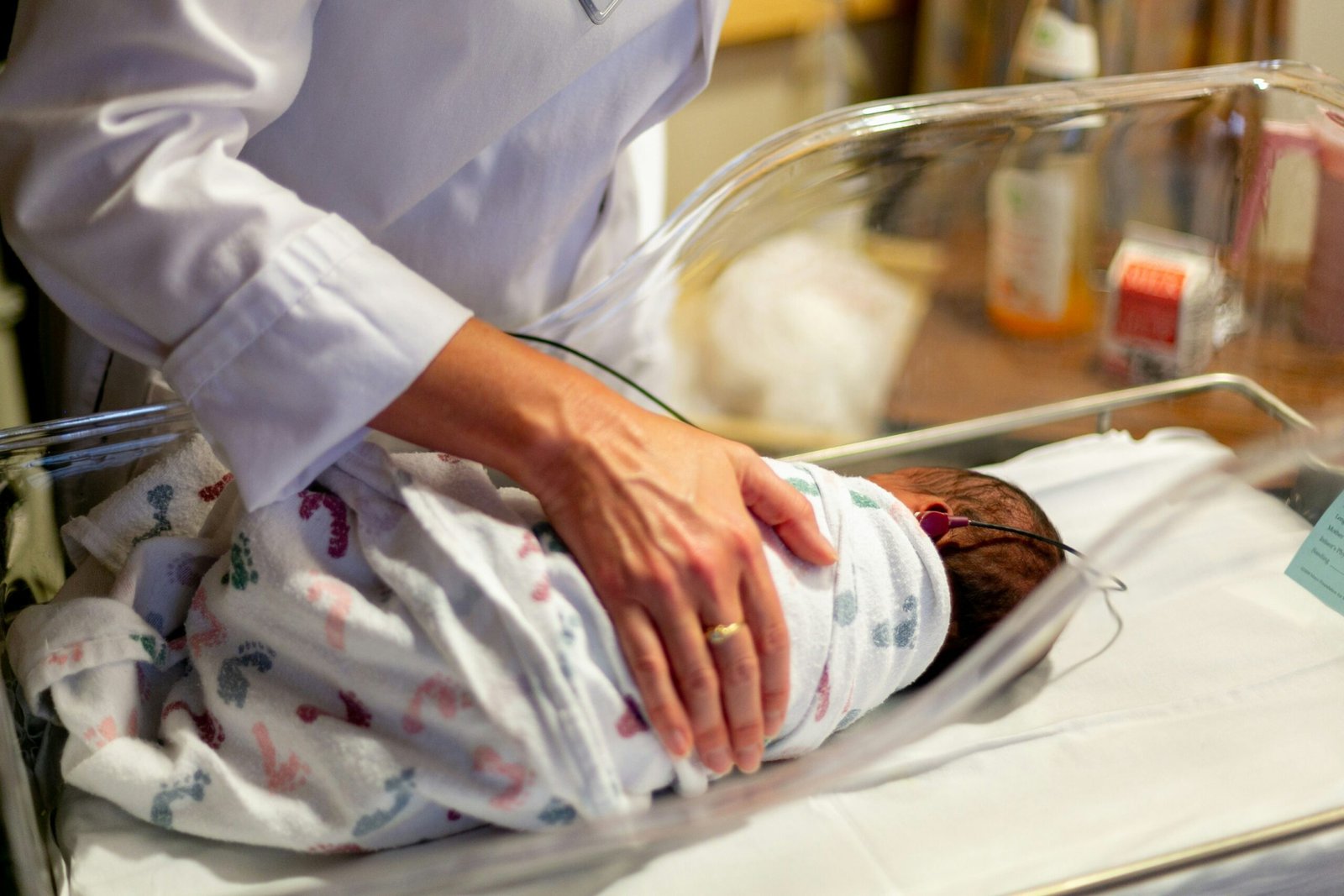
Free quality healthcare for all, a disruptor in the arena of modern healthcare, is another pillar of the mission. The Sri Sathya Sai Sanjeevani hospitals began in Raipur in 2012 with a focus on free paediatric cardiac care. Since then, they have expanded into a network of hospitals providing completely free cardiac diagnosis, interventions and surgery.
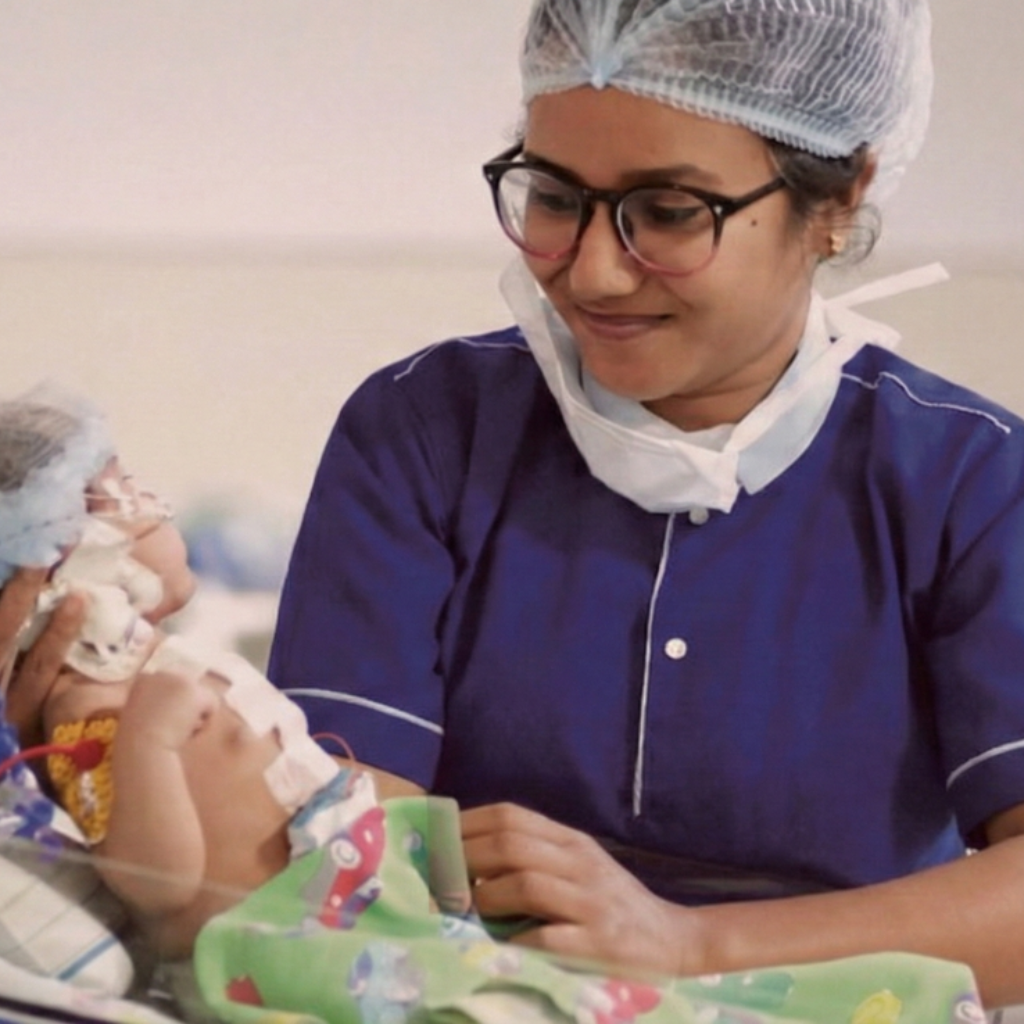
The model has spread internationally.
- Fiji now serves children and adults across the South Pacific, supported by a modern cardiac catheterisation laboratory.
- Batticaloa in Sri Lanka provides free cardiac care in a region still recovering from decades of conflict.
- New hospitals and mother-and-child facilities are being developed in India, Nigeria, Malaysia, Latin America and the United States.
- Where connectivity is poor, ‘Aarogya Vahini’, healthcare on wheels, takes care of the unreached; as in India’s north-east, the Sunderbans and so on.
The mission also invests in prevention. Over hundred Sai Swasthya Wellness Centres, including ‘Urgent Care Centres’ for non-life-threatening emergencies, have been established across India to provide free consultations, diagnostics, medicines and telemedicine. Patients requiring advanced care are referred seamlessly into secondary and tertiary hospitals.
The long-term vision is a Sai Swasthya Wellness Centre in every taluka of India, supported by district-level secondary care hospitals and advanced tertiary centres.
A SEAMLESSLY NETWORKED CARE CONTINUUM
- Primary care: Sai Swasthya Wellness Centres
- Secondary care: Sai Aarogya hospitals and mother-and-child facilities
- Tertiary care: Sri Sathya Sai Sanjeevani hospitals and the medical college hospital at Sathya Sai Grama
Sri Madhusudan Sai Institute of Medical Sciences and Research (SMSIMSR)
The mission also addresses another challenge: producing compassionate doctors committed to serving underserved communities.
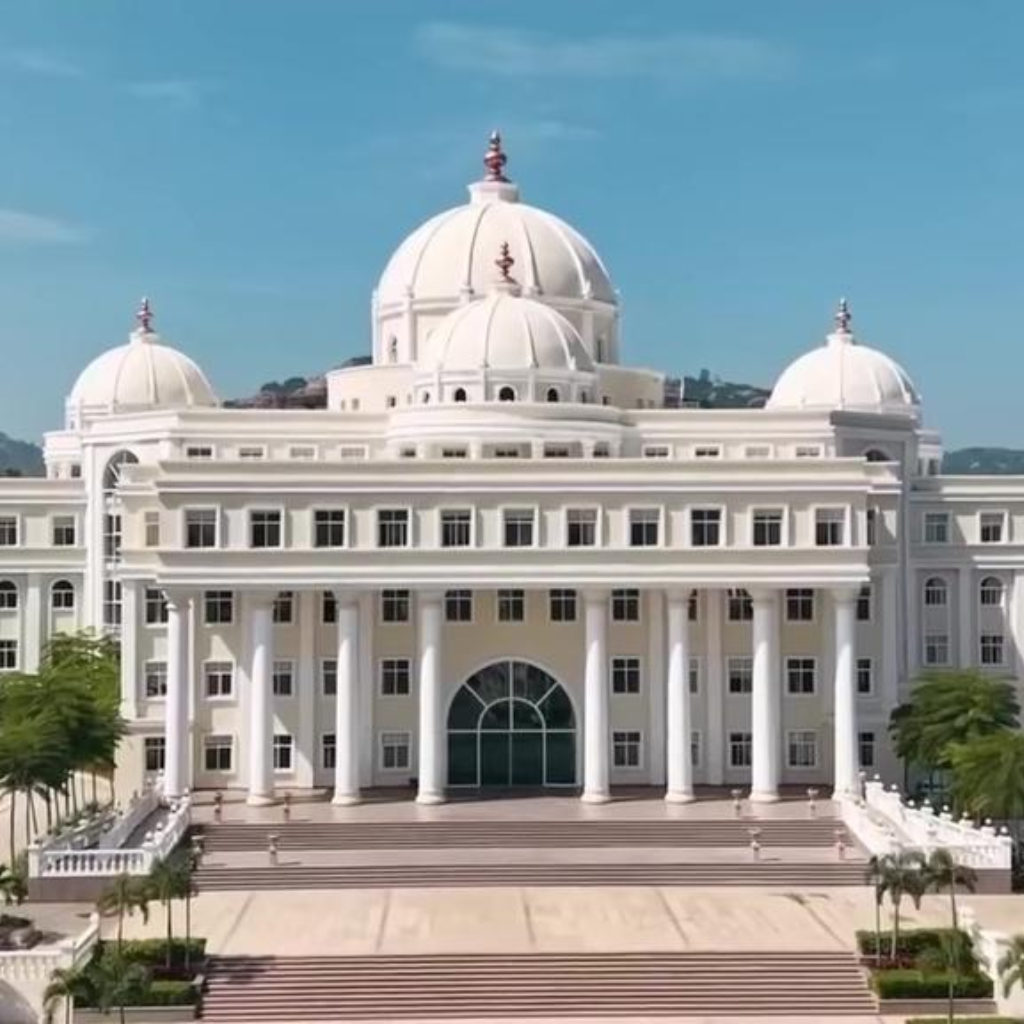
SMSIMSR, inaugurated by Prime Minister Narendra Modi in 2023, offers completely free medical education. Students graduate without educational debt and commit to serving within the mission’s hospitals for a corresponding period after graduation. The institute combines advanced medical education with values-based training, yoga, meditation and service. Its 600-bed teaching hospital performs sophisticated procedures including robotic cardiac surgery, minimally invasive procedures, joint replacements and so on, entirely without any out-of-pocket charges.
Plans are underway for a second medical college in Fiji, while international collaborations are expanding opportunities for students from across the Global South.
A DIFFERENT MEDICAL CONTRACT
- Students receive free medical education.
- Graduates serve in mission hospitals.
- The goal is to produce highly skilled doctors motivated by service rather than financial necessity.
Sri Sathya Sai Loka Seva Gurukulam and the Sri Sathya Sai University for Human Excellence
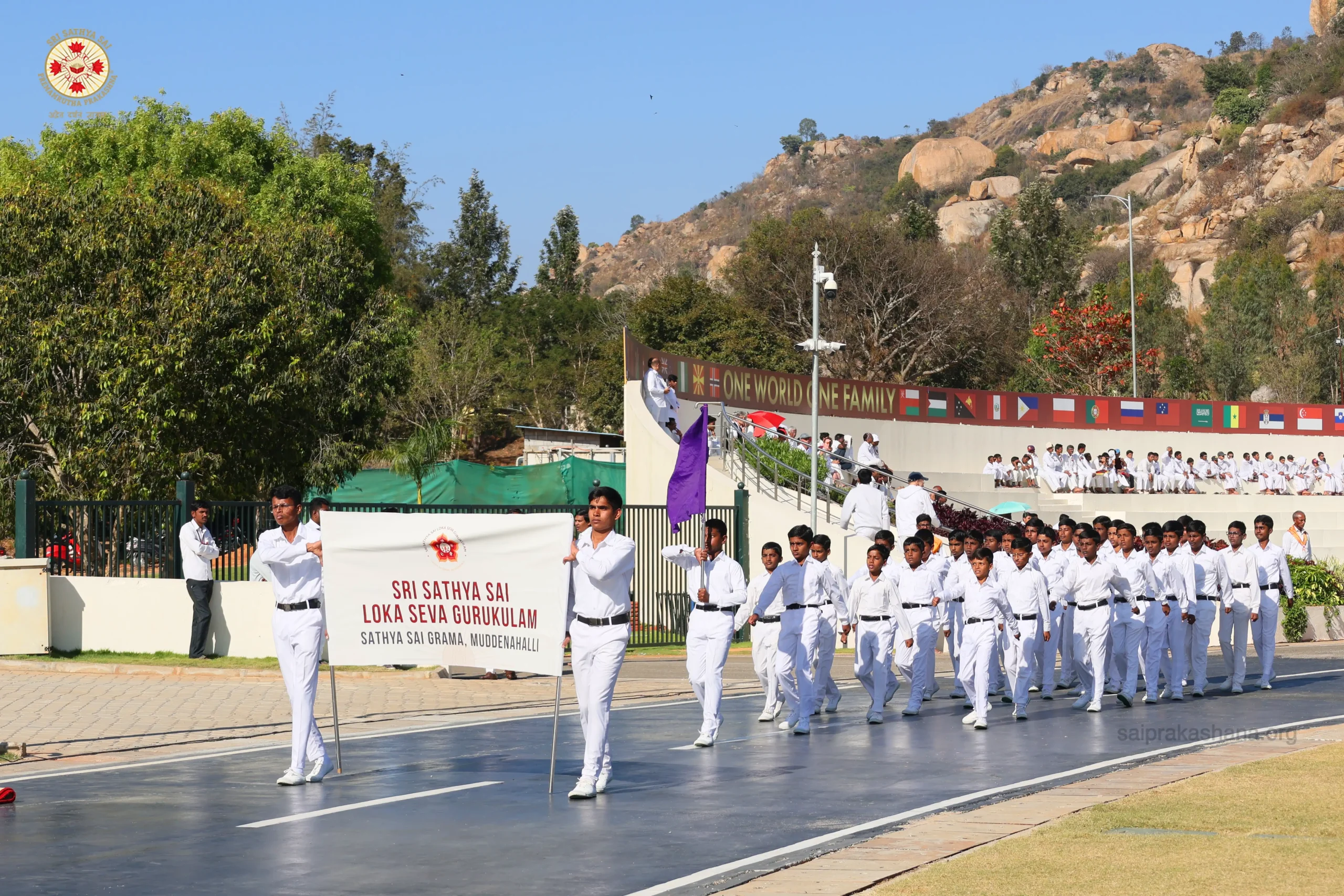
Values-based education has been central to the movement since 1963, when Madiyala Narayana Bhat (“Anna”) established the first institution inspired by Sathya Sai ideals. Today the Sri Sathya Sai Loka Seva Gurukulam group operates around thirty residential schools and colleges, while the Sri Sathya Sai University for Human Excellence provides free higher education.
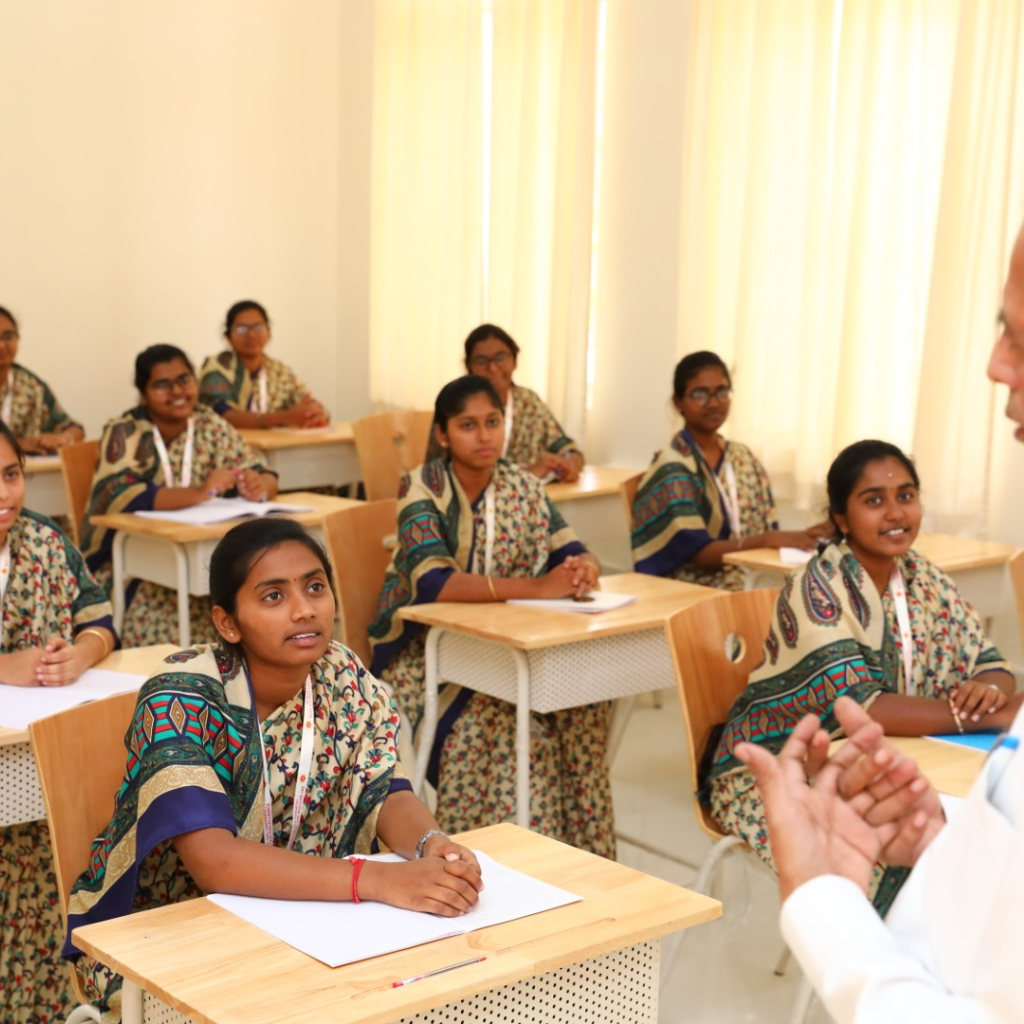
Besides academics, students are taught human values; including training in leadership, service, music, sport, and yoga. Culture, traditions and patriotism are fostered. Special emphasis is placed on girls’ education, scholarships for disadvantaged students and mentoring programmes that help first-generation learners succeed.
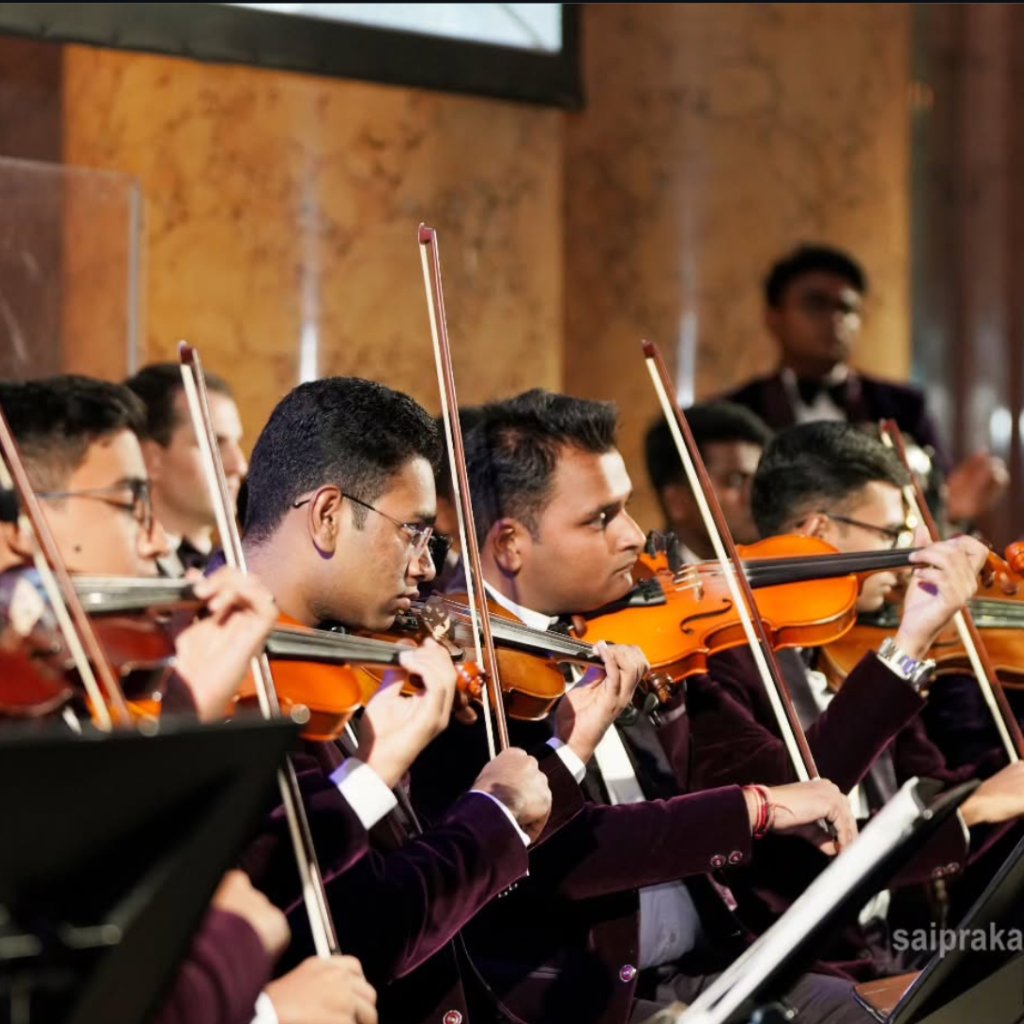
A 200-member Sai Symphony Orchestra of boys and girls, India’s largest and youngest, experience international cultural exchanges and demonstrate the mission’s belief that rural children deserve world-class opportunities.
An amazing fact is that, because of the love and care, as well as the values-based education they have received, nearly entire batches passing out of the mission’s university are choosing to serve in the mission. Sustainability seems inbuilt in the system.
EDUCATION BEYOND THE CLASSROOM
- Free residential education
- Scholarships and mentoring
- Girls’ education
- Music, sport and service
- Residential cricket academy
Rural Shores and People Shores: livelihoods with dignity
Education alone is insufficient without employment.
Inspired by Bhagawan Sri Sathya Sai Baba, entrepreneur Murali Vullaganti established Rural Shores to create skilled employment opportunities within rural India. Rather than forcing migration to cities, Rural Shores trains young people in digital and business-process skills while creating employment close to home.
The concept later expanded internationally through People Shores in the United States, supporting disadvantaged urban communities through skills training, employment and mentoring.
The model is now extending into Mexico through partnerships with the Autonomous University of Chihuahua. The underlying philosophy is what the mission calls “compassionate capitalism”, creating sustainable businesses whose success directly creates opportunity for underserved communities.
Human development, culture and values
Beyond material service, the mission also supports Centres of Human Development that combine service with spiritual learning and personal transformation. The Veda Patashala at Sathya Sai Grama integrates traditional Vedic education with modern subjects including English, mathematics, artificial intelligence and computer science.
Sadguru Sai’s “An Evening Divine” gatherings similarly seek to introduce audiences to the values underpinning the mission rather than promoting any particular religion.
Sport and entrepreneurship
The Vishwanath-Gavaskar Cricket Academy provides talented rural boys with free residential coaching alongside formal education. The India Start-Up Festival encourages entrepreneurs to develop businesses that create social impact, particularly in rural communities, alongside commercial success. Both initiatives reflect the mission’s belief that talent should never be limited by geography or economic circumstance.
The deeper invitation
In a century marked by inequality, conflict and division, One World, One Family proposes a simple but demanding idea: that humanity functions best when we behave as though we truly belong to one another. Its hospitals, schools, nutrition programmes, livelihood initiatives and cultural institutions are practical expressions of that philosophy.
For believers, this represents the continuing work of the Sai Avatar. For others, it offers a compelling, successful model of values-based development, the world over; in which compassion, organised with professional excellence and modern technology, enables time folding and delivery of services, at unprecedented scale. Unbelievable! Inspiring! To say the least.
The question OWOF leaves us with
What would change if we treated the child in a distant village, the patient without means, the student with no financial backing and the young person without a job not as statistics, but as members of our own family?
That question is the heart of One World, One Family.