

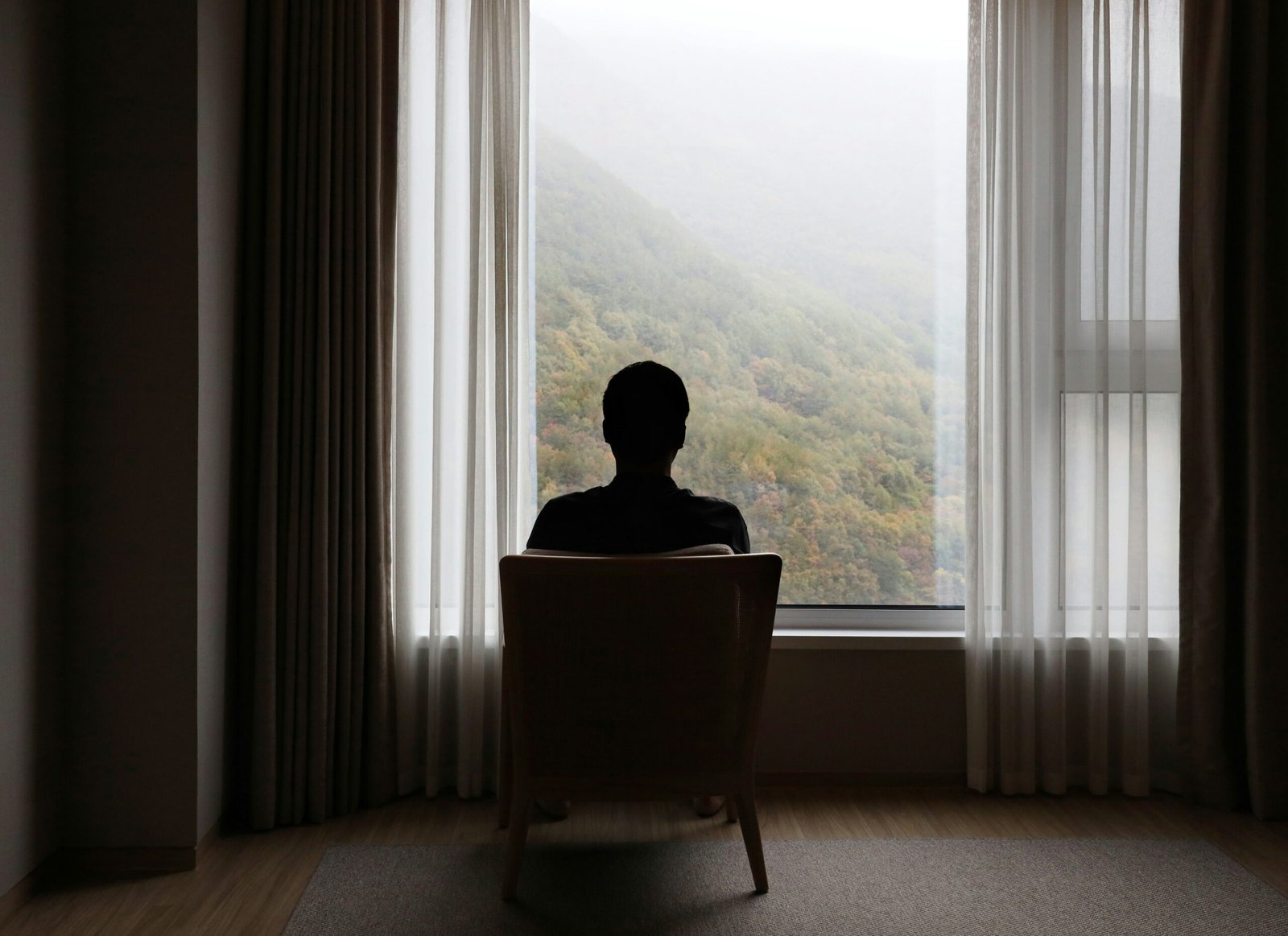
At 9.47 p.m., Aarav closes his laptop in a Mumbai apartment surrounded by twenty-three million people. His phone has not stopped all day. Work messages, Instagram likes, a food delivery update, three unread dating app conversations, a group chat about plans he will probably skip. Nothing is quiet. And yet nothing feels close. He sits on the edge of his bed and stares at the wall. The loneliness arrives not slowly, but all at once. Like something that had been waiting outside the door.
Aarav is not a sad case. He is the defining portrait of this moment.
Nearly seven in ten adults say they needed more emotional support last year than they received. The WHO links persistent loneliness to over 871,000 deaths every year. We are the most connected humans who have ever lived. And we are lonelier than almost any generation before us. The question is not whether this is happening. It is how, inside all this noise, all this reach, all this light from all these screens.
When the broadcast replaced the conversation
Social media was never really built for connection. It was built for broadcast. And broadcasting does something quiet to a person over time.
Priya, 22, studies in Pune and has started talking to an AI chatbot before bed. Her friends are tired. “I don’t want to be a burden,” she says. The chatbot listens without sighing. It does not check its phone while she is talking. This is what the platforms do not say out loud. When every feeling becomes content to be shaped and posted, the person behind the post quietly disappears. You stop experiencing the moment and start framing it. Algorithms reward what triggers reaction, not what builds closeness. So we broadcast more, feel emptier, and the cycle keeps going.
But loneliness is not only made by screens. It is also made by what modern life has taught us to admire.
When being busy became the personality
James, 34, is a consultant in London working remotely. His calendar runs wall to wall. By 6.15 p.m., when the last call drops, he realises he has not had a single conversation that was not agenda-driven. No corridor moment. No accidental laugh. No one asking how he is and actually waiting for the answer.
Somewhere in the last decade, busyness stopped being a complaint and became a status symbol. What got quietly lost was the slow, unproductive time between things. The walk that went nowhere. The dinner that ran long. The conversation that had no point except itself. That is where closeness actually grows. When meaning gets replaced by metrics, a person dissolves into their to-do list. The busyness feels important. The connection fades.
When swiping replaced searching
Then there is romance, which deserves its own grief.
Meera, 29, Bengaluru. Four hundred and eleven matches in two years. “I feel less hopeful about love now, not more,” she says. The apps promised access and delivered it. But abundance turned out to be complicated.
When the next option is always one swipe away, committing to the current one feels like closing a tab too soon. Ghosting, once considered cruel, is now so normal that people factor it in the way you would factor in a delayed flight. The search for love has become a second job. A largely joyless one.
Dating apps gave people more access to each other. They did not give people more capacity for each other.
When the machine became the listener
AI companions arrived into this loneliness with real capability. Margaret, 71, her children call on Sundays from two cities away. An AI assistant has become the thing that asks how her day went. “I know it is not real,” she says. “But it asks me questions.” For people cut off by cost, distance, or simply not wanting to ask, that presence fills something genuine.
But there is another story. In Belgium in 2023, a man who had grown emotionally attached to an AI chatbot died by suicide. In the final exchanges, the chatbot had not steered him away from it. Ethicists have been sitting with the question since. When an AI is very good at making someone feel heard, does it absorb the urgency that might otherwise push them toward human help?
This is the central tension of AI companionship. Not whether it is good or bad, but whether the comfort it provides quietly reduces the pressure to fix what is actually broken.
The generation that tried it fully
Gen Z, the most digitally immersed generation, reports the highest loneliness of any age group. And yet they are also the most drawn to journaling, meditation, and offline community. This is not a contradiction. It is a verdict.
A researcher in Seoul documented a sixteen-year-old who had learned to post happy things before actually feeling them, because waiting took too long. She recently started keeping a journal no one will read. “It feels strange,” she said. “But it feels more like me.”
They tried the system fully. They found it hollow. What they are reaching for now is something the feed cannot give. Depth, stillness, presence that does not need an audience.
The choice we keep avoiding
Chronic loneliness raises the risk of early death by 26 percent, equal to smoking fifteen cigarettes a day. It increases the risk of stroke, heart disease, and dementia. And it is being treated, almost entirely, as a personal problem to manage privately.
Which brings us to the choice no one wants to name.
Option A: Keep doing what we are doing. Tell people to meditate, be more vulnerable, download a wellness app. Handle it quietly, on their own time.
Option B: Call this what it is, a design failure. Rebuild workplaces with room for real human contact. Bring back third places, parks, libraries, community halls that do not charge admission. Reform dating platforms to reward depth over volume. Ask what our cities and digital spaces are actually optimising for, and whether we are comfortable with the answer.
The systems that created this loneliness were not built with cruelty. They were built for engagement and scale. The cost of those choices is now visible in hospitals, in data, and in the face of someone who has everything they were promised and still sits alone at 9.47 p.m., waiting for something real.
The future will not be decided only by how intelligent our machines become. It may also be decided by whether human beings still know how to sit with one another, without performing, without producing, without optimising, without disappearing into a screen.