
How travelling through Georgia reveals what happens when a country designs itself to be understood.
From the Knobles Editorial Desk
There is a particular kind of surprise that only travel can offer. It is not the surprise of discovering a hidden church or an unforgettable landscape, but the quieter realization that an entire country somehow feels easier to understand than you expected.
Mine came over coffee in Tbilisi.
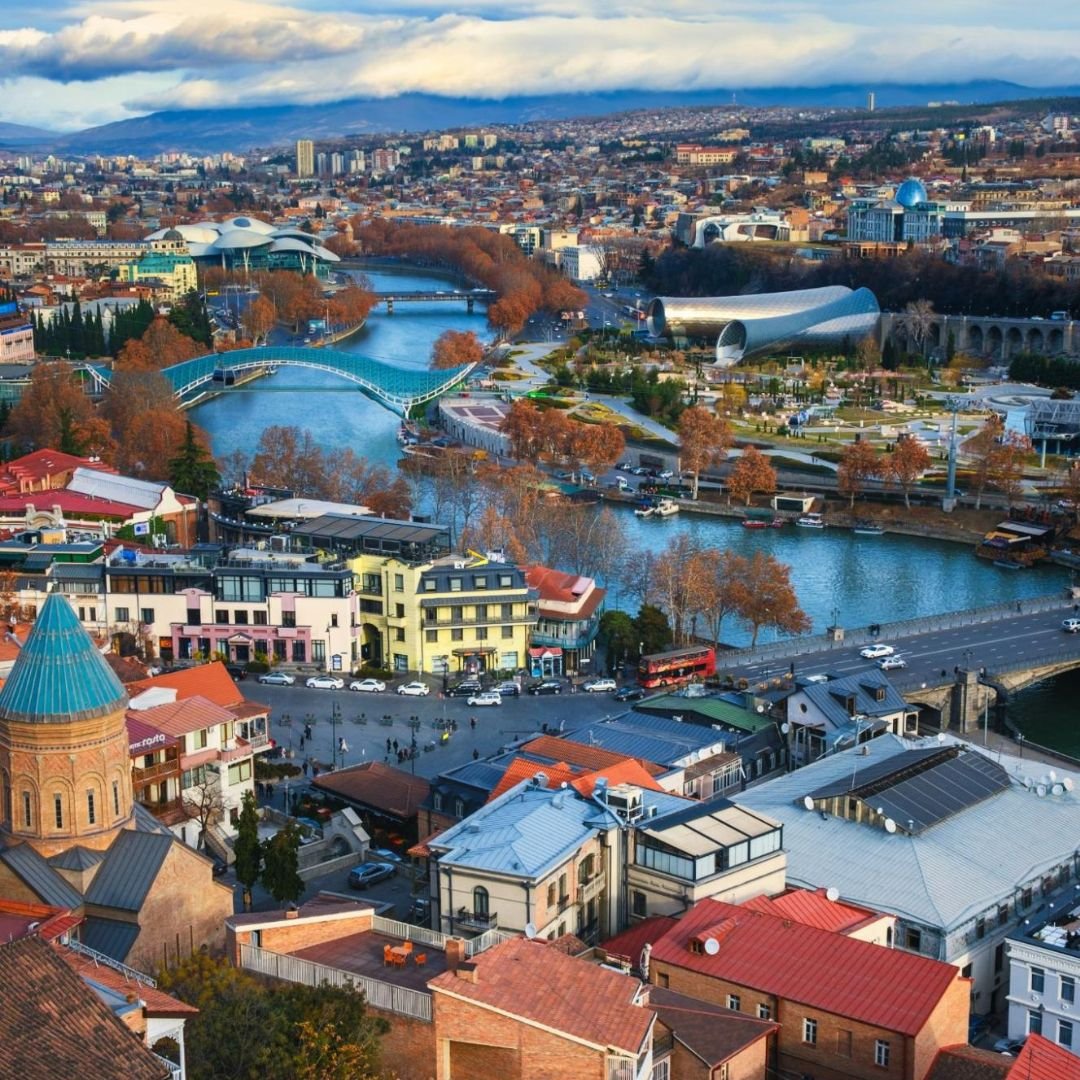
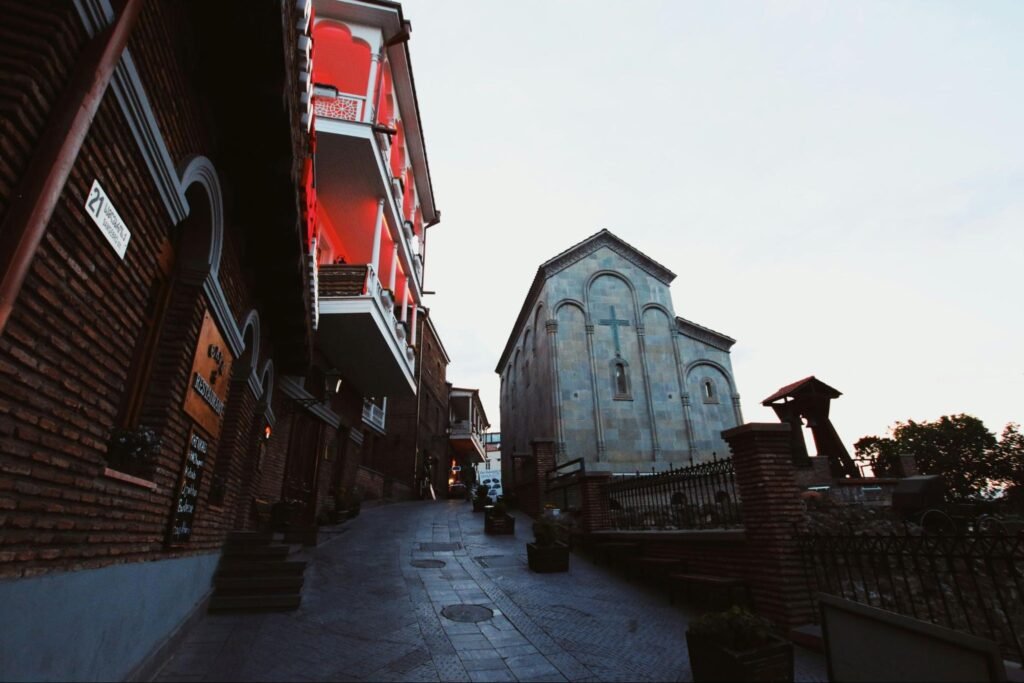
The café overlooked a narrow cobbled street where wooden balconies leaned gently over passers-by, their carved facades carrying centuries of memory. Around the corner stood a restored nineteenth-century townhouse, while beyond it, glass office towers caught the afternoon sun. Old women exchanged conversations across balconies. Young entrepreneurs typed away on laptops. Tourists wandered towards the sulphur baths. A tram glided quietly through the city. Nothing appeared hurried, yet everything seemed to work.
Across the table, an entrepreneur spoke matter-of-factly about registering his company.
“It was done yesterday.”
There was no dramatic story about paperwork, no complaints about navigating government departments, no tale of endless approvals. Incorporating a business had become almost incidental, just another task completed between meetings.
It was an oddly revealing conversation. Not because Georgia has become known for its business reforms, but because those reforms seemed almost invisible. The systems did not demand attention. They simply stayed out of the way and that, perhaps, is one of the rarest qualities a country can possess.
Travel often teaches us how places look. Occasionally, it teaches us how places work. Georgia quietly does both.
Can a Country Be Understood?
Countries spend enormous resources trying to become memorable. They build iconic skylines, host global events, commission striking museums, launch tourism campaigns and promote investment summits, yet memorability is only one measure of national success.
Legibility may matter even more. Can a visitor understand how a place functions? Can a founder predict how regulations will behave? Can a student imagine building a future there? Can culture remain deeply local while the economy becomes increasingly global? These questions reveal a country not through monuments, but through design.
Georgia rarely announces its ambitions loudly. Instead, it communicates them through countless small decisions that reduce friction without erasing identity.
Over the past two decades, administrative reforms have transformed how businesses interact with the government. Company registration that once took weeks can now be completed within a day. A liberal tax framework, simplified regulations and an expanding network of free trade agreements have quietly repositioned the country as a bridge between Europe and Asia. Investors speak not only of incentives but of predictability. Entrepreneurs mention bureaucracy less often because there is simply less of it to navigate. These are economic facts. Walking through Tbilisi, it began to feel like cultural ones, because ease is never merely administrative, it is experiential.
Few cities represent contrast as comfortably as Tbilisi. Ancient churches rise above neighbourhoods where Soviet apartment blocks still stand. Contemporary architecture shares skylines with medieval fortifications. Boutique hotels occupy restored merchant homes while technology companies work from minimalist offices a few streets away. The city never appears to be choosing between past and future. It seems determined to inhabit both simultaneously and that balance feels increasingly rare.
Across the world, modernization often demands uniformity. Historic neighbourhoods become lifestyle districts. Local businesses give way to global brands. Cities become efficient but interchangeable. Tbilisi resists that temptation. Its identity feels neither curated nor frozen. It simply continues.
Perhaps that explains why walking through the city rarely feels like visiting an open-air museum. The old town is not preserved for tourists; it remains part of everyday life. Families still gather in courtyards shaded by grapevines. Children weave effortlessly between cafés and centuries-old churches. Laundry still hangs from weathered balconies overlooking narrow streets where visitors pause to take photographs of scenes residents barely notice anymore.
Life has not been arranged for observation, it simply unfolds.
Designed for Ease
The same philosophy seems to extend beyond architecture. Georgia’s reputation among entrepreneurs has grown steadily over the past decade, not because it promises extraordinary incentives, but because it has worked systematically to remove unnecessary complexity.
Its location has always made it significant. Positioned along the ancient Silk Road, between Europe and Asia, Georgia has spent centuries serving as both crossroads and frontier. Geography has been its greatest opportunity and, at times, its greatest vulnerability.
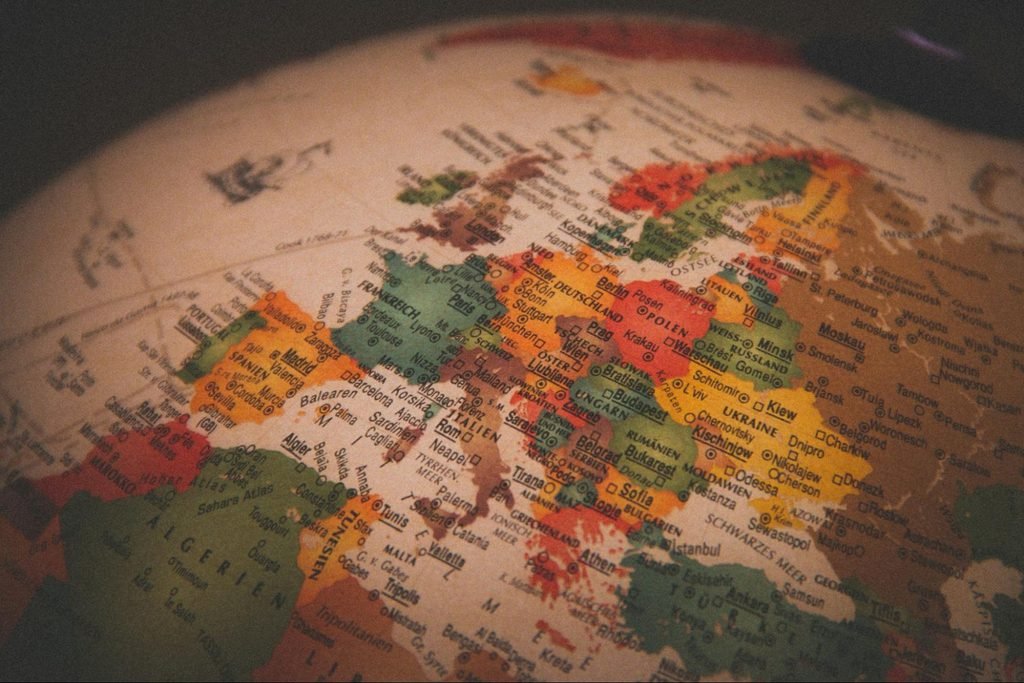
Today, rather than relying solely on geography, the country has invested in governance. Its network of free trade agreements now connects businesses to markets stretching across Europe, China, the United Kingdom, Turkey and neighbouring regions. Logistics corridors linking the Black Sea to Central Asia continue to strengthen Georgia’s role as a transit economy. Free Industrial Zones in cities such as Poti, Kutaisi and Tbilisi provide manufacturers with streamlined operating environments, while digital public services have significantly reduced bureaucratic friction. Numbers may not explain why founders choose a place. People do!
Several entrepreneurs described something remarkably similar during conversations across the city – not low taxes, not cheap labour but trust.
Rules that remain consistent, processes that feel predictable and authorities that are accessible rather than distant. One founder laughed when asked what had surprised him most.
“I spend more time thinking about my business than paperwork.” It was perhaps the simplest compliment any public administration could receive and this clarity extends beyond business.
Public spaces are well maintained without becoming overly managed. Signage is intuitive. Digital payment systems function almost everywhere. Public transport feels straightforward enough that visitors rarely hesitate before using it. English is widely spoken among younger Georgians, yet the Georgian language remains proudly visible on street signs, menus and public buildings.
Nothing feels diluted for international audiences. Instead, visitors are quietly invited to adapt and there is a subtle confidence in that choice.
Countries often assume accessibility requires simplification but Georgia suggests otherwise. It demonstrates that systems can become easier without becoming generic and that clarity need not come at the expense of character and perhaps that is where travel becomes something larger than tourism.
Walking through Georgia, one begins to realise that infrastructure is not only about roads, airports or broadband connections, it is also about trust, about reducing uncertainty, about making participation feel possible, because when systems become easier to navigate, people stop thinking about the system itself, they begin thinking about what becomes possible because of it and that may be Georgia’s quietest achievement.
Not that it has made doing business easier, but that it has made building a life, a journey, or even a first impression feel unexpectedly natural.
The Architecture of Welcome
If governance explains how a country functions, hospitality explains why it stays with you.
The Georgian word for guest is more than a social courtesy. Across the country, hospitality is treated almost as a civic value. Visitors quickly discover that meals are rarely transactions. They are invitations. Conversations seldom end where they begin. For an Indian traveller, this feels surprisingly familiar.
Like India, Georgia measures wealth not merely by what is owned, but by what can be shared. Families gather across generations. Festivals are community affairs rather than private occasions. Weddings are celebrations of entire neighbourhoods. Religious festivals, harvests, birthdays and family milestones become reasons to open one’s home rather than reserve a restaurant.
Perhaps this explains why Indians often leave Georgia with an unexpected feeling not of having discovered something entirely foreign, but of recognising echoes of home in another civilisation.
The similarities are subtle rather than obvious – respect for elders, large family meals, an instinct to insist that guests eat more than they intended, stories told over food, and music that belongs as much to communities as to concert halls.
The details differ but the impulse feels remarkably familiar.
Nowhere is this more evident than at the supra, Georgia’s centuries-old tradition of communal dining.
A supra is not simply dinner, tt is theatre, conversation, celebration and memory.
At its centre sits the tamada, the toastmaster, whose role extends far beyond raising a glass. Each toast becomes a reflection on friendship, family, gratitude, peace, ancestors or hope. In an age increasingly organised around speed, the supra quietly resists efficiency as it reminds everyone at the table that relationships cannot be rushed.
Food itself reflects that same philosophy.
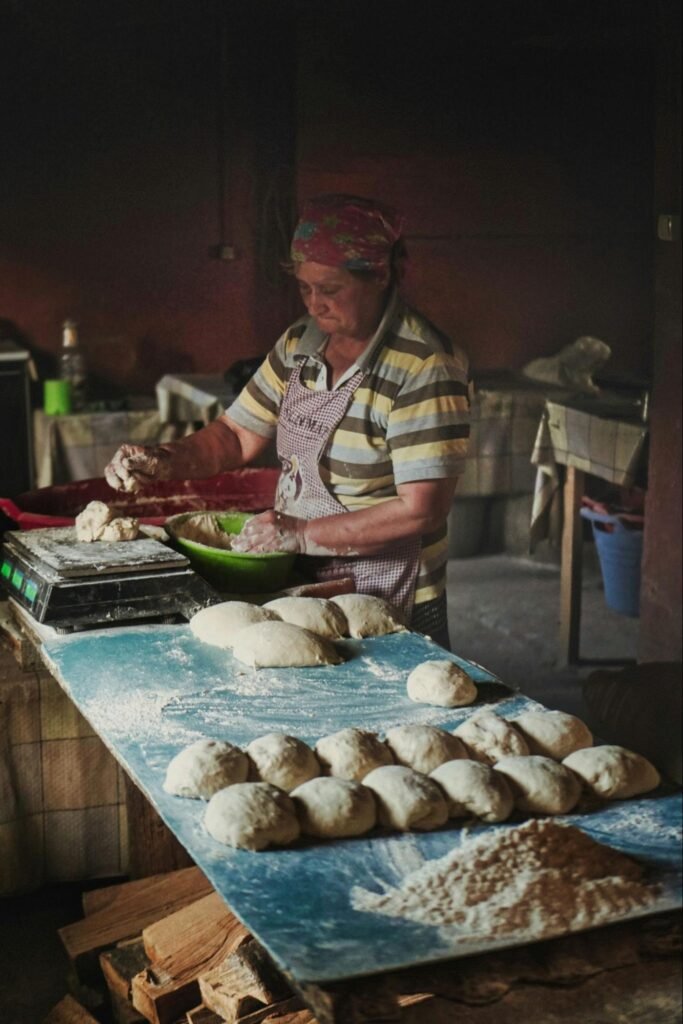
Khachapuri, often described as Georgia’s answer to pizza, is perhaps the country’s most recognisable culinary ambassador, although the comparison only hints at its character. Freshly baked bread filled with local cheeses or potatoes or meat and in the celebrated Adjarian version, finished with butter and a golden egg stirred into the molten centre, it is unmistakably Georgian. Every region prepares it differently, each convinced theirs is the definitive expression.
Then come khinkali, beautifully pleated dumplings filled with richly seasoned broth. Locals smile patiently as first-time visitors learn the unwritten ritual: lift carefully, take a small bite, sip the broth first, then continue.
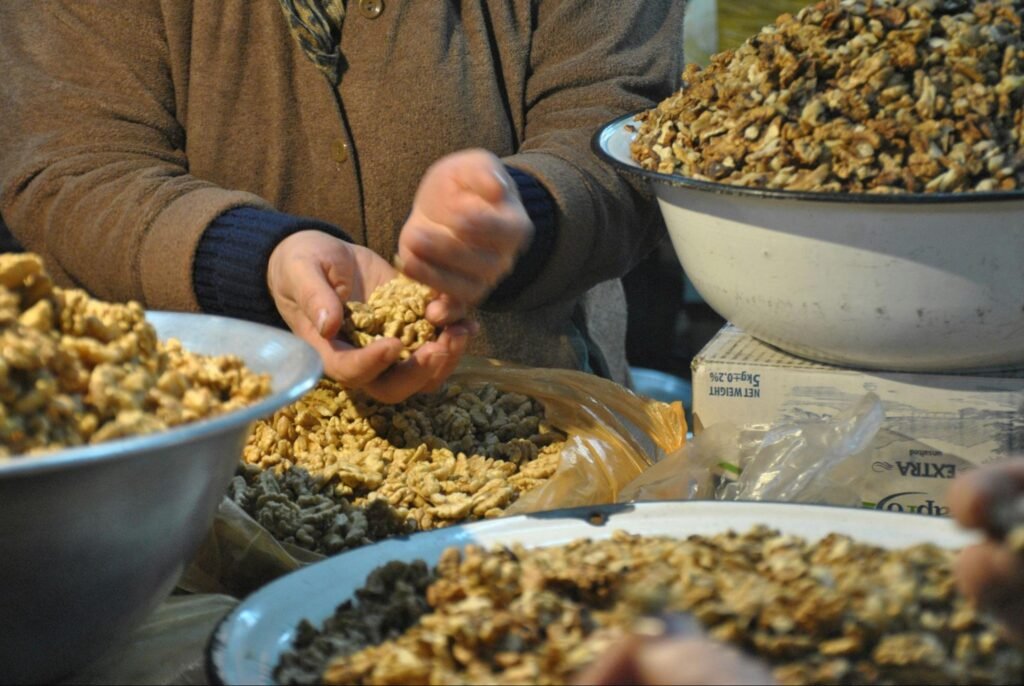
Around them arrive fragrant walnut sauces, grilled meats, mountain cheeses, herbs gathered that morning, vegetables bursting with colour, freshly baked breads and wines from one of the world’s oldest wine-making traditions, and then, inevitably, comes chacha.
Powerful, clear and distilled from grapes, Georgia’s beloved spirit is present wherever people gather to celebrate. Birthdays, weddings, harvest festivals, village feasts or family reunions are rarely complete without someone raising a glass of chacha in honour of friendship or remembrance.
The drink matters less than the gesture. Celebration, here, remains profoundly communal.
Culture That Refuses to Become Performance
What makes Georgia memorable is not simply that it protects its traditions.
It continues to live on. Polyphonic singing recognised by UNESCO as one of humanity’s great intangible cultural traditions is not confined to concert halls. Folk melodies still accompany village festivals. Ancient church chants continue to resonate within monasteries. Young musicians move comfortably between jazz festivals, electronic music venues and centuries-old vocal traditions.
Culture has not been placed behind glass, it remains part of daily life and this becomes particularly visible beyond Tbilisi.
The vineyards of Kakheti continue rhythms shaped by generations of winemakers. In the Caucasus Mountains, villages such as Ushguli and Mestia retain architectural forms and community traditions that have evolved over centuries. Along the Black Sea coast, Batumi presents an altogether different face of Georgia: contemporary, cosmopolitan and increasingly international.
These landscapes also reveal another reality – Georgia’s development is not evenly distributed.
Outside the capital, infrastructure varies considerably. Economic opportunity remains concentrated in urban centres. Young people continue to migrate in search of education and employment. Tourism has created prosperity for some regions while leaving others relatively untouched.
The country does not hide these contrasts, nor should it because they reveal something important – development is rarely a finished condition, it is an ongoing negotiation.
A Country Between Worlds
Few countries understand uncertainty quite like Georgia. For centuries it has occupied one of history’s great crossroads, linking Europe and Asia while navigating the ambitions of larger powers around it. Geography has offered extraordinary opportunity and persistent vulnerability in equal measure.
That reality has not disappeared.
The country’s relationship with Europe continues to evolve. Political debates surrounding democratic reforms, European integration and domestic governance remain active. Questions of regional security continue to shape public life. Economic growth has brought new confidence, yet it also depends significantly upon tourism, international investment and global trade flows that remain susceptible to external shocks. Visitors may notice little of this during a weekend in Tbilisi.
Residents cannot afford to forget it. Perhaps that awareness explains another quality one encounters throughout Georgia – pragmatism.
The future here is approached neither with naïve optimism nor quiet resignation, it is approached with deliberate effort.
The Future Is Designed Slowly
It would be easy to describe Georgia as Europe’s next great destination and many already do.
The phrase is convenient but it is also incomplete, because what distinguishes Georgia is not simply that more visitors are arriving, or that more entrepreneurs are choosing to build companies here.
It is that the country appears to have asked a more fundamental question:
How do you become open without becoming anonymous?
How do you modernise without abandoning memory?
How do you reduce bureaucracy without reducing identity?
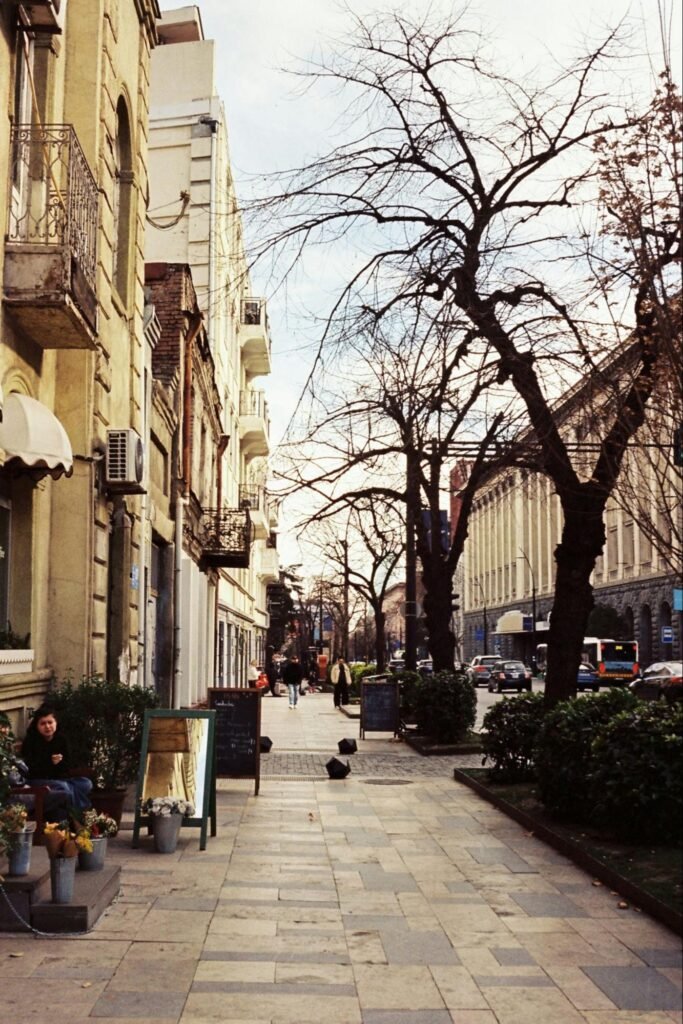
Walking through Tbilisi, the answers appear not in speeches, but in ordinary encounters – a founder who trusts the system, a restaurateur who refuses to hurry dinner, a family inviting strangers to join a celebration.
A centuries-old church standing comfortably beside contemporary architecture. A city that speaks confidently to the future without feeling embarrassed by its past.
These are not isolated moments. Together, they form something resembling a national philosophy, not perfection but clarity.
The Country That Makes Itself Understandable
Travel often encourages us to collect places. Georgia encourages something else, it asks us to pay attention to how a society chooses to organise itself. Not only through its buildings or landscapes, but through its institutions, traditions, conversations and everyday gestures.
Perhaps that is why the country lingers long after the journey ends, not because every system is flawless, not because every region has benefited equally from growth, nor because every political question has been resolved. Rather, because Georgia demonstrates that progress need not erase personality, that efficiency need not diminish warmth, that global ambition can coexist with deep cultural confidence.
In a century where nations increasingly compete for investment, talent and attention, the greatest advantage may not belong to those that shout the loudest or build the tallest skylines.
It may belong to those that make themselves easiest to understand. Georgia has not solved every challenge before it, no country has. But somewhere between the carved wooden balconies of Old Tbilisi, the vineyards of Kakheti, the conversations that stretch late into a supra, and the quiet confidence of systems designed to reduce friction rather than create it, one begins to recognise a different measure of national success, not seamlessness, not spectacle but legibility.
A country that allows visitors to see not only where they are, but what it is trying to become. Perhaps that is the rarest journey travel can offer not simply discovering a destination, but understanding the choices that are shaping its future.