

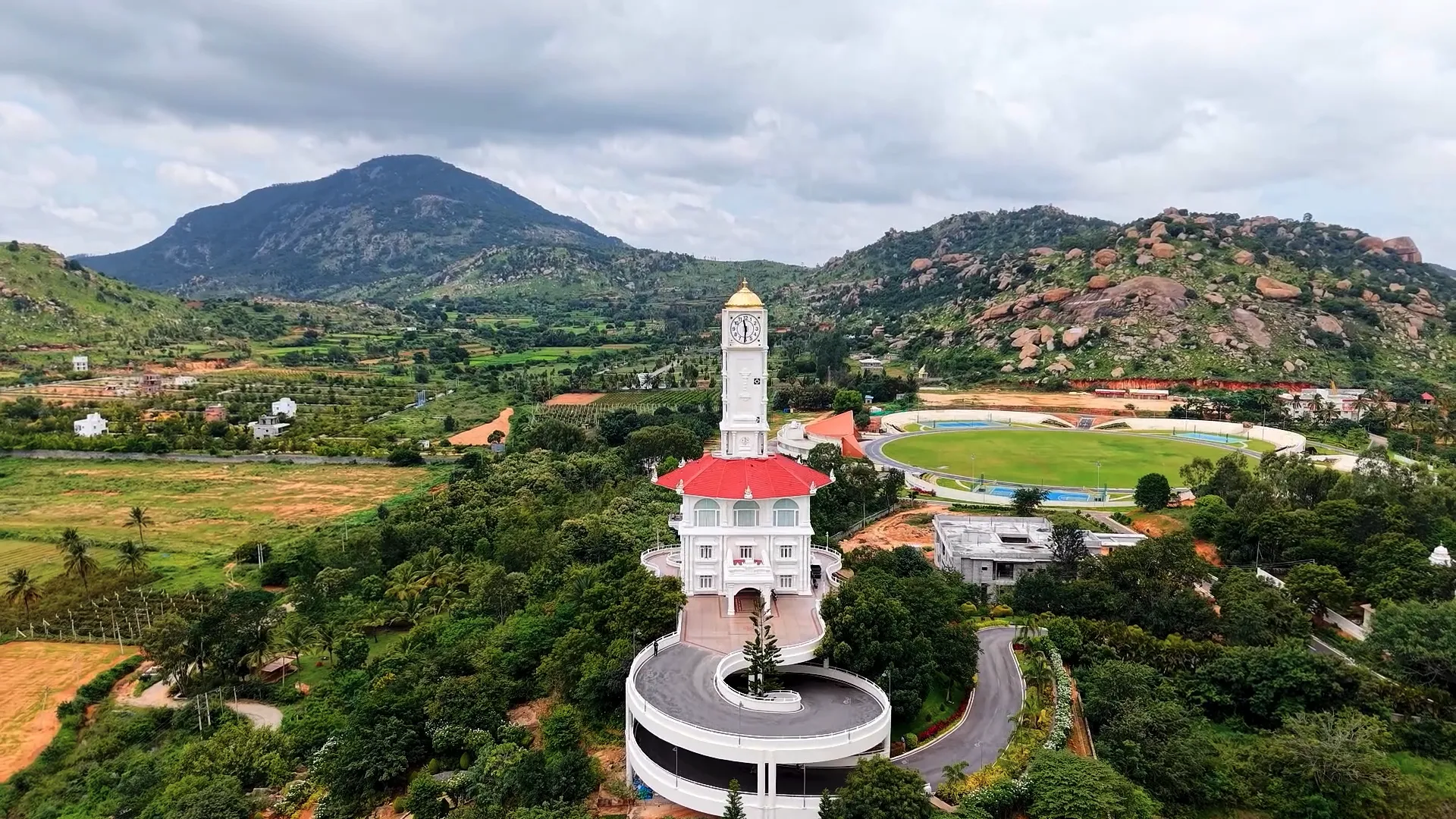
Part Two of Three Parts | Also read Part One & Part Three
In July 2011, three months after Sri Sathya Sai Baba’s death, B. N. Narasimha Murthy found himself doing something he had done decades earlier: teaching a young man how to tie a dhoti.
The young man was Madhusudan Naidu, a former student whom Murthy had known through the Sathya Sai educational institutions. The request itself was ordinary. The reason behind it, in Murthy’s recollection, was not. Madhusudan said that Baba, whom he believed he was perceiving in a subtle form, had asked him to travel to Sathya Sai Grama and prepare for Guru Purnima. Murthy, meanwhile, says he had independently experienced a dream or vision in which Baba announced that he would come to the rural campus for the occasion.
For a secular reader, this is the point at which the story becomes difficult to classify. For devotees, it is an account of spiritual continuity. For a historian, it is testimony that must be treated as testimony. For the institutions that grew around Sathya Sai Grama after 2011, however, these experiences became part of the community’s own explanation of how a long-held dream suddenly acquired momentum.
To understand why a dhoti lesson could carry so much meaning, one has to go back almost a century.
The man before the mission
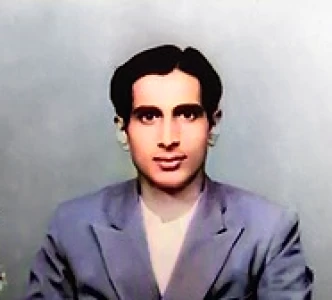
Madiyal Narayan Bhat was born in 1927 in the Dakshina Kannada region of Karnataka. Known simply as “Anna”, or older brother, he came from a landed family but was drawn early to a very different idea of what a useful life might look like. Gandhi and Vivekananda shaped his imagination. So did the example of missionaries who gave their lives to education and service.
By his twenties, Bhat had chosen teaching over the comforts available to him. His ambition was not modest. He wanted to create a disciplined, service-oriented community of young men and women who would work in rural India and treat service not as charity but as a way of life. The philosophical frame was Sanatana Dharma’s idea of an underlying oneness: if the same divine reality is present in all beings, service to another is not entirely separate from service to oneself.
In 1960, Bhat founded the Loka Seva Vrinda, literally a group dedicated to serving the world. Its committed members were known as tyaga jeevis, people who had consciously chosen a life of sacrifice and service. The title can sound grand in retrospect. At the time, the organisation was small, rural and held together more by conviction than resources.
A school built before there was a campus
B. N. Narasimha Murthy entered this story in the mid-1960s. Then an engineering student, he met Bhat and was drawn into the same idealistic circle. He would later spend decades in the Sathya Sai educational system and become one of the central custodians of the Muddenahalli institutions.
In the early 1970s, Bhat and his associates began building a residential school near Muddenahalli, between Bengaluru and Puttaparthi. The early years were improvised. Murthy has recalled functioning as manager, treasurer, labourer and watchman, at times sleeping among building material while the campus took shape. The first school building opened in 1973 with only a small group of students.
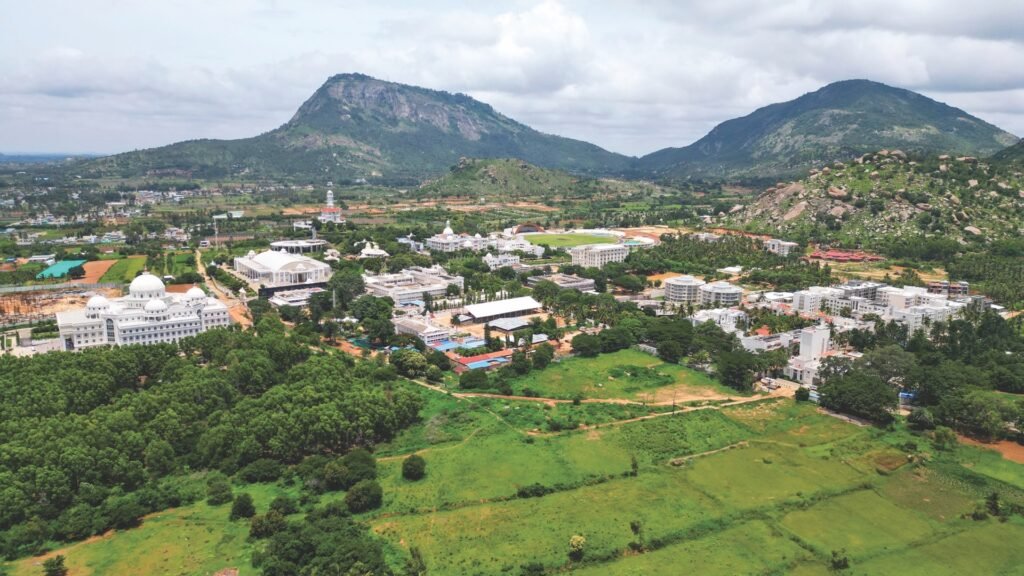
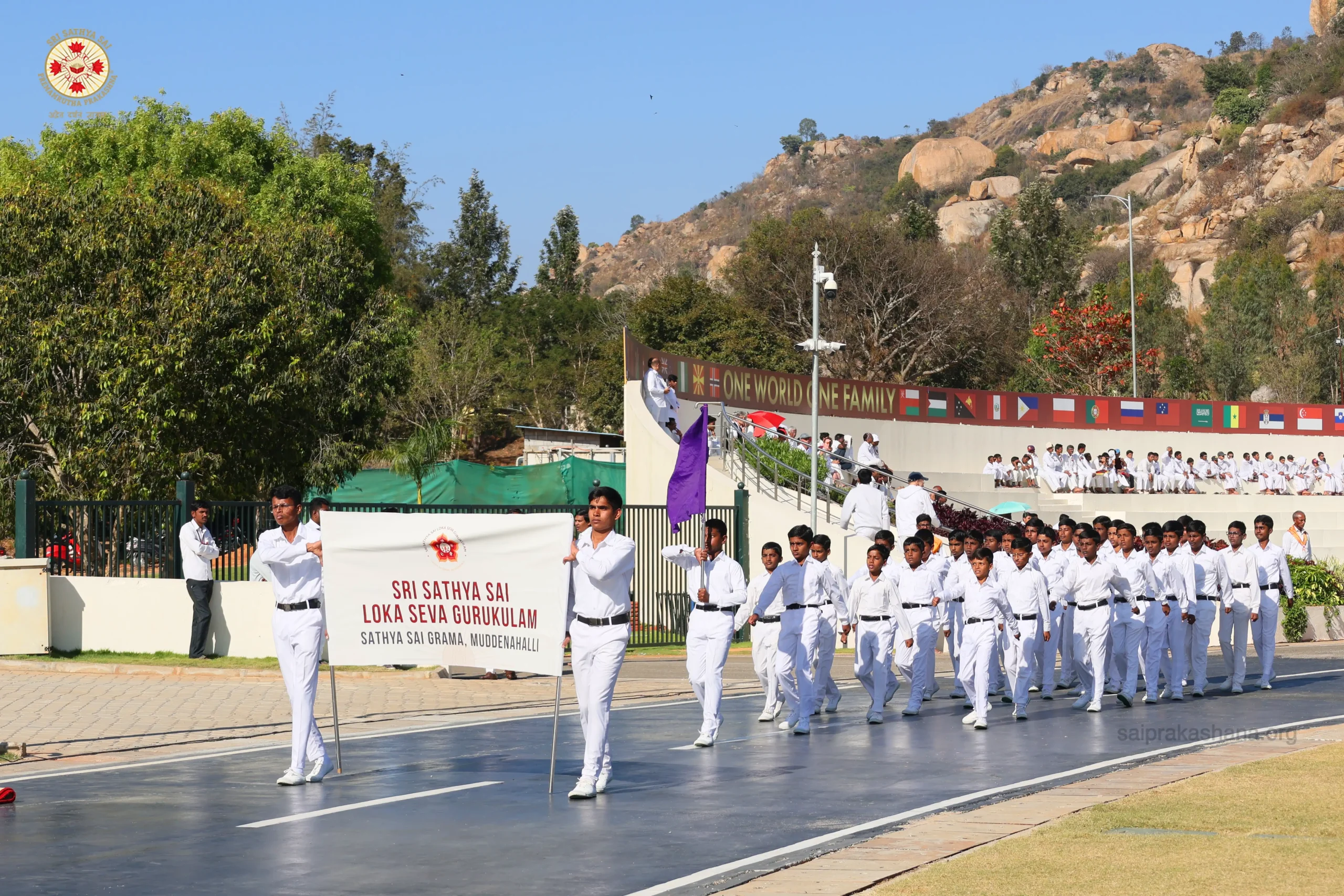
In January 1976, Bhat and his associates formally offered the Loka Seva Vrinda and its educational institutions to Sathya Sai Baba. The Muddenahalli campus became known as Sathya Sai Grama. Barely a year later, Bhat died in a road accident, aged 49.
For the young men and women who had organised their lives around him, the loss was both personal and institutional. Devotee accounts preserve an assurance attributed to Baba that Bhat’s work would not end with his death and that the community of people dedicated to service would grow far beyond its original size. What is historically visible is that the schools survived. What followed, for several decades, was not explosive growth but patient continuity.
The campus remained relatively quiet. Teachers taught. Students came and went. The tyaga jeevis continued the work. The dream of a far larger service movement remained, in many ways, unrealised.
A question Sanatana Dharma asks differently
It is here that Dr B. N. Narasimha Murthy’s reading of Sanatana Dharma becomes essential to the story. In his telling, human life is not exhausted by the body, mind and intellect. The deeper aim is Self-realisation: the recognition of consciousness, or divinity, as one’s fundamental identity. Karma and rebirth form part of this worldview. An unfinished tendency, attachment or aspiration may, within that framework, continue beyond a single lifetime.
This is a religious and philosophical proposition, not a settled scientific one. Yet the subject has not been entirely absent from academic investigation. The University of Virginia School of Medicine’s Division of Perceptual Studies has spent more than half a century documenting cases of young children who report memories of previous lives. Its researchers say they have collected thousands of such cases and continue to study them using contemporary psychological and neuroscientific methods. That work does not amount to a mainstream scientific consensus on reincarnation, but it does show that the phenomenon has been studied rather than simply ignored.
For readers who want to examine that research directly, see the University of Virginia Division of Perceptual Studies and its work on children who report memories of past lives.
Sanatana Dharma, meanwhile, uses a different vocabulary. The physical body returns to the elements; subtler aspects of mind, impression and causation are understood to continue, shaped by karma. Whether one reads this literally, symbolically or not at all, it is the framework within which Murthy and other senior members of the Sathya Sai Grama community interpreted what happened after 2011.
2011: The story turns inward
Sri Sathya Sai Baba died in April 2011. For the tyaga jeevis at Sathya Sai Grama, the timing was painful. Bhat’s original dream had not yet reached anything like the scale he had imagined, and the person they believed could make it possible was no longer physically present.
Murthy later described a dream or vision in which Baba told him he would come to Sathya Sai Grama for Guru Purnima. He also recalled being asked to organise a large celebration, including new clothes for roughly a thousand students. Around the same time, Madhusudan Naidu, an MBA graduate, former banker and devoted alumnus of Baba’s institutions, began reporting experiences in which he perceived Baba in what he described as a sookshma shareera, or subtle form.
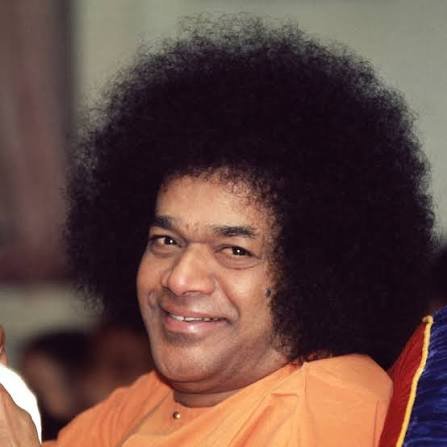
Madhusudan initially questioned his own perception, according to accounts shared by him and those around him. Gradually, he began acting on instructions he believed came from Baba. One such instruction took him to Sathya Sai Grama with the request that clothes be arranged for the students and staff. Another, stranger request, was that Murthy teach him to wear a dhoti.
The moment unsettled Murthy because it echoed his own youth. Decades earlier, Narayan Bhat had taught him the same thing. The repetition felt, to him, less like coincidence than recognition.
According to Seshadri’s account and later recollections attributed to Murthy, Baba eventually confirmed to Murthy that Madhusudan was Narayan Bhat reborn. There is no empirical way for an outside publication to establish such a claim. Its significance here is interpretive: it explains how some of the people closest to the institutions understood Madhusudan’s role and why they saw the post-2011 work not as a new project, but as the continuation of an unfinished one.
From unfinished work to spiritual continuity
The interpretation deepened over time. During Guru Purnima 2026, Murthy recounted a conversation in which he told Sadguru Sri Madhusudan Sai that Narayan Bhat would have been deeply happy to see what Sathya Sai Grama had become. Sadguru Sai Murthy said that Bhat was “right here” in his person.
Within the movement’s spiritual framework, the claim goes beyond reincarnation. Murthy has described Bhat as a deeply devoted man whose aspiration to serve remained unfinished, while devotees understand Madhusudan’s later spiritual journey as the completion of that inner work under Sathya Sai Baba’s guidance. The language used is that of Self-realisation and jivanmukti, liberation while still living in the body.
A secular reader need not accept metaphysics to understand what the idea does inside the community. It collapses the distance between legacy and responsibility. Bhat’s vision is not treated as a memorial to a dead founder; it is treated as a living obligation.
Sadguru Sai’s own explanation of the principle is simpler: “I learnt to love like my Master, and love did the rest.” In Part One of this series, that idea was examined as an operating principle: love translated into systems. Part Two reveals the genealogy behind it: a chain of teacher, disciple, institution and inherited duty.
When private conviction becomes public institution
This is where the story leaves the realm of private experience and enters the realm of observable institutions.
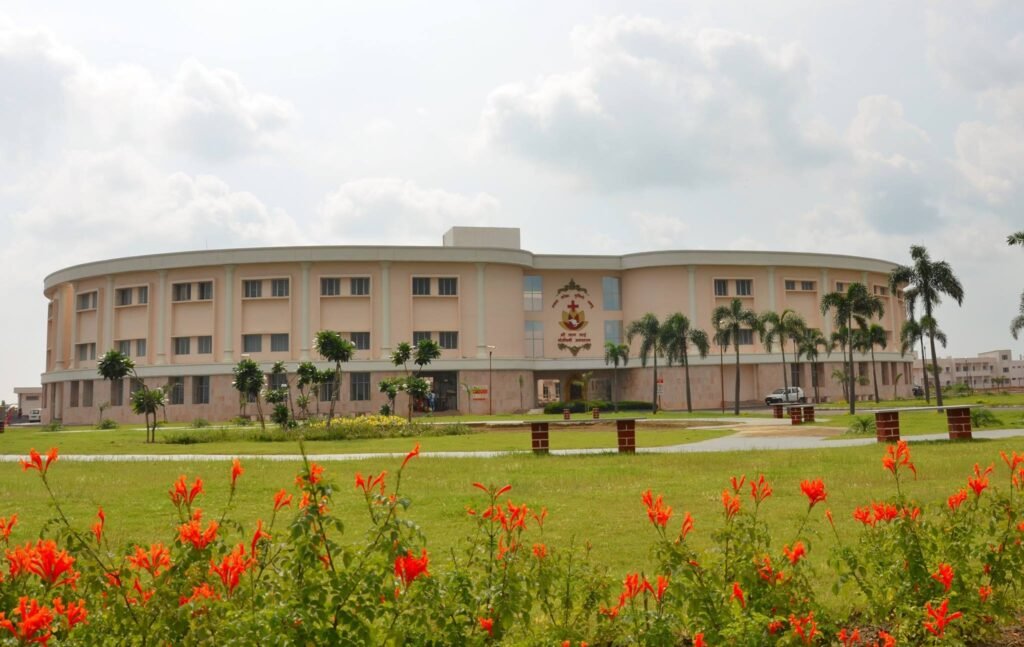
In the years after 2011, the educational network around Sathya Sai Grama expanded to more than two dozen campuses. C. Sreenivas, who had long been associated with Sathya Sai Baba’s healthcare initiatives, became involved in the next phase of hospital-building. In November 2012, the first Sri Sathya Sai Sanjeevani Centre for Child Heart Care opened at Atal Nagar, formerly Naya Raipur, in Chhattisgarh. It would become the starting point for a wider network of paediatric cardiac and other healthcare facilities offering treatment without billing patients.
The mission’s current healthcare overview records that the Sanjeevani journey began in 2012. See the Sri Madhusudan Sai healthcare overview for the present network and impact figures.
Nutrition followed a similarly small-to-large arc. In 2012, a breakfast initiative associated with Anand Kadali began by serving around 50 schoolchildren. The Sri Sathya Sai Annapoorna morning nutrition programme now says it reaches 10 million schoolchildren each day across India and several other countries.
For current programme data, see the Sri Sathya Sai Annapoorna Trust morning nutrition page.
For believers, the speed and scale of this growth are inseparable from the subtle-form narrative. For an outside observer, the institutional facts can be examined separately from the metaphysical explanation. Both readings matter because the first helps explain motivation, while the second allows the work to be assessed in the ordinary language of schools, hospitals, meals, budgets, staff and beneficiaries.
The difficult language of the subtle
The post-2011 accounts contain another idea that is difficult to translate into modern secular language. Devotees describe Sathya Sai Baba as continuing to travel and communicate in a subtle form through Madhusudan, including on international visits. Senior companions such as B. N. Narasimha Murthy, C. Sreenivas and the American philanthropist Isaac Tigrett were among those associated with these journeys.
Within Indian yogic traditions, one term sometimes invoked to make sense of such experiences is para kaya pravesha, literally, entering another body. Stories associated with Adi Shankara and several Siddhar traditions use related ideas. These belong to the religious and hagiographic vocabulary of Indian spirituality, not to the categories of contemporary empirical science.
That distinction is important. The value of documenting the story is not in asking a general reader to accept every supernatural claim. It is about understanding how a community’s interior beliefs can generate exterior consequences. People who believed they were continuing a Guru’s work reorganised their careers, money, time and institutions around that conviction. Whatever one makes of the cause, the consequences are material.
What survives a lifetime?
The recurring image in this story is not a miracle but a task passed from one pair of hands to another. Narayan Bhat dreams of rural schools. Narasimha Murthy helps build one. Bhat dies. The institution remains. Decades later, Murthy teaches a younger man to tie a dhoti and experiences the moment as the return of something unfinished. That younger man eventually leads a mission whose schools, hospitals and nutrition programmes extend far beyond the hamlet where the story began.
Sanatana Dharma names the continuity through karma, rebirth, Guru and Self-realisation. A secular vocabulary might call it legacy, institutional memory, vocation or intergenerational purpose. The two vocabularies do not have to collapse into one another for us to notice the same material fact: a rural education experiment outlived its founder and became the seed of something much larger.
Perhaps the more useful question is not whether every reader accepts the metaphysics. It is what changes when people believe that service is a duty too large to fit inside one lifetime.
Part Three continues Dr Hiramalini Seshadri’s exploration of the One World One Family mission and the Sanatana Dharma ideas through which its participants understand it.



One Response
Wonderful article as always. Thks for sharing.