

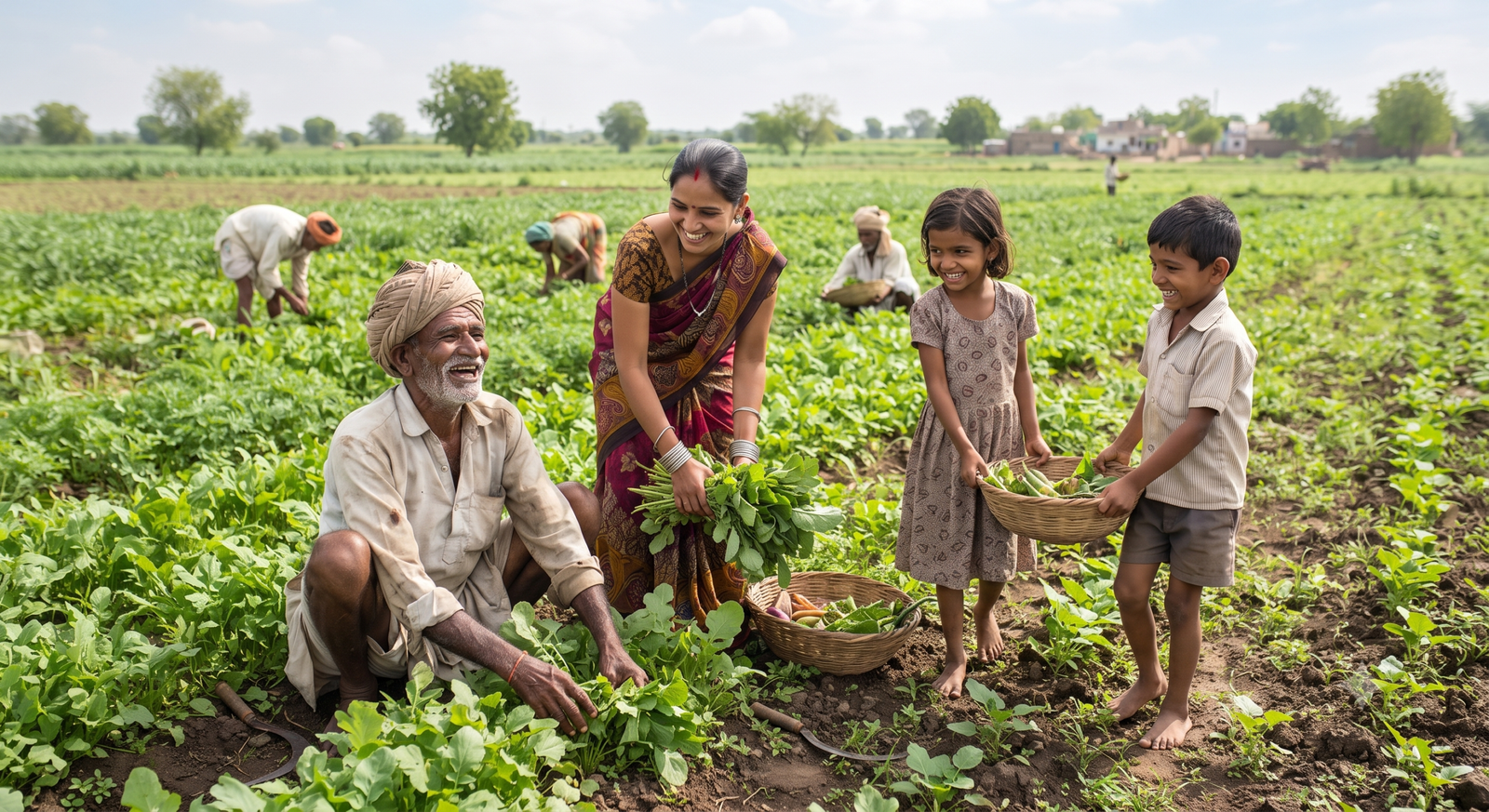
There is a kind of knowledge that does not sit inside books.
It stands in a field before sunrise. It looks at the sky and senses whether rain will hold or betray. It knows which seed has strength, which soil is tired, which pest is arriving before the damage is visible. It understands moisture not as a number alone, but as touch, colour, smell and memory. It has been passed from parent to child, from elder to apprentice, from one season of failure to another season of learning.
And yet, for the longest time, this knowledge has rarely been treated as expertise.
The farmer may feed a society, but the farmer’s intelligence is often left unnamed. We value the crop, the yield, the market price, the procurement system, the nutrition programme and the end product. But the human being who knows how to bring food out of the earth is too often seen as a producer, a beneficiary, a category or a statistic.
The question that has guided my recent work is simple: what would change if we formally recognised the farmer as an expert?
Not symbolically. Not ceremonially. Not only in speeches. But through a credible, structured and internationally aligned process that assesses, recognises and certifies knowledge, skill and competence.
That is the thought behind the Voluntary Personnel Certification Scheme for Farmers Cultivating Organic Finger Millet, or ragi, developed under the Sri Sathya Sai University for Human Excellence Vision 2035 framework, under the Steering Committee, chaired by Prof. V. N. Rajasekharan Pillai. SSSUHE has described the scheme as a way to recognise farmers’ knowledge, skills and lived expertise through a credible certification pathway aligned with national and international standards.
The first crop chosen was ragi. This matters.
Ragi is not just a millet. It is one of India’s old nutritional memories. It belongs to drylands, to small farmers, to food security, to climate resilience, to school meals, to the ordinary intelligence of communities that have known how to survive difficult land. In Karnataka, it also belongs to a living agricultural culture where knowledge is not always written, but is deeply practised.
To certify a ragi farmer, therefore, is not only to recognise an individual. It is to recognise a body of traditional knowledge that has kept communities fed and landscapes productive long before modern systems learned to name it.
From qualification to competence
My own journey into personnel certification began in 2010, when I moved from North Eastern Hill University, Shillong, to establish the Centre for Traditional Knowledge Systems at Indira Gandhi National Open University in New Delhi. Until then, my disciplinary life had been rooted in academic behavioural science. Certification was a new world.
The turning point came through work with Traditional Community Healthcare Providers, commonly known as folk healers. Between 2010 and 2012, a pilot was undertaken across six Indian states with support from the then Department of AYUSH. The aim was to test whether the knowledge and skills of traditional healers could be evaluated through the international framework of personnel certification.
This was significant because these practitioners had acquired competence through non-formal routes: family knowledge, observation, apprenticeship, and years of community practice. They did not always possess formal qualifications. But they did possess working knowledge.
That distinction matters.
A qualification-based system asks: where did you study?
A competence-based system asks: what can you demonstrate that you know and can do?
In the pilot phase, 517 traditional healthcare providers were examined and certified. Over time, the value of that recognition became visible. Certification did not merely give them a document. It gave credibility to knowledge that had long existed outside formal institutions. According to the attached first draft, more than 3,500 healers have since been certified nationally through the voluntary certification route.
The lesson from that work stayed with me: formal systems do not have to erase traditional knowledge. At their best, they can create a respectful bridge between lived expertise and public recognition.
The farmer certification initiative grew from that same conviction.
The field as a classroom
When I was invited in October 2025 to be a member of the Sri Sathya Sai University for Human Excellence Vision (SSSUHE) Committee 2035, the university was already engaged in education, healthcare, nutrition and rural development. What was new was the idea of personnel certification as a pathway for empowerment.
After a discussion on how the competence of traditional healers had been recognised through certification, the idea emerged that organic ragi farmers could also be certified. The first proposed group was drawn from farmers associated with the Subhiksha Organic Cooperative Society in Tumkur.
From there, the work became both technical and deeply human.
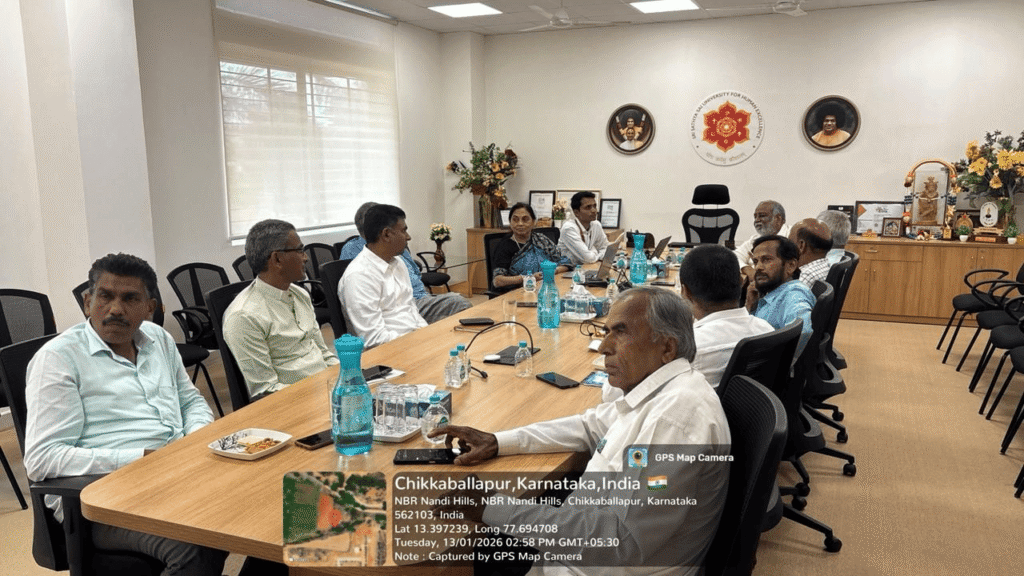
A multi-stakeholder expert committee was formed, bringing together certification and accreditation experts, organic farming specialists, ragi experts, sustainability and climate experts, senior ragi farmers from traditional communities, SSSUHE agriculture faculty, representatives from Subhiksha Cooperative Society and SaiSure Nutrition LLP.
This was important. A farmer certification framework cannot be designed only in a meeting room. It must listen to the field. It must respect the farmer’s language of practice. It must also withstand the rigour of credible certification.
At the SSSUHE, Dr. Debjani Roy is the Convenor of the Farmer Certification Framework Committee that includes experts from accreditation, agriculture, certification, quality assurance and farming communities. The initiative is placed under SSSUHE Vision 2035.
The scheme was developed as a voluntary certification programme. It does not replace statutory approvals or government licences. Its purpose is different: to recognise the farmer’s competence.
What does a farmer know?
This may sound like an obvious question until one tries to answer it seriously.
What does a farmer know?
The answer is not one thing. The draft scheme identifies knowledge and skill areas such as ragi varieties, cropping seasons, seed selection, seed storage, seed treatment, input selection, soil health, nutrient awareness, moisture management, sowing practices, crop monitoring, pest and disease identification, harvesting, post-harvest storage and emerging technologies.
In other words, the farmer is not merely performing labour. The farmer is continuously reading a living system.
A farmer knows time.
When to prepare. When to sow. When to wait. When to act.
A farmer knows risk.
Too much rain. Too little rain. Weak seed. Poor soil. Pest pressure. Market uncertainty.
A farmer knows evidence.
A change in leaf colour. A shift in soil texture. A pattern in the field. A memory from another season.
A farmer knows adaptation.
What worked last year may not work this year. A field is not a factory line. It is a changing conversation with climate, soil, seed, labour, animal life and family decisions.
To turn this into certification required a careful process. The scheme provides for individual farmers as well as farmer families. That is crucial, because farming knowledge is often collective. One family member may understand seed, another may manage soil preparation, another may hold knowledge of storage, another may make daily observations in the field.
The assessment process includes oral examination and verification of evidence. The evaluation team may meet the farmer at an identified location or visit the farmer family. The draft notes that the oral examination is intended to last about 30 minutes, followed by evidence review, with the total duration normally around one hour. The scoring requires at least 50 percent in both knowledge and skill, and 70 percent overall, for certification.
This is not a decorative certificate. It is a structured recognition of competence.
Why recognition matters
Recognition is not a small thing.
A farmer who has learned through experience may know a great deal, but the world often asks for paperwork before it offers trust. Formal certification can become a bridge between the farmer and wider systems: markets, institutions, value chains, training opportunities, universities and possibly, in time, international recognition.
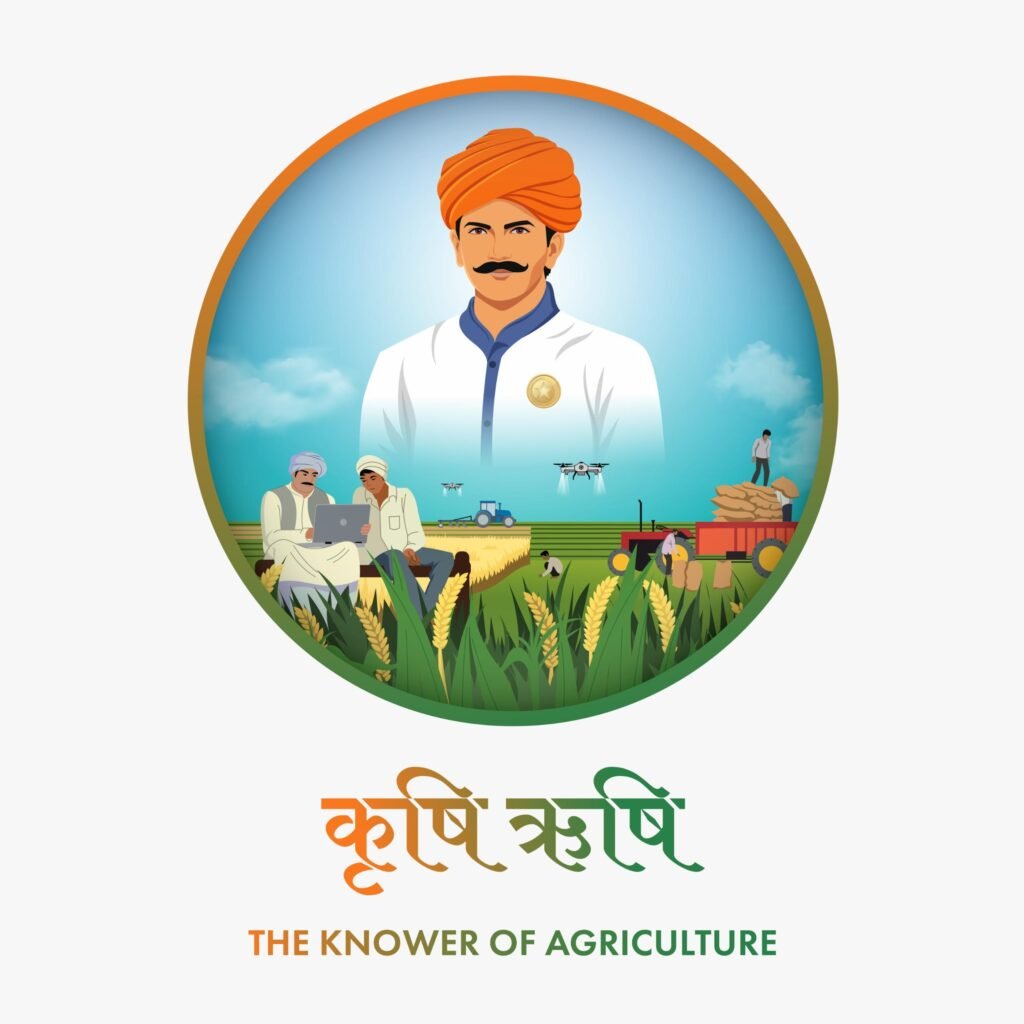
This is where the idea of “Krishi Rishi” becomes powerful. SSSUHE describes the logo of the scheme as representing the farmer as the “knower of agriculture.” The logo text explains the farmer as one who becomes identified with soil and seed through lived experience, while also carrying the possibility of modern tools and digital engagement.
This is where the idea of “Krishi Rishi” becomes powerful. SSSUHE describes the logo of the scheme as representing the farmer as the “knower of agriculture.” The logo text explains the farmer as one who becomes identified with soil and seed through lived experience, while also carrying the possibility of modern tools and digital engagement.
The first cohort
The pilot process gave the idea its first real test.
According to the attached draft, 180 ragi farmers underwent examination and 138 obtained the required score for certification. SSSUHE later announced that, as part of its 5th Convocation on 29 July 2026 at Sathya Sai Grama, 138 farmers had qualified from among 180 participants for formal certification in organic ragi farming.
Numbers matter here, but not only as numbers.
Each farmer represents a body of observation, effort, patience and inherited knowledge that has now entered a framework of public recognition. For some, this may strengthen dignity. For others, it may open future opportunities. For institutions, it raises a larger possibility: if farmers can be certified for demonstrated competence, how many other forms of informal knowledge across India remain waiting to be recognised?
The LinkedIn post shared by SSSUHE framed the effort through the idea of “soil to school to society,” suggesting that farmer recognition is connected not only to agriculture, but also to nutrition, education and social dignity. That linkage is important. Food does not end at harvest. It enters kitchens, schools, nutrition programmes, childhood health and public welfare.
In that sense, farmer certification is not only about the field. It is about society finally seeing the field more clearly.
A careful balance
There is, however, an important caution.
Traditional knowledge should not be flattened into paperwork. Certification must not turn lived wisdom into bureaucratic burden. It must not create another gate that excludes the very people it seeks to recognise.
This is why design matters.
The process must remain accessible, fair, transparent and culturally sensitive. It must recognise oral knowledge. It must allow evidence beyond formal records. It must include senior farmers in evaluation. It must guard against conflicts of interest. It must be voluntary. It must be credible without becoming intimidating.
The SSSUHE framework attempts to do this by creating an examination team that includes a certification expert, an agriculture expert and, where required, a senior ragi farmer from outside the same district to address conflict-of-interest concerns. Evaluators are required to sign commitments around impartiality, integrity, independence, confidentiality and conflict of interest.
These procedural details may seem dry, but they are where dignity is protected.
A certificate is meaningful only if the process behind it is trusted.
The farmer and the future
India often speaks of farmers with emotion. We call them annadata. We honour them in slogans. We invoke them during harvest festivals and national speeches. Yet public systems do not always treat their knowledge as formal expertise.
This gap matters more now than ever.
Agriculture is entering a complex future: climate change, soil stress, water uncertainty, market volatility, nutrition needs, carbon questions, digital tools, organic standards and traceability. In such a world, the farmer cannot be seen as the last person in the knowledge chain. The farmer must be recognised as one of its central knowledge-holders.
The future of agriculture will need science. It will need data. It will need technology. It will need policy and markets and institutional systems.
But it will also need the farmer’s intelligence.
The farmer who knows how land behaves in a bad monsoon.
The farmer who knows which seed has survived locally.
The farmer who knows when soil is losing life.
The farmer who understands risk not as theory, but as the family’s next meal.
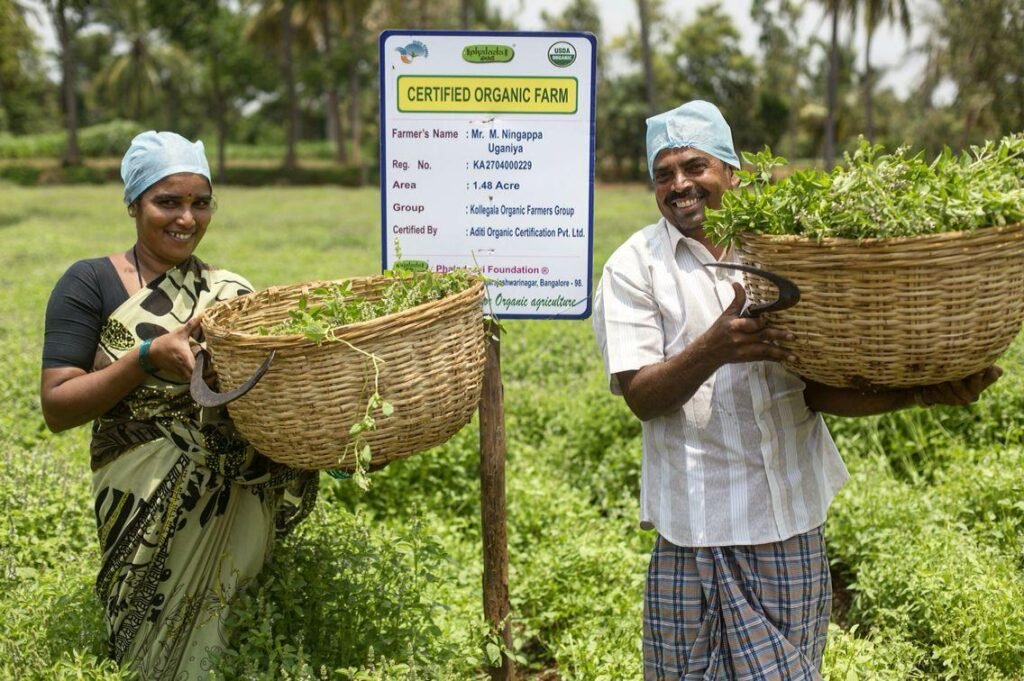
The most meaningful agricultural future will not be built by replacing this knowledge. It will be built by bringing it into conversation with modern systems.
Certification is one way of beginning that conversation.
From respect to structure
Respect is often spoken. Recognition must be designed.
That is the heart of this initiative.
A society can praise farmers and still fail to recognise their competence. It can consume their produce and ignore their knowledge. It can modernise agriculture while leaving farmers out of the language of expertise.
The Voluntary Personnel Certification Scheme for Farmers Cultivating Organic Finger Millet is a small but significant attempt to correct that imbalance.
It says that knowledge acquired outside formal classrooms can still be rigorous.
It says that competence can be demonstrated in more than one way.
It says that traditional communities do not need pity; they need pathways.
It says that the field is also a site of intelligence.
For Knobles, the meaning of this story lies here: in the redefinition of expertise.
The farmer is not merely part of India’s past. The farmer is part of India’s future. Not as an image of rustic simplicity, but as a knowledge-holder whose work sits at the intersection of food, climate, health, livelihood, soil and society.
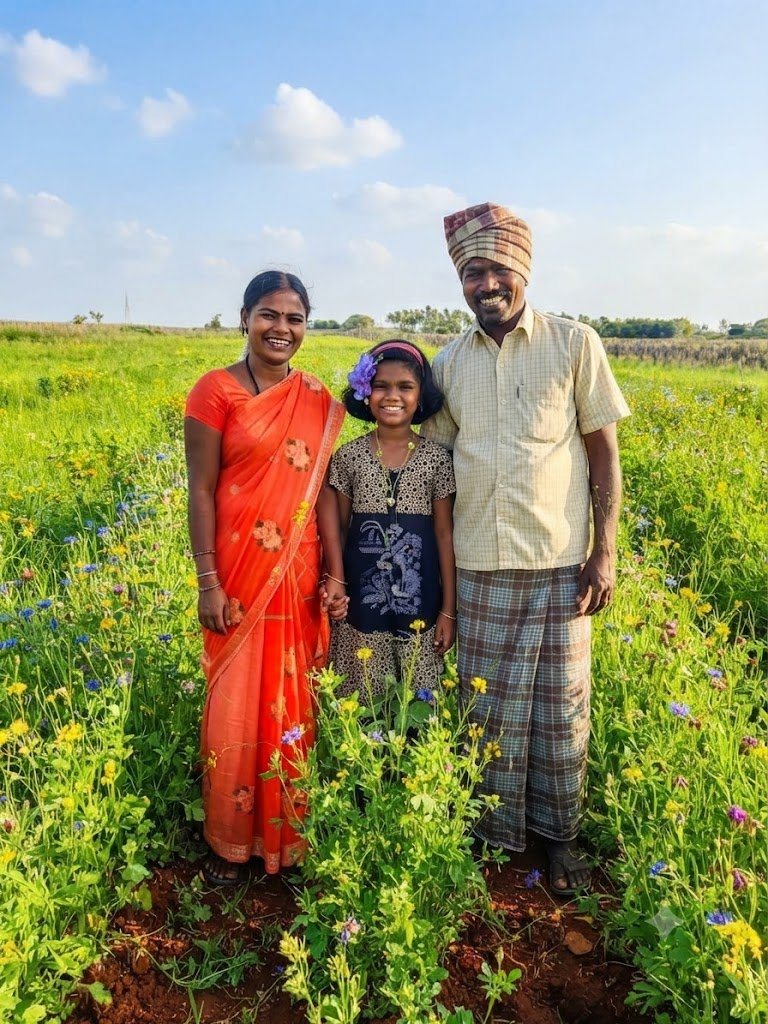
The next time we look at a field of ragi, perhaps we should not only see a crop.
We should see a curriculum.
We should see years of observation.
We should see a family’s knowledge.
We should see a farmer who has always been an expert, waiting for the world to find the language to say so.




2 Responses
I know Dr Debjani Roy personally- a diehard down-to-earth grassroot research worker. She always viewed the challenges with positivity. She achieved the milestone with utmost sincerity dedication. Dr Roy was partially successful in establishing a strong farmers’ base in Assam too. Her efforts would lead India solving food security in future.
This is a write- up that truly reflects the author’s passion for the work she does. Also, what comes through and inspires is her compassion for those she works with, whether they were primary healthcare workers in NE India, or the ragi farmers of Karnataka more recently. Although privy to only a small part of her impressive research journey, I can confidently say that Dr. Debjani Roy is a power- house, a living treasure, and a national resource, so much so that I wish I could train under her.