
There is a moment in almost every class when someone discovers their body is telling them something they had not been listening to.
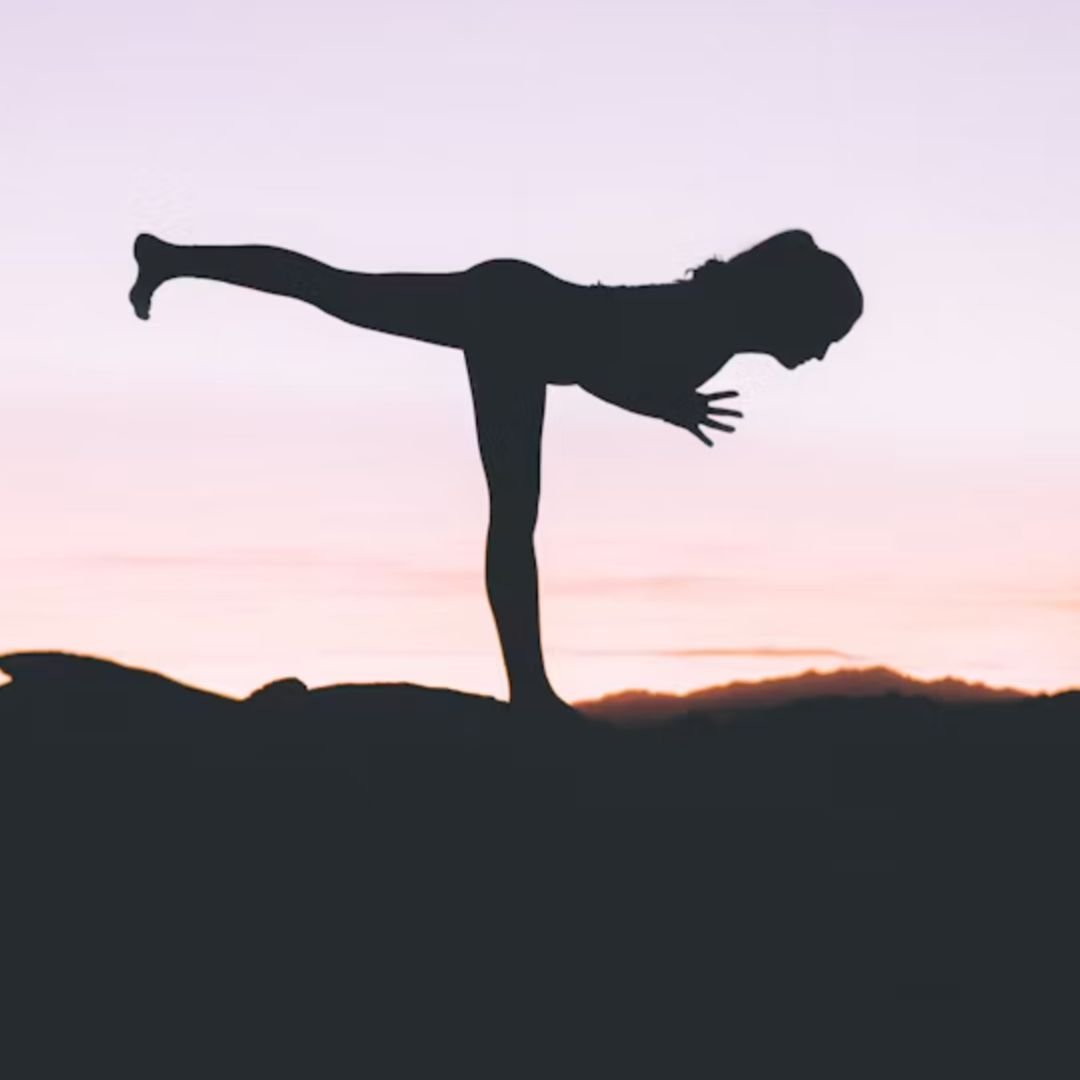
This can happen during a simple balance exercise. Someone lifts one foot off the floor, raises their arms to steady themselves, and suddenly starts to wobble. It is not dramatic, just enough to catch them off guard. They laugh, glance around, try again, and wobble once more.
Sometimes it happens while breathing. I ask someone to take a slow, deep breath, and they notice their shoulders are working hard while the breath stays stuck near the chest. It can also happen during a stretch they thought would be easy. Their hand does not reach as far as they expected. The spine resists, the hip tightens, and the neck aches.
These moments may seem small, but they are rarely just physical.
Fixing vs. Listening
People often start moving with a certain image in mind. They want to lose weight, tone up, become more flexible, look fitter, fit into old jeans, or feel less guilty about what they ate. They see their body as something that needs fixing.
Then the body answers differently.
It says: I am tired. I am stiff. I am holding stress. I do not trust the floor. I have forgotten how to breathe deeply. I am not weak, but I have been ignored.
Modern fitness culture makes us focus on how bodies look. We notice shape, size, muscle, posture, clothing, and weight in photos. We compare bodies constantly, often without noticing. But we pay much less attention to how bodies feel, move, recover, balance, or show discomfort.
A body might look fit but still be tired. It can look slim but lack strength. It might seem active but be disconnected from breathing. It can look good in a photo but still struggle with rest, coordination, balance, or trust.
That is why I now believe movement is more than just exercise. It is a kind of literacy.
Movement as Body Literacy
Moving well means learning to read your body. It is noticing when your shoulder lifts before you breathe deeply. It is seeing when your knee makes up for your hip. It is feeling when tiredness is not laziness, but a message. Balance is not about being still, but about adjustment. Strength is not always about force. Sometimes it is control, sometimes softness, and sometimes knowing when to stop.
My own relationship with movement began long before I entered the world of structured fitness.
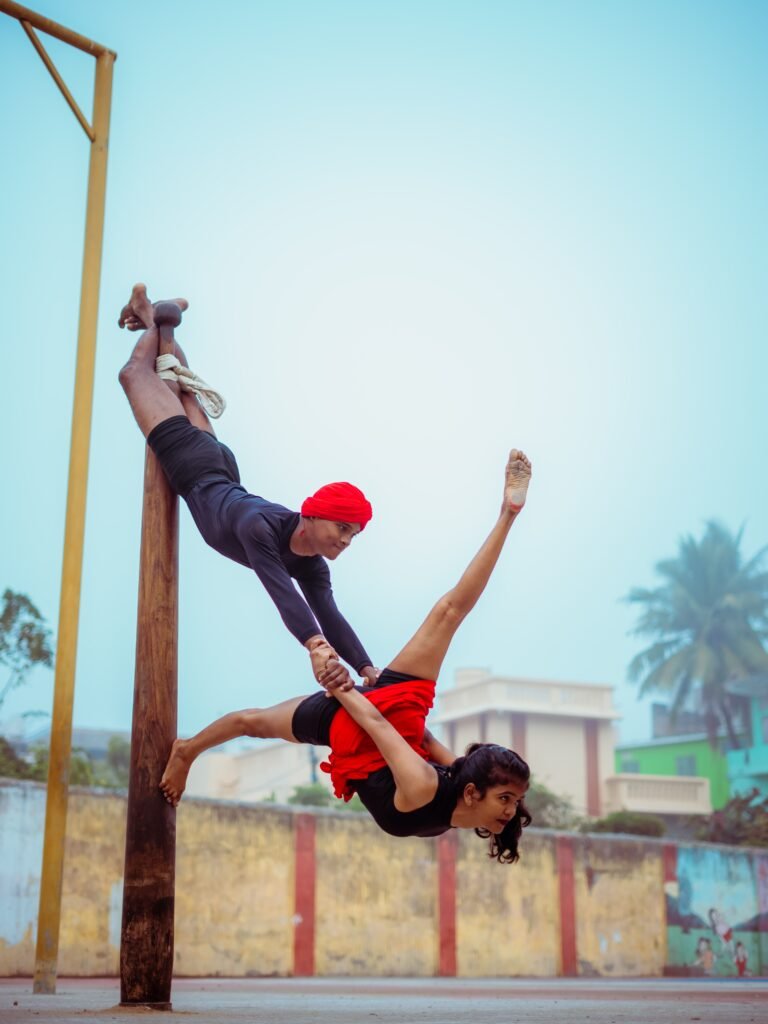
Mallakhamb showed me a kind of strength that has nothing to do with looks. On the pole, your body cannot fake it. You either know where you are in space, or you do not. Your grip must be strong but not desperate. Your core must be active but not stiff. You have to face your fear, not ignore it. The body learns through practice, friction, bruises, failure, and coming back again.
Mallakhamb has a certain honesty.
It teaches discipline without any glamour. It shows that the body can do amazing things, but only if the mind is fully present. You cannot be distracted on the pole. You cannot just act confident. You have to earn it through touch, breath, and control.
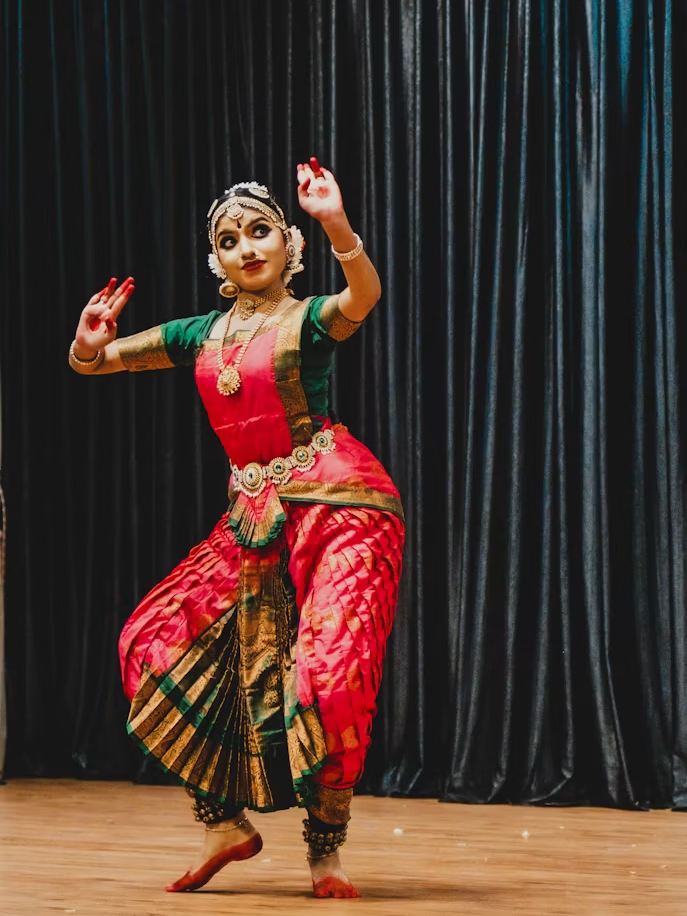
Bharatanatyam taught me another language of the body.
In dance, strength and grace go together. The eyes, hands, spine, feet, rhythm, and expression all work together. The body is not just a machine doing steps; it carries meaning. A small change in your gaze can change the emotion. Shifting your weight can change the story. The footwork might be strong, but your face must stay expressive. Your posture should be disciplined, but not stiff.
Dance taught me that the body is not just for function. It is expressive. It holds culture, memory, devotion, discipline, and emotion. It also showed me that control does not mean being tense. Real control makes movement clear.
Later, Zumba taught me something new. It reminded me that movement can be fun even if it is not perfect. People who might feel shy in a formal class often ended up laughing, sweating, following the rhythm, missing steps, and still going on. That was important. For many adults, the body often feels judged. Zumba turned it into a place for letting go.
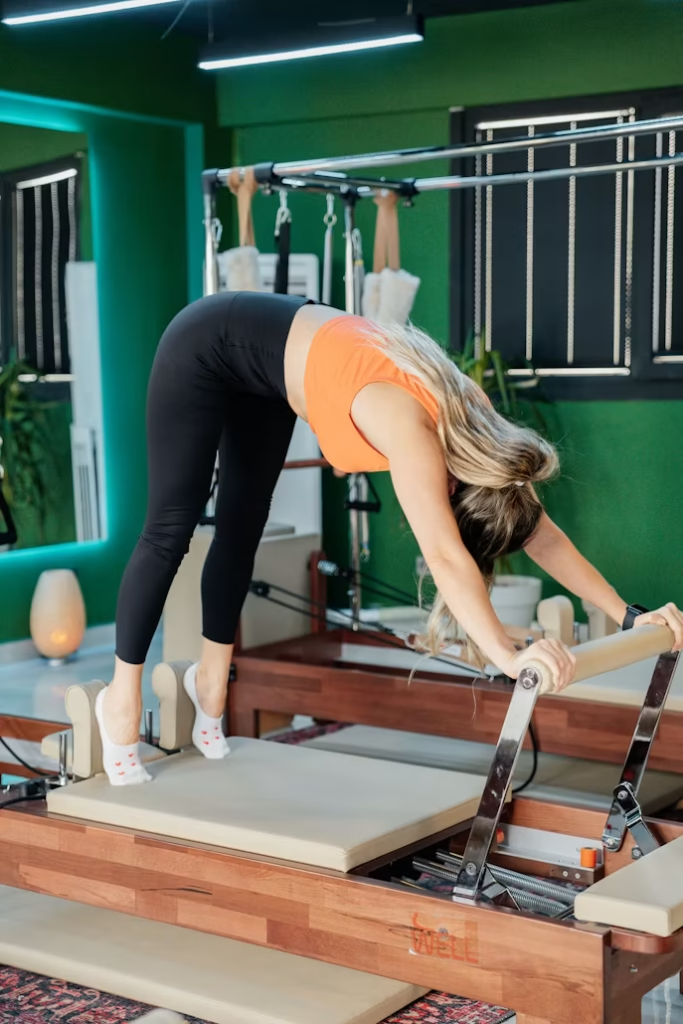
Pilates brought me inward again.
Pilates requires careful attention. A small, mindful movement can show more than a big, careless one. It asks your body to organise itself from the centre. It teaches alignment, breathing, stability, mobility, and control. It also teaches humility. Someone might lift heavy weights or run far, but still find it hard to move slowly and precisely.
Together, these practices have shaped the way I understand strength.
Lessons Across Practices
Strength is not a look. It is a relationship.
It is the relationship between breath and effort, the spine and gravity, the feet and the ground, mobility and stability, fear and trust. It is also about what your body can do now and what it might do over time if you are patient.
In my work, I meet many people who are living inside bodies they do not fully inhabit.
Some people carry stress in their shoulders, as if their bodies are storing everything their minds cannot handle. Some sit for hours in front of screens and slowly lose the ability to stand, bend, twist, or breathe easily. Some are young but already feel tired in ways that are not about age. Some are older and worry that every ache means decline.
Women often come with extra hesitation. Many have spent years being told, directly or indirectly, to be smaller, to sit a certain way, not to take up too much space, to be graceful but not strong, fit but not muscular, disciplined but not demanding. Their relationship with their bodies is often shaped by rules, correction, and comparison.
For them, movement can become quietly radical.
Reclaiming Space and Strength
To stand with equal weight on both feet. To lift the chest without feeling sorry. To build arm strength. To take up space. To breathe loudly enough to hear themselves. To realise the body is not just for looking at, but for living in.
I also notice that many people treat exercise as punishment. They work out because they ate too much, dislike their shape, fear getting older, or feel upset by a number on the scale. The body turns into a problem to fix. Movement feels like a penalty.
But the body does not respond well to contempt for very long.
Discipline is important. So is consistency and effort. But how you feel while making the effort matters too. There is a big difference between moving because you dislike your body and moving because you want to connect with it.
When movement is just about losing weight or looks, the body becomes an object. When movement is about awareness, the body becomes a partner.
This does not mean appearance does not matter. It is fine to want to look better, feel attractive, or become leaner or stronger. The problem starts when appearance is the only way we measure health. A photo cannot show how well someone sleeps, how deeply they breathe, how easily they bend, how steady they feel, how quickly they recover, or if they trust their own strength.
A mirror shows one kind of truth. Movement reveals another.
Preventive Health and Quiet Confidence
Preventive health often starts with small moments of awareness.
Noticing your posture before pain becomes constant.
Building strength before ageing makes daily tasks risky.
Improving balance before you fall.
Learning to breathe well before anxiety becomes a habit.
Understanding mobility before stiffness feels normal.
A body that moves well gives you more than fitness. It gives you confidence.
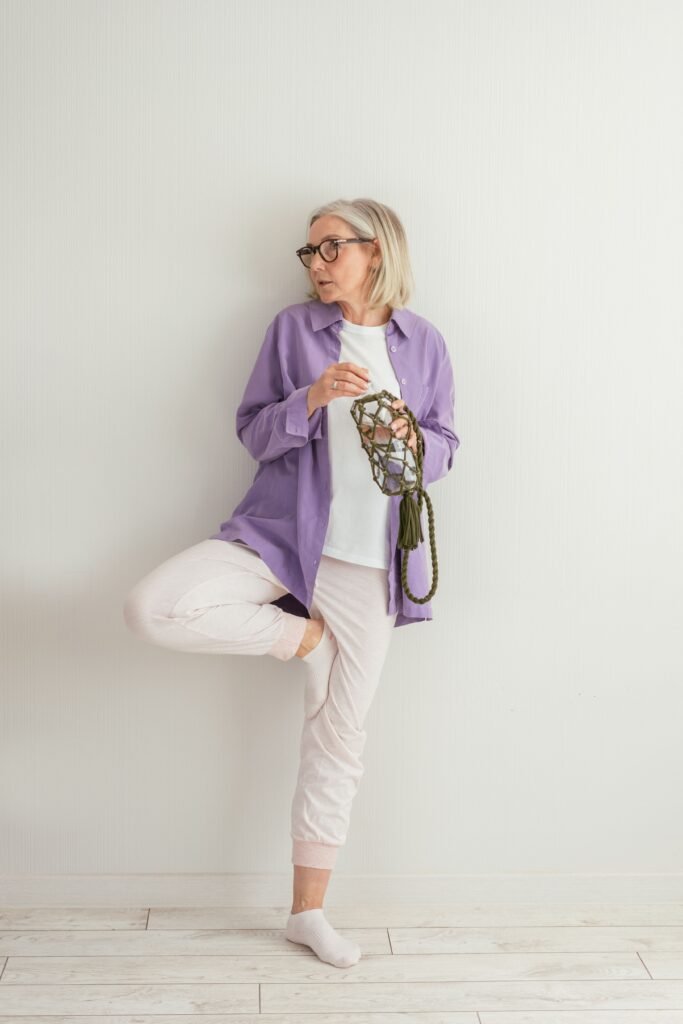
Confidence is not just in the mind. It is physical too. It is the quiet feeling that you can get up from the floor, climb stairs without fear, carry a bag, walk with balance, recover after effort, try new things without expecting to fail, and feel at home in your own body.
This is especially important in a time when many lives have become strangely disembodied.
We work, socialise, order food, attend meetings, learn, worry, compare, and do all of this through screens. Our bodies sit through it all, taking on the strain. Our necks bend, eyes get tired, breath shortens, hips tighten, backs ache, and our nervous systems stay alert long after the day is over.
The body keeps the score long before we are ready to read it.
Movement gives us a way back.
It is not always about intensity. Sometimes it is about paying attention. Taking a slower breath, aligning your spine, building a stronger centre, finding a steadier foot, letting your shoulder relax. It is about realising that pain is not a given, stiffness is not who you are, and ageing does not mean giving up.
The healthiest relationship with the body may begin when we stop asking it to look perfect and start learning how to listen to it.
A Foundation for Life
Listening is not about being indulgent. It is about being responsible. It means knowing when to push and when to rest, when to build strength and when to recover, when discomfort means growth and when it is a warning. It is understanding that the body is not just for show, but the foundation of life.
Everything we do passes through it.
Work, care, ageing, confidence, desire, attention, dignity, participation, and independence all depend on the body. Your world grows or shrinks based on what your body can do, what it resists, and how you have prepared it.
That is why movement cannot be measured only by calories, inches, or before-and-after photos. Those are small ways to measure something much bigger.
The real question is not whether a body looks strong.
It is whether it can carry life.
Can it bend, breathe, reach, recover, and rest? Can it hold steady under pressure? Can it move with enough freedom to keep the person connected to the world? Can it alert us before distress becomes damage? Can it help us feel present, capable, and at ease?
In class, when someone wobbles for the first time, I do not see failure. I see information. The body is speaking, and it shows where trust needs rebuilding.
The work begins there. Not in the mirror. Not in comparison. Not in punishment. It begins with listening, so the body can guide what comes next. It begins with listening and with learning to trust the body again.
In that quiet moment, a person realises that the body is not something to conquer, but something to understand.
Maybe strength starts with that change. Instead of asking, ‘How do I look?’ we can ask, ‘What is my body trying to tell me?’